Deploying specialized quadrupedal and crawler robotic units engineered to operate efficiently under coastal Atlantic salinity, extreme heat, and severe mining dust profiles in Namibia.
An in-depth analysis of industrial robot capabilities, local economic application vectors, supply chain optimization, and technological roadmaps.
Namibia hosts some of the most challenging physical and geographic terrains globally. Characterized by the convergence of the hyper-arid Namib Desert with the cold, moisture-laden Benguela Current of the South Atlantic Ocean, local industrial equipment is subjected to a dual assault: micro-fine silica dust and highly corrosive marine salt spray. In wind-swept regions such as Walvis Bay, Lüderitz, and the coastal diamond fields of Oranjemund, standard industrial robots quickly deteriorate due to moisture ingress, abrasive sand particle penetration, and salt-induced oxidation.
This harsh environment dictates a shift from conventional wheeled or wheeled-crawler automation to legged, hermetically sealed systems. Waterproof quadruped robots designed to IP67 and IP68 standards offer a paradigm shift. Unlike wheeled systems that easily become high-centered or bogged down in loose sand and mud, quadrupedal platforms leverage dynamic gait planning to walk over shifting sand dunes, jagged rocky terrains, and semi-submerged tidal zones. The addition of robust waterproof seals protects the core electronics, high-torque brushless actuators, and sensory payloads (including LiDAR, infrared thermography, and visual cameras) from saline condensation and fine sand particles.
The deployment of waterproof quadrupedal robots in Namibia spans several crucial sectors:
The next generation of waterproof quadrupeds utilizes a unified software-hardware co-design framework. Key aspects of the roadmap include:
Ingress Protection: Moving beyond simple rubber gaskets, future builds will implement active pressurized internal air cavities. By maintaining a positive internal pressure relative to the outside environment, the robot actively prevents water or fine dust from entering the housing, even if structural micro-cracks develop in the external shell.
Dynamic Locomotion Planning: Utilizing model predictive control (MPC) alongside reinforcement learning (RL), quadrupeds can predict slipping events on loose sand or mud and adapt their foot placement within milliseconds. This is critical for traversing sand dunes in the Namib Desert or mud-laden riverbeds near the Kunene and Orange rivers.
Advanced Sensor Fusion: The incorporation of multi-spectral LiDAR, sonar for underwater operations, and high-frequency radar ensures operational capability in dust storms or underwater environments where standard optical cameras fail. Edge-computed neural networks will enable real-time hazard mapping and path planning directly on the robot's hardware.
Rooted in engineering precision and driven by Hong Kong Stock Exchange compliance (Stock Code: 9880.HK), we build world-class robotic systems.

Bringing intelligent robots into every family, and making everyday life more convenient and intelligent.

With intelligent robot as the carrier and AI technology as the core, we aim to build an intelligent eco-system with hardware, software, service and content all integrated together.

Creativity, Resilience, Collaboration, Straightforwardness
Established in March 2012, Hangzhou Excitech Technology Co., Ltd. is a leading humanoid robots and smart service robots company. On 29 December, 2023, we were listed on the main board of the Hong Kong Stock Exchange (stock code: 9880.HK), and have become the first humanoid robot company listed on Hong Kong Stock Exchange.
Dedicated to the mission of 'bringing intelligent robots into every family, and making everyday life more convenient and intelligent', we have developed a full stack of humanoid robotic technologies independently. Building on our full-stack technologies, Excitech has engaged in the research and development, design, smart production, and commercialization of smart service robots, and has developed smart robotic solutions that integrate with hardware, software, service and contents. These solutions span various industries such as AI education, smart logistics, smart elderly care, business and consumer service.
Excitech is among the few global leaders in full-stack humanoid robotics technologies. Our full-stack technologies are a holistic combination of industry-leading robotic technologies (robotic motion planning and control technology, and high performance servo actuators), our AI technologies (human-like brain function and cerebellum function), integrated robotic and AI technologies (SLAM and autonomous technology, visual servo operation and human-robot interaction), and Robot Operating System Application Framework (ROSA 2.0), our proprietary robotics application framework.
The competitive edge of Hangzhou Excitech Technology Co., Ltd. lies in the vertical integration of our domestic manufacturing ecosystems in China. The manufacturing pipeline in Hangzhou integrates raw material sourcing, high-precision CNC machining, PCB manufacturing, and automated quality testing. This minimizes production lead times compared to Western competitors. The presence of mature supply chains for core components—such as high-torque density frameless torque motors, planetary reduction gears, and lightweight carbon fiber composite structures—enables us to quickly iterate and customize robots to match specific client needs.
From an export standpoint, our logistical and customs frameworks are optimized for fast shipping to key Southern African gateways, including the Port of Walvis Bay and Cape Town. We maintain strategic agreements with international logistics partners to ensure shipping compliance, battery transport safety certifications, and customs handling. This minimizes delay risks for mining operators in Namibia who depend on timely spare parts deliveries to maintain operations.
Deploying advanced robotics in Namibia requires local support and strict regulatory compliance. All Excitech robotic products exported to Southern Africa comply with regional standards, including South African Bureau of Standards (SABS) alignment, CE certification, and local telecommunications approvals for wireless control bands (CRAN in Namibia).
Our localized support model includes:
• Technical Field Training: Comprehensive training programs for local engineers and technicians at mining and infrastructure locations in Windhoek, Swakopmund, and Walvis Bay.
• Modular Spares Network: Modular designs allow local teams to easily swap out components, such as leg assemblies, sensors, and battery packs, minimizing downtime.
• Remote Diagnostics: Satellite and 4G/5G remote diagnosis platforms connect local units directly to our primary engineering center in Hangzhou for quick troubleshooting.
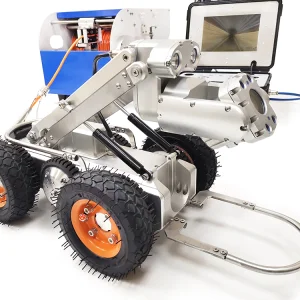
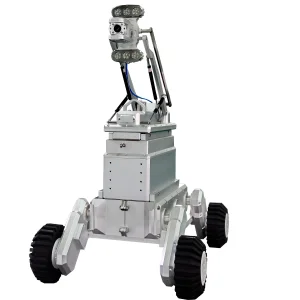
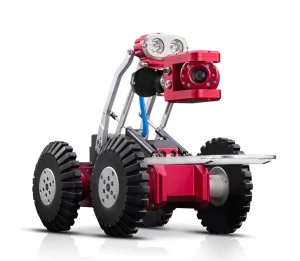
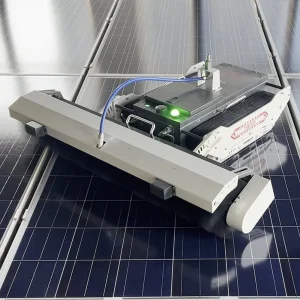
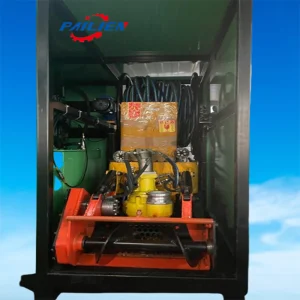
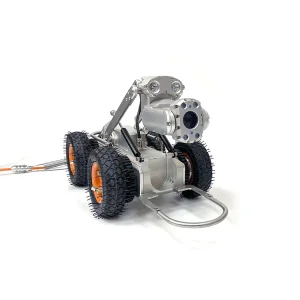
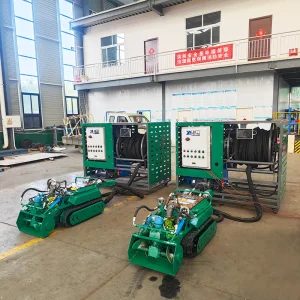
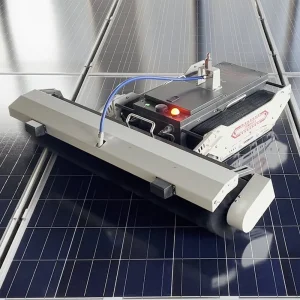
Explore our complete range of certified waterproof inspection crawlers, solar panel cleaning systems, and urban sewer robots.
Technical guidance and system clarification for deployment across Namibian industrial, municipal, and mining environments.
Our waterproof quadrupeds and crawlers utilize high-grade aluminum alloys, titanium fasteners, and anti-corrosive powder coatings. Seal points are fitted with fluorocarbon rubber gaskets that resist saltwater oxidation, ensuring durability in marine and coastal environments.
Yes. The F-D1000 cleaning machine supports both wet and dry cleaning modes. In hyper-arid regions like the Namib Desert, it uses custom anti-static micro-fiber roller brushes to clean dust without water, preventing cementation on the PV panels.
Our robots support dual-band Wi-Fi, 4G LTE, and 5G cellular communication. For remote mining environments with limited cellular coverage, we can integrate COFDM digital link systems or satellite backhaul connections to ensure stable remote control up to 10 kilometers away.
Thanks to our integrated supply chain in China, standard replacement parts ship within 48 hours of order confirmation. Air freight delivery to Windhoek (WDH) typically takes 5 to 7 business days, while ocean freight shipments to Walvis Bay arrive in 25 to 30 days.
Yes. Our robots run on the ROSA 2.0 software framework, which features modular hardware integration. We provide standard mounting rails, payload power (12V/24V), and Ethernet interfaces for integration of thermal cameras, gas sniffers, LiDARs, and ultrasonic sensors.
 Excitech Robot