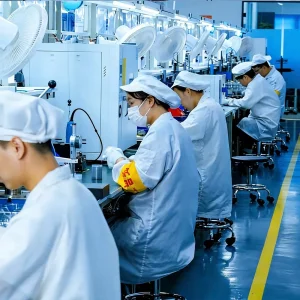
Flagship hardware engineered for high-performance mobility, dynamic environments, and professional academic research across the Caribbean region.
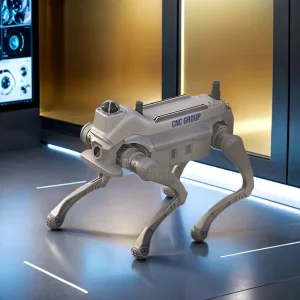
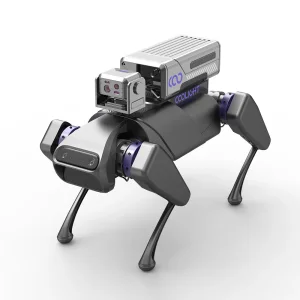
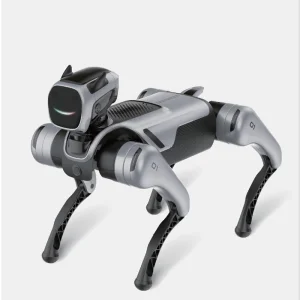
Analyzing the intersection of the Nature Island’s unique terrain, ecological protection initiatives, and the transition toward automated survey and monitoring.
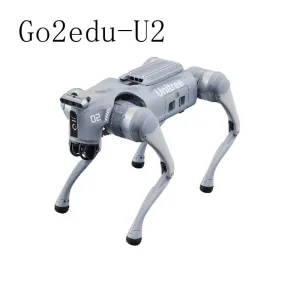
The Commonwealth of Dominica, known globally as the "Nature Island of the Caribbean," presents an extraordinary geographical profile characterized by steep volcanic slopes, dense rainforest canopies, geothermal reserves, and dynamic weather patterns. Unlike flatter Caribbean territories, Dominica's infrastructure challenges demand highly specialized locomotion technologies. From the Morne Trois Pitons National Park to the active geothermal valleys of Laudat and Wotten Waven, traditional wheeled and tracked robotic platforms often fail due to unstable mud, steep grades, and high-friction rocky pathways. This terrain gap establishes the critical necessity for outdoor quadruped robots—agile, multi-legged systems capable of dynamic footstep planning, real-time center-of-gravity stabilization, and robust environmental perception.
In Dominica, the commercial and industrial demand for autonomous leg-based mobility systems is growing across four core sectors:
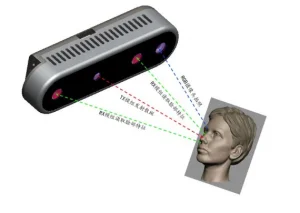
Operating robots in tropical rainforest conditions requires design profiles that exceed standard indoor specifications. High humidity levels, salt mist from the Atlantic Ocean, and sulfuric gases from geothermal vents call for corrosion-resistant chassis materials, high-IP rating seals (IP67/IP68), and hermetically isolated electronics. Additionally, our quadruped platforms integrate advanced thermal dissipation methods, ensuring that internal processors running localized neural networks do not overheat under direct sunlight and high ambient humidity. The integration of robust sensory arrays like the Abham Metasense series allows these quadrupeds to generate detailed 3D point clouds even in heavy rain or under dense forest canopies, ensuring continuous operation regardless of Dominica's rapid weather shifts.
How we bridge the gap between heavy robotics manufacturing and localized Caribbean field operations.
Global procurement teams face unique logistical challenges when importing highly sensitive robotics technology into the Caribbean. Our supply chain infrastructure is designed to mitigate these challenges, offering end-to-end support from our advanced manufacturing facility directly to the port of Roseau or Portsmouth. We ensure all imports comply with Dominican Customs regulations, CARICOM standards, and the local telecommunications authority (ECTEL) guidelines regarding radio-frequency transmissions (LIDAR, Wi-Fi, and LTE bands).
Specialized marine-grade aluminum and carbon fiber frames protect key mechanical joints and internal sensors against salt-mist corrosion and highly humid atmospheric conditions.
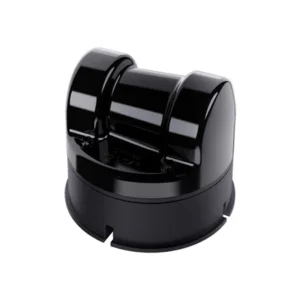
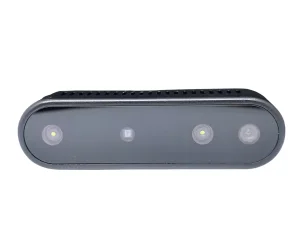
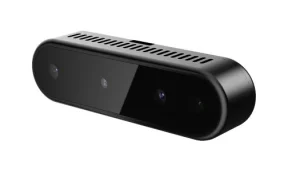
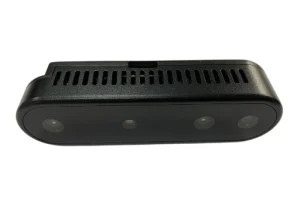
Integration of 4D LiDAR, depth cameras, and ToF sensors to guarantee reliable autonomous localization and mapping (SLAM) under dense, multi-tiered rainforest canopies.
Full support for our proprietary ROSA 2.0 (Robot Operating System Application Framework) to enable developers in Dominica to build custom localized packages.
Furthermore, we recognize that technology deployment is only as effective as the support behind it. Our macro-level solutions include remote hardware diagnostics, high-priority spare part routing, and specialized simulation sandboxes. Developers and researchers at institutions like the Dominica State College or regional environmental research centers can leverage our simulated testing environments to evaluate locomotion control algorithms without risking physical hardware in the field. This decreases development friction and speeds up the deployment cycle for environmental and infrastructural monitoring projects.
Essential components for micro-assembly, oceanographic research, and robotic rehabilitation aiding the broader Caribbean tech ecosystem.
Navigating the parameters of deploying high-end mechatronics and artificial intelligence in the Lesser Antilles.
Our commitment as a leading robotics manufacturer goes beyond delivering boxes. For clients in Dominica, we provide a complete localization architecture. Every quadruped system shipped to Roseau includes pre-configured RF settings aligned with the Eastern Caribbean Telecommunications Authority (ECTEL) policies. This ensures that the high-bandwidth 5G, Wi-Fi, and Lidar data streams do not conflict with local communication channels or emergency services. Additionally, we provide comprehensive training programs for engineering departments and safety personnel, highlighting step-by-step operating guidelines for battery management, localized SLAM calibration, and emergency overrides.
In terms of regulatory compliance, our products conform to international quality and safety standards, including:
By offering dedicated on-site consulting services and remote software patches tailored to local terrain challenges, we guarantee that your team can run operations reliably with minimal downtime. We establish secure cloud-linked pipelines (with option for fully air-gapped local server deployments for sensitive military or industrial utility security) to continuously monitor the health of your robot fleet, providing proactive warnings about actuator wear, joint friction, and battery cycle deterioration.
Advancing the frontiers of legged mobility through sensor fusion, Edge AI, and generative path planning.
The development of legged robotics is shifting toward embodied AI, where the robot does not simply execute pre-programmed gaits, but actively perceives and learns from the terrain in real-time. Our technical roadmap focuses on the integration of deep reinforcement learning for gait adaptation. By simulating millions of unique soil, rock, and slope parameters in digital twin environments, our quadrupeds are pre-trained to walk across wet mud, slippery moss, and loose gravel with human-like reflex speed.
Furthermore, our future platforms will feature advanced multi-sensor integration, fusing 4D Lidar data with multi-spectral imaging to help the robot evaluate the structural stability of the ground before stepping on it. This proactive hazard avoidance prevents slips on muddy slopes, securing expensive sensor payloads. By optimizing energy efficiency inside our high-performance actuators, we target a 35% increase in operational runtime, allowing researchers in Dominica to conduct extensive field operations without frequent battery swaps.
Building an integrated eco-system of hardware, software, and AI services to make everyday life more convenient.

Bringing intelligent robots into every family, and making everyday life more convenient and intelligent.

With intelligent robot as the carrier and AI technology as the core, we aim to build an intelligent eco-system with hardware, software, service and content all integrated together.

Creativity, Resilience, Collaboration, Straightforwardness
Established in March 2012, Hangzhou Excitech Technology Co., Ltd. is a leading humanoid robots and smart service robots company. On 29 December, 2023, we were listed on the main board of the Hong Kong Stock Exchange (stock code: 9880.HK), and have become the first humanoid robot company listed on Hong Kong Stock Exchange.
Dedicated to the mission of 'bringing intelligent robots into every family, and making everyday life more convenient and intelligent', we have developed a full stack of humanoid robotic technologies independently. Building on our full-stack technologies, Excitech has engaged in the research and development, design, smart production, and commercialization of smart service robots, and has developed smart robotic solutions that integrate with hardware, software, service and contents. These solutions span various industries such as AI education, smart logistics, smart elderly care, business and consumer service.
Excitech is among the few global leaders in full-stack humanoid robotics technologies. Our full-stack technologies are a holistic combination of industry-leading robotic technologies (robotic motion planning and control technology, and high performance servo actuators), our AI technologies (human-like brain function and cerebellum function), integrated robotic and AI technologies (SLAM and autonomous technology, visual servo operation and human-robot interaction), and Robot Operating System Application Framework (ROSA 2.0), our proprietary robotics application framework.
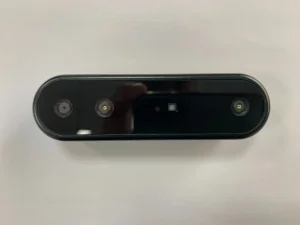
Explore the full suite of specialized hardware, Lidar components, and multi-platform depth cameras for integrated AI system development.
Answering high-intent technical and procurement queries for engineers, developers, and logistics managers.
 Excitech Robot