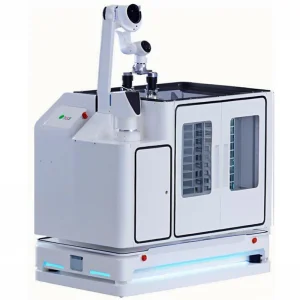
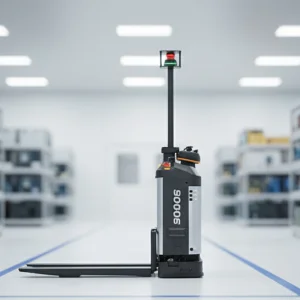
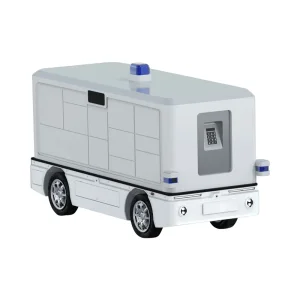
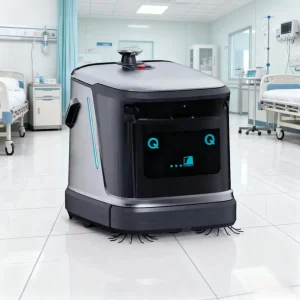
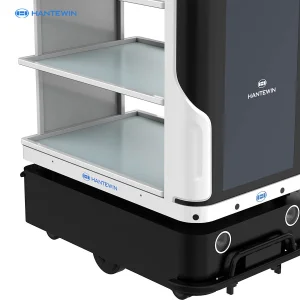
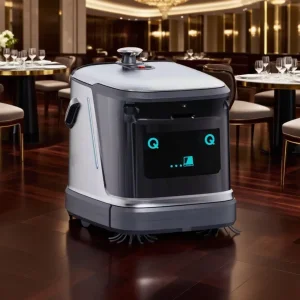
Designed for commercial cleaning, facilities inspection, and smart intralogistics inside challenging indoor environments.
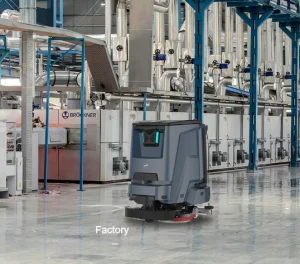
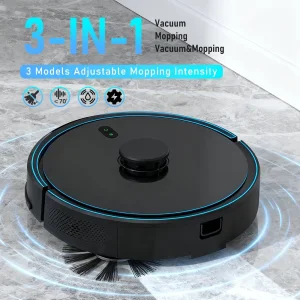
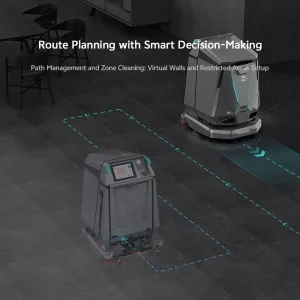
Analysis of Peru’s industrial shifts, dynamic environment challenges, and the architectural superiority of legged robotics.
As the economic heart of Peru, Lima is experiencing an unprecedented industrial modernization program. Major industrial clusters in districts like Lurín, Callao, and Villa El Salvador are rapidly transitioning from legacy logistical setups to integrated, automated intralogistics ecosystems. At the same time, commercial districts in San Isidro and Miraflores are demanding higher operational standards for multi-story office buildings, five-star hospitality facilities, and massive commercial malls (such as Jockey Plaza and Larcomar).
Traditional wheeled robotics often struggle in these spaces. Typical challenges include narrow, irregular layout configurations, steep access ramps, drainage channels in commercial kitchens, and the dust layers characteristic of Lima’s dry, coastal climate. This is where quadrupedal platforms and intelligent hybrid-wheel bases step in. Legged robots can negotiate cable channels, step over structural thresholds, climb stairs, and perform real-time thermal/visual monitoring in facilities that are functionally inaccessible to traditional automated guided vehicles (AGVs).
"By deploying advanced visual SLAM, LiDAR mapping, and dynamic gait planning, our quadruped and specialized indoor cleaning robots allow operations managers in Callao’s logistics warehouses to reduce manual patrolling risks, increase cleaning consistency, and run uninterrupted, 24/7 autonomous facility support."
Our indoor robotics portfolio has been optimized for specific enterprise requirements within metropolitan Lima:
Meet Hangzhou Excitech Technology Co., Ltd. (Stock Code: 9880.HK) — pioneer in high-performance actuators and humanoid/quadruped operating systems.
Established in March 2012, Hangzhou Excitech Technology Co., Ltd. is a leading humanoid robots and smart service robots company. On 29 December, 2023, we were listed on the main board of the Hong Kong Stock Exchange (stock code: 9880.HK), and have become the first humanoid robot company listed on Hong Kong Stock Exchange.
Dedicated to the mission of 'bringing intelligent robots into every family, and making everyday life more convenient and intelligent', we have developed a full stack of humanoid robotic technologies independently. Building on our full-stack technologies, Excitech has engaged in the research and development, design, smart production, and commercialization of smart service robots, and has developed smart robotic solutions that integrate with hardware, software, service and contents. These solutions span various industries such as AI education, smart logistics, smart elderly care, business and consumer service.
Excitech is among the few global leaders in full-stack humanoid robotics technologies. Our full-stack technologies are a holistic combination of industry-leading robotic technologies (robotic motion planning and control technology, and high performance servo actuators), our AI technologies (human-like brain function and cerebellum function), integrated robotic and AI technologies (SLAM and autonomous technology, visual servo operation and human-robot interaction), and Robot Operating System Application Framework (ROSA 2.0), our proprietary robotics application framework.

Bringing intelligent robots into every family, and making everyday life more convenient and intelligent.

With intelligent robot as the carrier and AI technology as the core, we aim to build an intelligent eco-system with hardware, software, service and content all integrated together.

Creativity, Resilience, Collaboration, Straightforwardness
Why sourcing from our vertically integrated manufacturing facility provides massive commercial benefits.
Building advanced quadrupedal hardware and state-of-the-art service robots requires a highly specialized industrial ecosystem. Operating out of our modern production facilities in China, Excitech leverages a highly integrated local component network. We manufacture our own high-performance servo actuators, structural components, and drive boards, keeping our designs highly optimized and robust while protecting our customers from global supply chain disruptions.
This deep integration translates directly to several structural advantages for our distributors and enterprise clients in Lima:
By eliminating third-party component markups, we pass down direct savings to industrial and service-industry buyers in Peru, offering premium performance at highly competitive price levels.
Need customized sensors, payload frames, or localization software layers for specific mine-to-port logistics in Callao? Our direct engineering team manages modifications in days, not months.
We maintain an extensive, active inventory of replacements—from gears and actuator joints to advanced LiDAR modules—ensuring quick transit and delivery directly to Lima facilities.
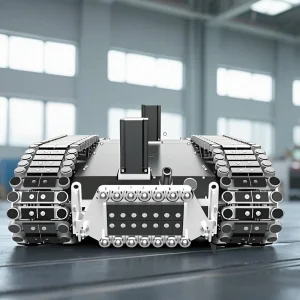
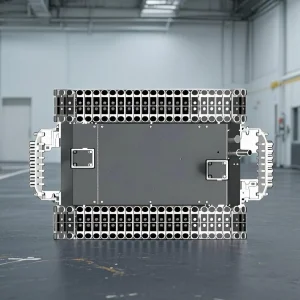
Engineered for researchers, software integrators, and industrial facility developers seeking robust mobile chassis.
Ensuring seamless deployment, operations training, and compliance with Peruvian standards.
The key challenge in quadrupedal robotics is balancing dynamic payload requirements against power consumption. Our engineering roadmap addresses this with the integration of our proprietary AI Cerebellum technology. By using deep reinforcement learning models trained on virtual terrain simulations, our quadruped platforms can adapt their gaits dynamically to changes in friction, structural vibration, and incline. This is crucial for Lima’s coastal production plants, where high humidity and fine coastal dust create slick surfaces on concrete and metal grates.
Over the next two years, Excitech’s technical roadmap includes integrating hybrid visual-inertial odometry (VIO) with multi-line LiDAR systems to maintain stable navigation in dynamic environments where structural landmarks are modified regularly.
We recognize that hardware reliability requires fast local service support. In Peru, we collaborate with certified regional automation systems integrators to offer:
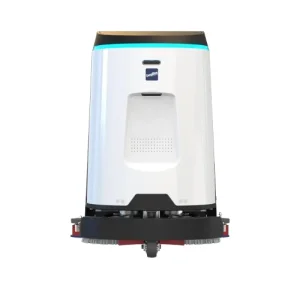
Advanced commercial, delivery, and patrol systems designed to secure and optimize high-traffic and industrial zones.

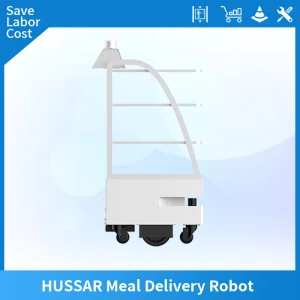
Common questions from operations managers, engineers, and distributors looking to integrate autonomous systems in Peru.
 Excitech Robot