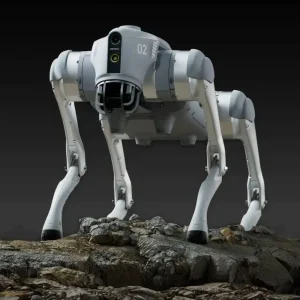
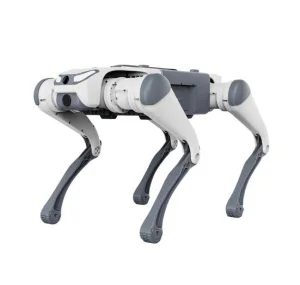
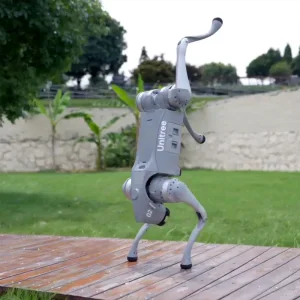
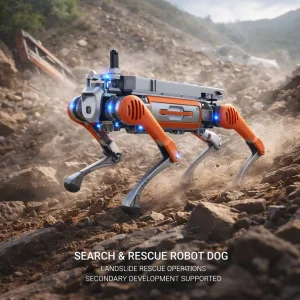
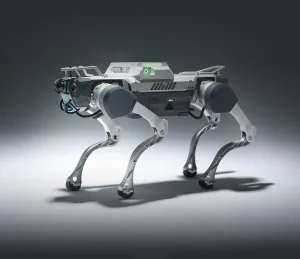
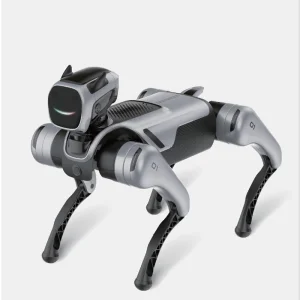
The global security landscape is undergoing a paradigm shift. Traditional surveillance systems—fixed cameras and human patrols—are increasingly being supplemented or replaced by Quadrupedal Robotic Dogs. These agile machines represent a multi-billion dollar industry that bridges the gap between static monitoring and dynamic intervention.
From the high-tech warehouses of North America to the sprawling oil refineries in the Middle East, robotic dogs for security are no longer science fiction. Market analysts predict a CAGR of over 25% for industrial quadruped robots through 2030. This growth is fueled by the need for 24/7 autonomous patrolling in hazardous environments where human presence is either too risky or too costly.
Autonomous patrolling of large industrial fences with AI-driven intrusion detection and real-time thermal alerts.
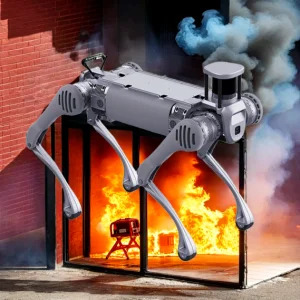
Deploying robots like the Unitree B2 into fire zones or chemical leaks to provide visual data without risking lives.
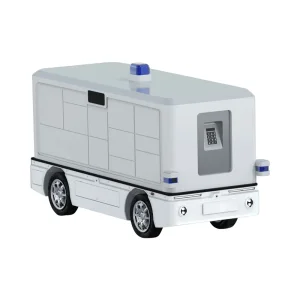
Integrating security with logistics, ensuring cargo integrity while navigating complex warehouse floors.
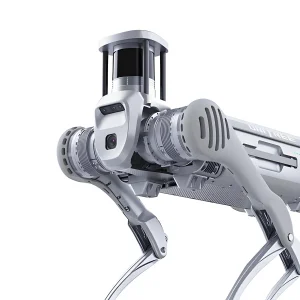
The latest trend in the robotic dog industry is the "Large Model" integration. Robots like the Unitree Go2 PRO Ai are not just programmed machines; they are intelligent agents capable of understanding complex environments through natural language processing and advanced computer vision. This allows security robots to distinguish between a stray animal and a human intruder with unprecedented accuracy.
With the rollout of 5G, robotic dogs can now stream high-definition 4K thermal video back to command centers with zero latency. Edge computing allows the robot to process data locally, making split-second decisions on whether to sound an alarm or follow a suspicious subject autonomously.
Unlike wheeled robots, quadruped robots excel in "unstructured environments." They can climb stairs, navigate rocky terrain, and operate in mud or snow. This makes them the ultimate choice for border security and remote infrastructure protection.
Robotic dogs equipped with thermal cameras can detect overheating transformers before they fail, preventing massive power outages and ensuring site security.
Providing a visible security deterrent, bionic dogs can perform scheduled night patrols in luxury residential areas, offering a "smart city" feel while enhancing safety.
In deep mines where air quality is a concern, these robots serve as the first line of defense, checking for structural integrity and gas leaks.
As a leading China robotic dog supplier and exporter, we provide a unique combination of innovation, scale, and cost-efficiency. Our Hangzhou-based manufacturing facility leverages the world's most robust electronics supply chain.

Bringing intelligent robots into every family, and making everyday life more convenient and intelligent.

With intelligent robot as the carrier and AI technology as the core, we aim to build an intelligent eco-system with hardware, software, service and content integrated.

Creativity, Resilience, Collaboration, Straightforwardness
Established in March 2012, Hangzhou Excitech Technology Co., Ltd. is a leading humanoid robots and smart service robots company. On 29 December, 2023, we were listed on the main board of the Hong Kong Stock Exchange (stock code: 9880.HK), becoming the first humanoid robot company listed there.
We have developed a full stack of humanoid and quadruped robotic technologies independently. Our solutions span AI education, smart logistics, smart elderly care, and business services. Excitech is among the few global leaders in robotic motion planning, high-performance servo actuators, and the Robot Operating System Application Framework (ROSA 2.0).
When searching for a Robotic Dog for Security Supplier, global procurement teams focus on three key metrics: Battery Life, Payload Capacity, and Software Openness. Our industrial-grade robots like the Unitree B2 offer over 4 hours of operational time and the ability to carry external sensors up to 20kg. This makes them ideal for heavy-duty industrial applications where "standard" toys fail.
The transition from manual surveillance to robotic security fleets is not just a trend; it's a strategic move toward operational resilience. By utilizing robots for routine checks, companies reduce human exposure to risks while increasing the frequency and accuracy of inspections. As the leading exporter of bionic quadruped technology, we are committed to providing the hardware that secures the world's most critical infrastructure.
 Excitech Robot