An authoritative analysis on how global engineering firms leverage customized quadrupedal, wheeled, and tracked platforms to scale field operations, mitigate risk, and secure structural data assets.
The global construction and heavy industry sectors face a multi-layered crisis: severe shortage of skilled field operators, rising insurance overheads, and stricter national safety mandates. Standard off-the-shelf automation platforms frequently fail to meet specialized environmental challenges. Heavy civil worksites require dynamic locomotion, robust payloads, and multi-sensor configurations.
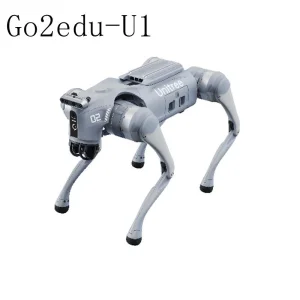
As a leading developer listed on the Hong Kong Stock Exchange (9880.HK), we supply state-of-the-art bionic quadruped robots and customized industrial systems. Our OEM/ODM capabilities enable engineering companies, EPC contractors, and system integrators to acquire customized robotic hardware configured for site conditions.
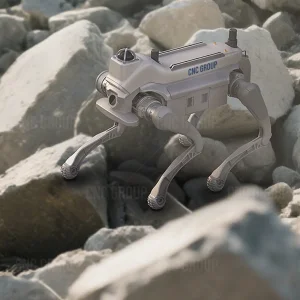
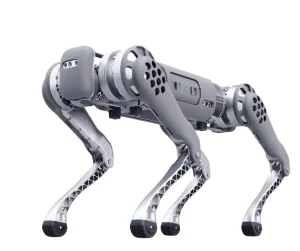
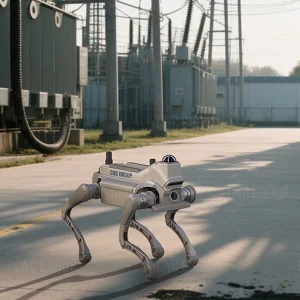
By bypassing standard developer constraints, partners leverage our deep hardware and software integration: high-performance actuators, modular IP67/IP68 chassis, and customizable sensor arrays. Our structures assist in replacing manual labor in high-hazard environments like deep drainage systems, active blasting zones, chemical storage silos, and structural testing fields.
Through our dedicated OEM design cycles, we build highly specialized models capable of handling up to 100kg payloads, negotiating steep slopes, and withstanding extreme temperature thresholds, ensuring that our systems deliver measurable field efficiency improvements.
We engineer hardware platforms to meet strict international standards, including certified IP67 and IP68 ratings, alongside explosion-proof certification. This guarantees long-term durability in high-dust, chemical-exposure, and submerged pipeline environments.
Unlike system assemblers, our platforms use our proprietary robotic framework (ROSA 2.0). We control every layer from dynamic motion planning algorithms to high-power density actuators, ensuring robust systems integration.
All OEM products are engineered under ISO 9001 and ISO 14001, carrying CE certificates. This compliance stream streamlines the regional integration process for your localized deployment.
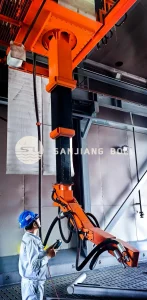
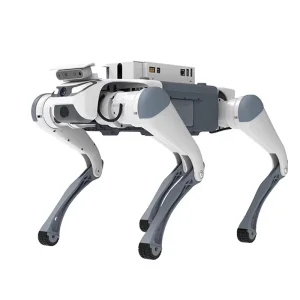
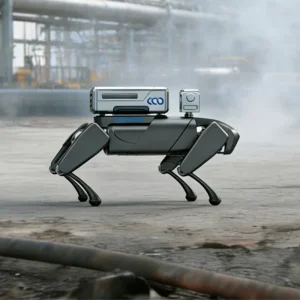
A crucial factor in global procurement selection is the platform's capacity for customization. Standard bionic quadrupeds struggle with complex payloads. Excitech addresses this by providing deep customization options for our chassis. We can modify physical mounting rails, integrate payload power connections directly to the main bus, and adjust motor drive settings for varying weight distributions. This ensures stable locomotion even when carrying specialized payloads like 3D LiDAR scanners, thermal cameras, gas sniffers, or mechanical robotic arms.
Tailored automation strategies across heavy industrial environments, municipal infrastructure, and precision agricultural applications.
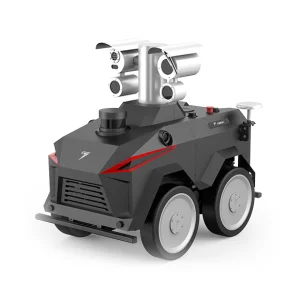
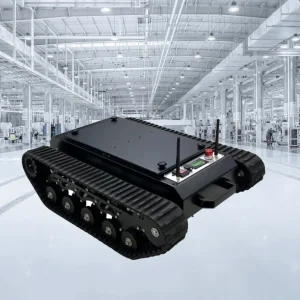
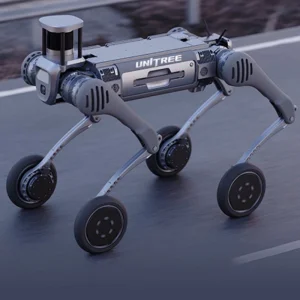
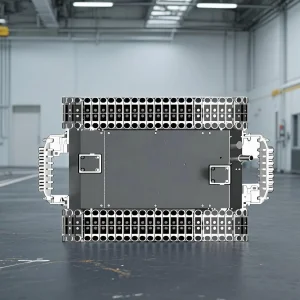
Implementing explosion-proof wheeled chassis and ATEX-certified quadruped units to conduct automated inspections in gas-heavy oil fields, chemical storage depots, and power generation substations.
Using waterproof robotic sewer crawlers and multi-sensor tracked platforms to inspect drainage pipelines, measure sediment buildup, and locate cracks without requiring human entry.
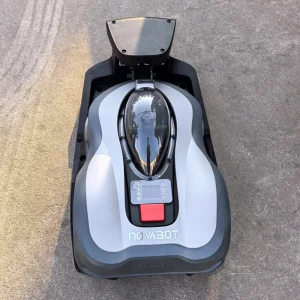
Applying all-electric, emissions-free weeding robots and environmental monitoring chassis to manage vertical farms, green houses, and soil-testing fields efficiently.
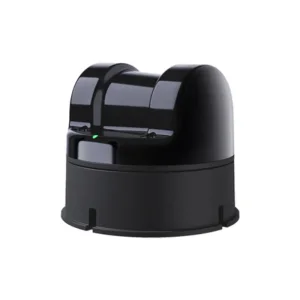
Our macro-scale solutions integrate Multi-Sensor Fusion systems combining 4D LiDAR, depth cameras, RTK-GPS, and heat mapping sensors. This allows the robots to function autonomously in GPS-denied environments like underground mines or inside steel structural frameworks. Our control systems process environmental changes in real-time, preventing collisions and maintaining optimal balance even on loose gravel or muddy slopes.
Established in March 2012, Hangzhou Excitech Technology Co., Ltd. is a leading humanoid robots and smart service robots company. On 29 December, 2023, we were listed on the main board of the Hong Kong Stock Exchange (stock code: 9880.HK), and have become the first humanoid robot company listed on Hong Kong Stock Exchange.
Our solutions span various industries such as AI education, smart logistics, smart elderly care, business and consumer service. Excitech is among the few global leaders in full-stack humanoid robotics technologies. Our full-stack technologies are a holistic combination of industry-leading robotic technologies (robotic motion planning and control technology, and high performance servo actuators), our AI technologies (human-like brain function and cerebellum function), integrated robotic and AI technologies (SLAM and autonomous technology, visual servo operation and human-robot interaction), and Robot Operating System Application Framework (ROSA 2.0).

Bringing intelligent robots into every family, and making everyday life more convenient and intelligent.

With intelligent robot as the carrier and AI technology as the core, we aim to build an intelligent eco-system with hardware, software, service and content all integrated together.

Creativity, Resilience, Collaboration, Straightforwardness
The technological trajectory of Excitech industrial automation systems from 2024 to 2026 and beyond.
We are upgrading our edge computers to run low-latency AI models directly on the robot. This enables faster real-time processing of sensor data, improving obstacle detection and decision-making on complex construction sites. We are also optimizing multi-sensor fusion algorithms to combine LiDAR, radar, and cameras for better spatial awareness in dusty or wet environments.
We are rolling out standard interfaces for physical, electrical, and software modules. This allows industrial clients to quickly swap sensor pods, tools, and power options based on their project needs. Developers can also use our updated SDKs to write custom behaviors on top of the ROSA 2.0 operating system, reducing integration time for new tools.
We are working to connect our quadruped and wheeled robot systems with advanced humanoid models. This allows heterogeneous robot teams to coordinate on complex tasks. We are also improving fleet management software to enable multi-robot scheduling, sharing of environment maps, and automated charging sequences across large-scale worksites.
Deploying robots to international construction sites requires navigating complex local regulations. Excitech products are designed and built to meet regional certifications like CE, FCC, and RoHS. For specialized hazardous environments, we offer configurations built to ATEX and IECEx standards to help speed up local safety approvals.
Our global partner network provides technical support, spare parts distribution, and scheduled maintenance. This minimizes downtime for critical machinery. We also support remote diagnostics, allowing our engineering team to troubleshoot issues online and deploy software updates directly to your fleet.
Answers to common technical, regulatory, and procurement questions from engineers, operations directors, and sourcing managers.
 Excitech Robot