The global bionic robotics market has transitioned from experimental laboratory prototypes to robust Industrial-grade commercial assets. As of 2024, the integration of Generative AI and Transformer-based architectures has empowered bionic robots to perform tasks once thought impossible. From the harsh environments of offshore oil rigs to the precision-required corridors of smart hospitals, bionic robots are redefining operational efficiency.
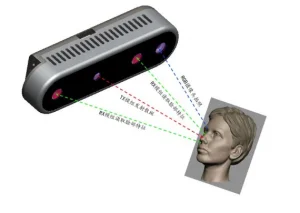
Bionic robotics is not just about mimicking biology; it is about surpassing biological limitations through high-performance servo actuators and multi-sensor fusion (LiDAR, RGB-D, Ultrasonic). Leading manufacturers are now focusing on the "Embodied AI" concept—where the robot learns from its physical environment in real-time.
A global leader in humanoid and smart service robots. Listed on the HKEX, Excitech specializes in a full-stack proprietary technology ecosystem including ROSA 2.0 and high-torque actuators. Their solutions span AI education, logistics, and elder care.
The pioneer of dynamic mobility. Known for Atlas and Spot, they set the gold standard for hydraulic and electric bionic movement, focusing on construction and public safety applications.
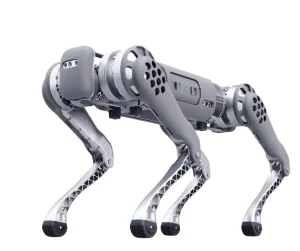
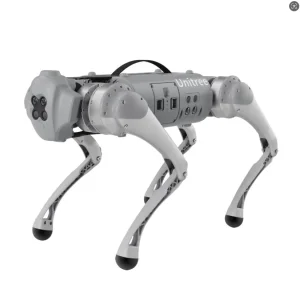
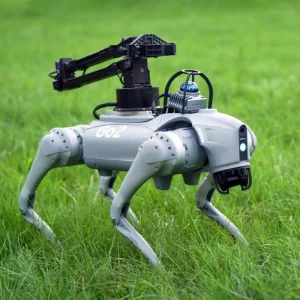
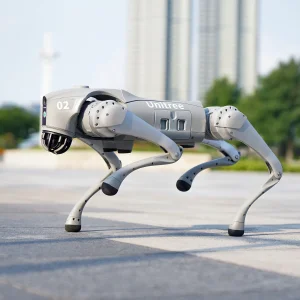
The "democratizer" of quadruped robots. Products like the Go2 and B1 demonstrate exceptional balance between cost-effectiveness and high-level AI capabilities for both consumers and industry.
Leveraging Tesla's FSD (Full Self-Driving) stack, the Optimus humanoid robot aims to solve the labor shortage in manufacturing through advanced vision neural networks and mass-production scalability.
Focused on the logistics sector, their bionic robot 'Digit' is designed to work alongside humans in warehouses, focusing on torso-heavy lifting and box handling.
A major player in the consumer bionic space, Xiaomi focuses on the integration of human-robot interaction and "emotional intelligence" within their bionic platforms.
Specializing in modular humanoid systems, their Apollo robot is built for "general purpose" versatility, focusing on ease of deployment in existing brownfield industrial sites.
A rising powerhouse backed by tech giants, focusing on deploying humanoids in the workforce to perform tasks that are dangerous or repetitive, utilizing state-of-the-art vision-language models.
Developing human-like intelligence for general-purpose robots, their Phoenix model excels in fine-motor skills and teleoperation learning.
A veteran in the Japanese market, focusing on "Co-robotics" where bionic arms and humanoid torsos assist in precision electronic assembly.
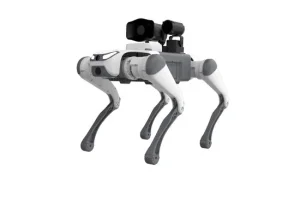
Focus on balancing, terrain traversal, and simple SLAM (Simultaneous Localization and Mapping). Primarily used for research and basic inspection.
Integration of Large Language Models (LLMs) for voice commands and Vision-Language Models (VLMs) for object recognition. Robots can now understand "context" rather than just coordinates.
Transition to "General Purpose" robots. High-density battery technology and solid-state actuators will allow 12+ hours of operation. Deployment of "Cerebellum" AI for reflexive, zero-latency obstacle avoidance.
The "Bionic Economy." Robots become as ubiquitous as smartphones, integrated into every household for cleaning, care, and complex manual labor.

Bringing intelligent robots into every family, and making everyday life more convenient and intelligent.

With intelligent robot as the carrier and AI technology as the core, we aim to build an intelligent eco-system with hardware, software, service and content all integrated together.

Creativity, Resilience, Collaboration, Straightforwardness
Established in March 2012, Hangzhou Excitech Technology Co., Ltd. is a leading humanoid robots and smart service robots company. On 29 December, 2023, we were listed on the main board of the Hong Kong Stock Exchange (stock code: 9880.HK).
Excitech is among the few global leaders in full-stack humanoid robotics technologies. Our technologies are a holistic combination of robotic motion planning, high-performance servo actuators, and AI "human-like brain" functions. Building on our full-stack technologies, we develop solutions for AI education, smart logistics, smart elderly care, and consumer services.
Our proprietary Robot Operating System Application Framework (ROSA 2.0) provides a seamless interface for developers to create complex robotic behaviors, ensuring our position at the forefront of the Industry 4.0 revolution.
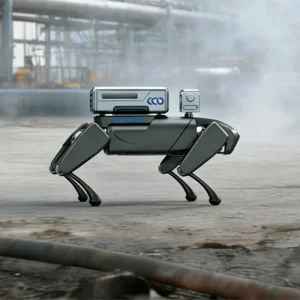
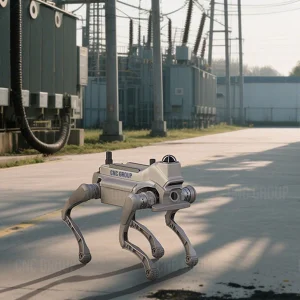
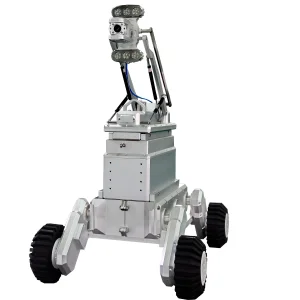
Utilizing Explosion-Proof Inspection Robots for oil and gas facilities. These units perform autonomous thermal scanning, gas leak detection, and valve status monitoring in hazardous zones without risking human lives.
Humanoid and quadruped robots handle "the last meter" of delivery. Unlike traditional AGVs, bionic robots can climb stairs, navigate cluttered aisles, and interact with human-designed interfaces.
With the global aging population, bionic assistants provide mobility support and companionship. AI-integrated sensors monitor vitals and detect falls, providing an essential safety net for smart homes.
 Excitech Robot