Basic Info.
Periods
Standard/Customized(8~36)
Length
Standard/Customized(1~50)
Product Description
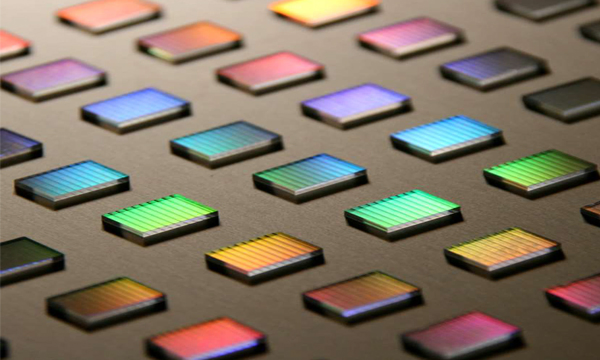
Periodically Poled Lithium Niobate (PPLN) Crystal
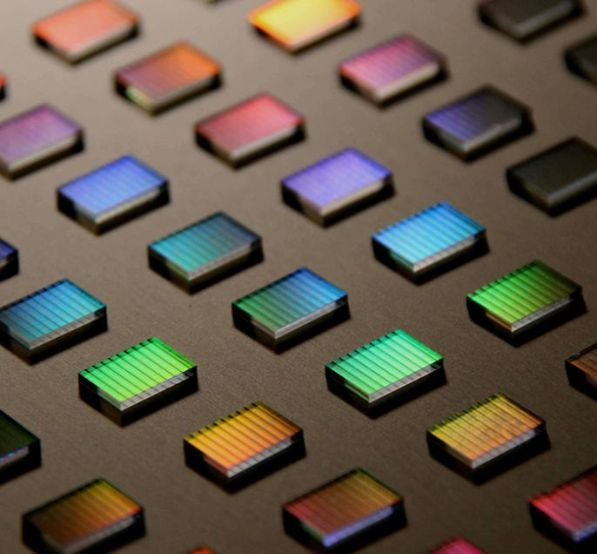
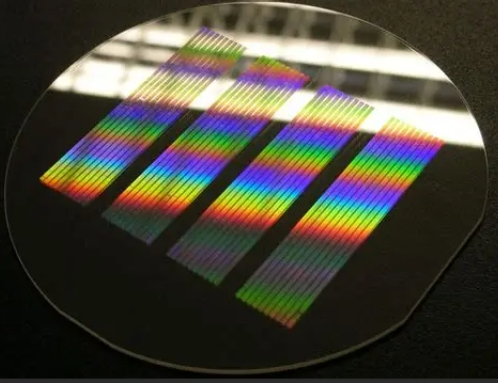
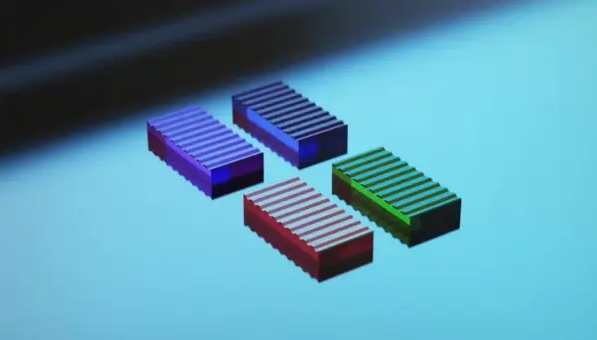
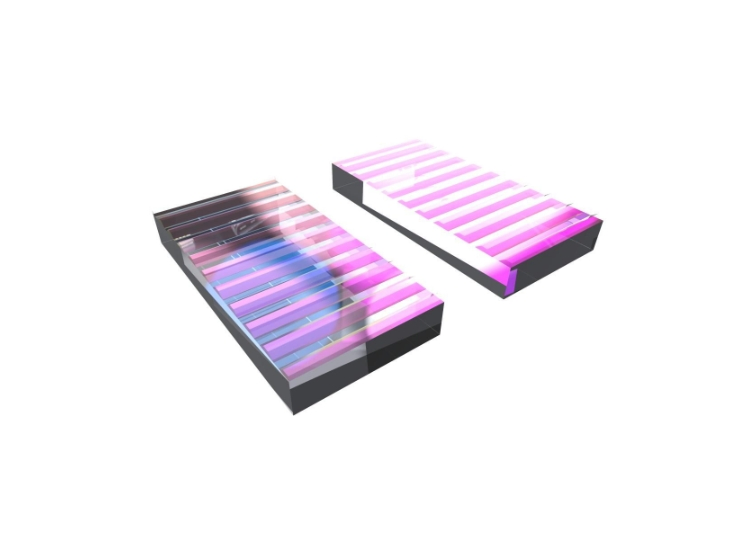
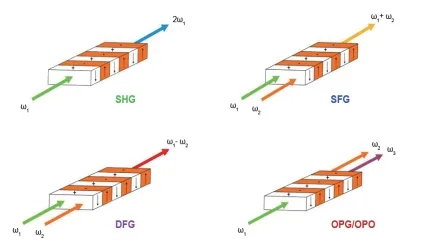
Periodically poled lithium niobate (PPLN) is a highly efficient crystal for nonlinear wavelength conversion processes, which has a wide light transmission range and covers the NIR and MIR Spectral regions. PPLN is used for SHG, SFG, OPO, and other nonlinear processes from visible to MIR.
By designing a periodic structure, output of any wavelength within the transmittance range can be achieved. MgO doping greatly improves the optical damage threshold and photorefractive threshold while maintaining a high nonlinear coefficient. Compared with standard PPLN, MgO:PPLN crystals work more stably at lower temperatures and in the visible light range.
Example Configurations
Technical Specifications
| Nonlinear Interaction |
Type |
Pump (nm) |
Output (nm) |
Periods (um) |
Temp Range (ºC) |
Length (mm) |
| SHG |
PPLN-Bulk-SHG1135 |
1120-1150 |
560-575 |
8.15 - 8.65 |
30-200 |
5-50 |
| SHG |
PPLN-Bulk-SHG1560 |
1500-1620 |
750-810 |
18.20 - 20.90 |
30-200 |
5-50 |
| SFG |
PPLN-Bulk-SFG633 |
1520-1620 & 1064 |
625-642 |
11.25 - 12.45 |
30-200 |
5-50 |
| DFG |
PPLN-Bulk-DFG3800 |
775-870 & 1064 |
2853-4771 |
20.60 - 23.30 |
30-200 |
5-50 |
Key Features
- Available wavelength from visible to MIR
- Available for SHG/SFG/DFG nonlinear frequency conversion
- Uniform periodically poled structure
- Precision end polishing and coating
- High damage threshold
Applications
- Laser Display
- MIR spectroscopy
- All-optical wavelength conversion
- Optical sensing
- Scientific Research and Medicine
- Environmental Monitoring
Product Media
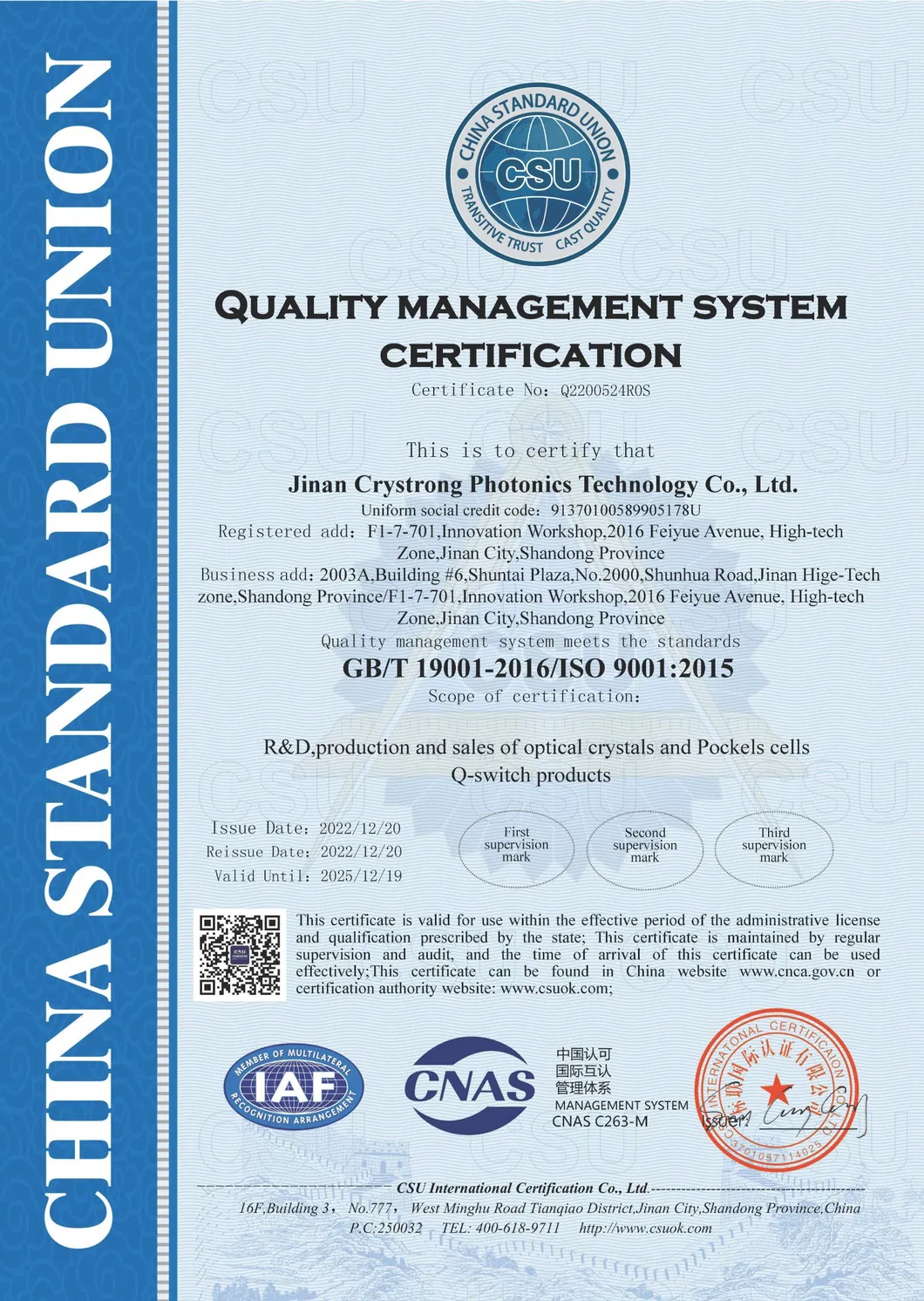
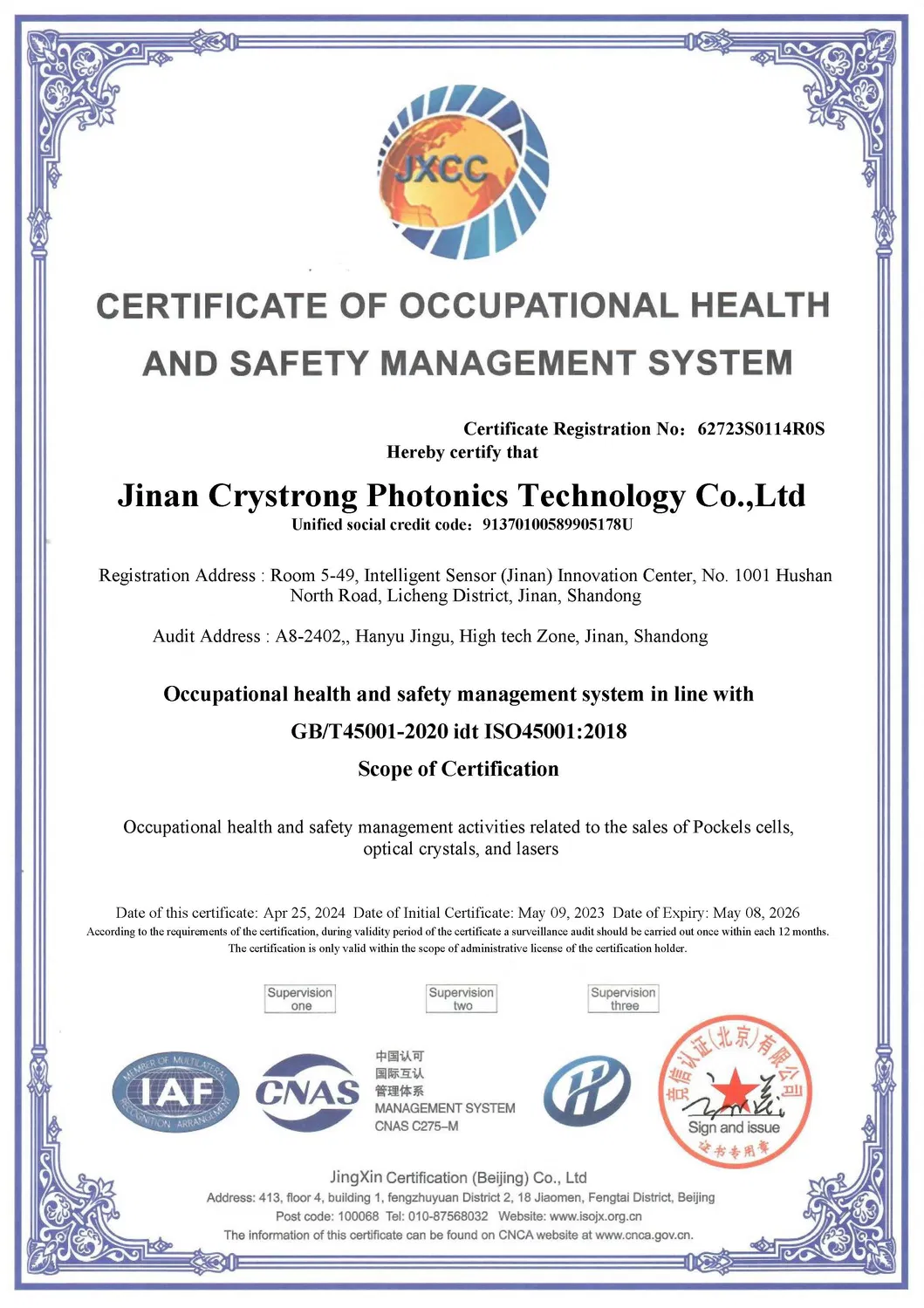
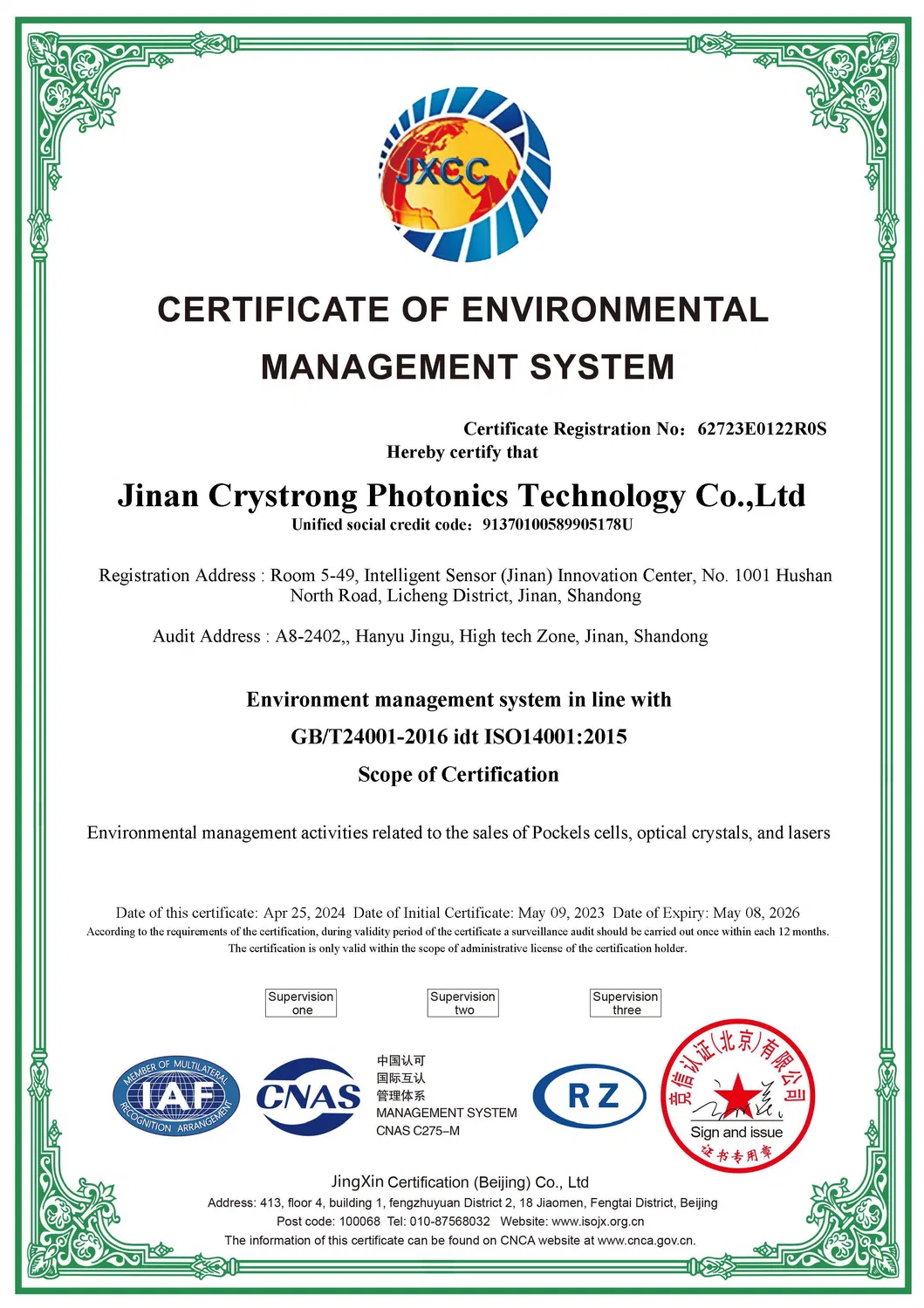
Qualification Certificates
Frequency Asked Questions (FAQ)
What is PPLN crystal used for?
PPLN is primarily used for efficient nonlinear wavelength conversion, including Second Harmonic Generation (SHG), Sum Frequency Generation (SFG), and Optical Parametric Oscillation (OPO).
What is the advantage of MgO doping in PPLN?
MgO doping significantly increases the optical damage threshold and reduces photorefractive effects, allowing the crystal to operate stably at lower temperatures.
Can the wavelength output be customized?
Yes, by designing specific periodic structures, any target wavelength within the crystal's transmission range (0.5 to 4 μm) can be achieved.
What is the effective aperture of these crystals?
The crystals maintain a high effective aperture of ≥90%, ensuring maximum efficiency for laser beam throughput.
What is the typical operating temperature range?
The standard operating temperature range is between 25ºC and 200ºC for optimal phase-matching and stability.
Are different coating designs available?
Yes, we provide custom thin-film coating designs according to specific application requirements for different laser wavelengths.
 Excitech Robot