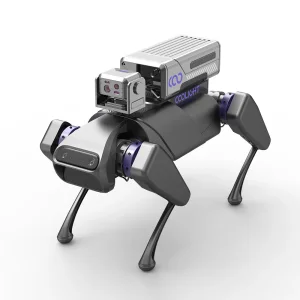
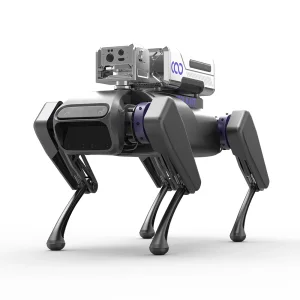
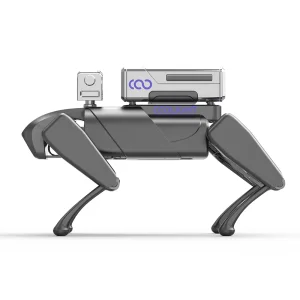
France has long been a global powerhouse in industrial innovation, from the nuclear excellence of EDF to the aerospace mastery of Airbus and the energy leadership of TotalEnergies. As the "Industrie du Futur" (Industry 4.0) initiative gains momentum across the Hexagon, the demand for specialized Inspection Quadruped Robot manufacturers and factories in France has surged. These robotic systems are no longer just laboratory curiosities; they are essential components in maintaining French industrial sovereignty and ensuring the safety of workers in complex environments.
In regions ranging from the high-tech corridors of Île-de-France to the industrial hubs of Auvergne-Rhône-Alpes, French enterprises are integrating quadruped robots into their routine workflows. The unique topography of many French industrial sites—aging infrastructure, narrow tunnels in the Paris Métro, and the verticality of Alpine hydroelectric plants—makes four-legged robots far more effective than traditional wheeled or tracked alternatives. Their ability to navigate stairs, uneven terrain, and cluttered floors allows for seamless data collection without human intervention in high-risk zones.
French Market Growth
Nuclear Safety Increase
Autonomous Patrol
France's reliance on nuclear energy makes it a primary market for radiation-resistant inspection robots. Quadruped robots equipped with specialized Geiger counters and thermal cameras can enter containment areas to detect leaks or structural anomalies, significantly reducing the radiation dose for human maintenance crews.
In the refineries of Fos-sur-Mer and Le Havre, explosive atmospheres (ATEX) are a constant concern. Modern quadruped robots are being designed with explosion-proof housings to meet stringent French and EU safety regulations, enabling autonomous monitoring of gas levels and valve status in volatile zones.
The "Grand Paris Express" project represents one of the largest infrastructure investments in Europe. Inspection quadruped robots are ideally suited for monitoring these new tunnels, navigating through construction debris and mud that would stop other robots in their tracks.

Bringing intelligent robots into every family, and making everyday life more convenient and intelligent.

With intelligent robot as the carrier and AI technology as the core, we aim to build an intelligent eco-system with hardware, software, service and content all integrated together.

Creativity, Resilience, Collaboration, Straightforwardness
Established in March 2012, Hangzhou Excitech Technology Co., Ltd. is a leading humanoid robots and smart service robots company. On 29 December, 2023, we were listed on the main board of the Hong Kong Stock Exchange (stock code: 9880.HK), and have become the first humanoid robot company listed on Hong Kong Stock Exchange.
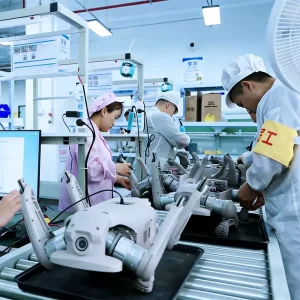
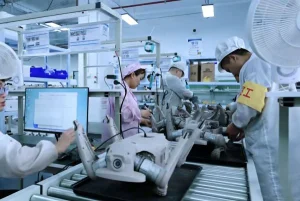
Dedicated to the mission of 'bringing intelligent robots into every family, and making everyday life more convenient and intelligent', we have developed a full stack of humanoid robotic technologies independently. Building on our full-stack technologies, Excitech has engaged in the research and development, design, smart production, and commercialization of smart service robots, and has developed smart robotic solutions that integrate with hardware, software, service and contents. These solutions span various industries such as AI education, smart logistics, smart elderly care, business and consumer service.
Excitech is among the few global leaders in full-stack humanoid robotics technologies. Our full-stack technologies are a holistic combination of industry-leading robotic technologies (robotic motion planning and control technology, and high performance servo actuators), our AI technologies (human-like brain function and cerebellum function), integrated robotic and AI technologies (SLAM and autonomous technology, visual servo operation and human-robot interaction), and Robot Operating System Application Framework (ROSA 2.0), our proprietary robotics application framework.
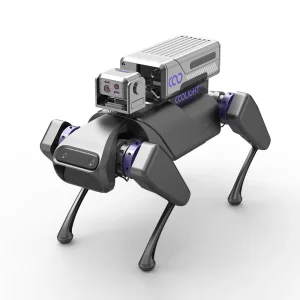
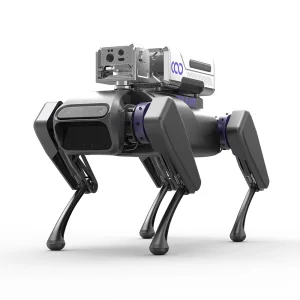
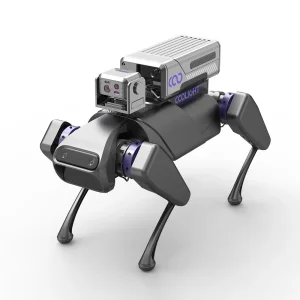
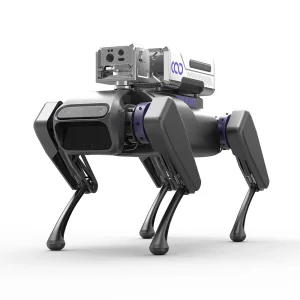
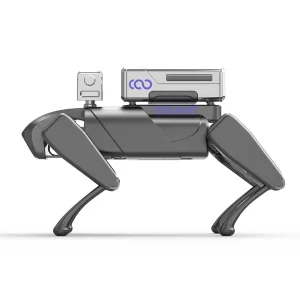
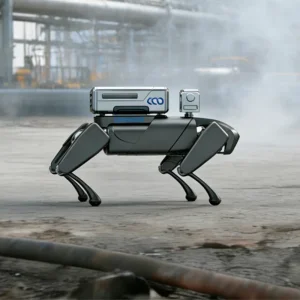
French industrial facilities are often characterized by their longevity and complexity. Unlike newer facilities in North America or Asia, French factories frequently utilize historical sites retrofitted with modern technology. This presents a unique challenge: stairs, narrow passages, and uneven flooring. The quadruped inspection robot, often referred to as a "robot dog," excels where wheels fail. By mimicking biological movement, these robots maintain stability on slippery surfaces common in French maritime or food processing plants.
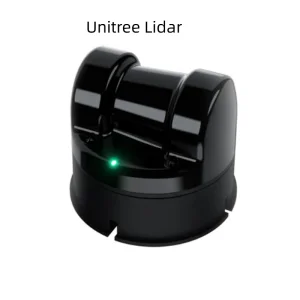
The integration of AI is where modern manufacturers distinguish themselves. Using SLAM (Simultaneous Localization and Mapping) technology, our robots create real-time 3D maps of French industrial sites. This allows for fully autonomous navigation even in GPS-denied environments like deep underground parking structures or within the massive halls of aeronautical assembly lines in Toulouse.
While large corporations like Saint-Gobain are early adopters, French Small and Medium Enterprises (SMEs) are also seeing the value. By automating the routine patrol of perimeters and the thermal monitoring of electrical panels, companies can reallocate human resources to higher-value tasks, addressing the skilled labor shortage currently affecting the French manufacturing sector.
Our quadruped solutions are helping French industries achieve unprecedented levels of safety and operational efficiency. Contact our specialists today to learn how our AI-powered robots can be integrated into your facility.
Send Inquiry Now Excitech Robot