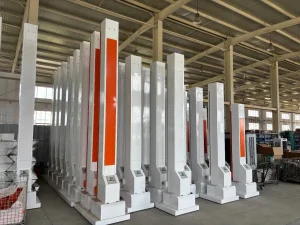
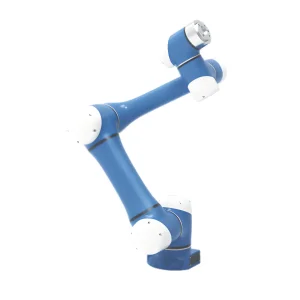
The global market for lightweight quadruped robots has witnessed an unprecedented explosion in demand over the last five years. Once the stuff of science fiction or limited to high-end research laboratories like MIT or Boston Dynamics, "robotic dogs" are now a common sight in industrial plants, construction sites, and urban environments. As leading quadruped robot exporters, we have observed a shift from curiosity to core utility. Today, these machines are integral to the digital transformation of industries worldwide.
In North America and Europe, the emphasis is heavily on "Smart Cities" and autonomous infrastructure monitoring. In contrast, the Asia-Pacific region, led by China's manufacturing prowess, has focused on democratizing the technology—making lightweight quadruped robot factories more efficient and the final products more affordable for small-to-medium enterprises (SMEs). This democratization is driving the expansion into new sectors such as facility management, last-mile delivery, and even personal assistance.
As we move into the middle of the decade, several key trends are shaping the future of four-legged robotics:
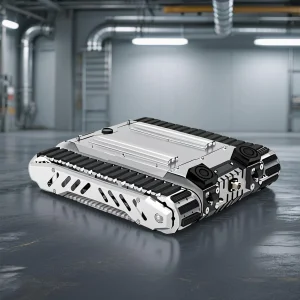
Our featured Lightweight Inspection Robot is the pinnacle of localized patrolling technology. Designed specifically for indoor facilities, it navigates complex corridors with ease, carrying high-definition sensors to detect gas leaks, heat anomalies, or security breaches. Its lightweight frame ensures it can be easily transported between sites by a single operator, making it the preferred choice for data centers and power substations.
International buyers from the Middle East, Southeast Asia, and South America are increasingly looking for reliable quadruped robot exporters who can provide more than just hardware. The current procurement landscape demands:
Research institutions and tech firms require robots that support ROS (Robot Operating System). They want the ability to write their own algorithms for gait control and SLAM (Simultaneous Localization and Mapping). Our factory addresses this by providing open API access and customizable mounting holes on our chassis.
In regions like the Middle East, robots must withstand high temperatures and sand. Procurement agents are prioritizing IP-rated (Ingress Protection) designs that can handle dust and moisture without compromising the delicate internal electronics.
While the initial purchase price is important, savvy exporters highlight the low maintenance costs of lightweight models. Fewer moving parts and modular designs mean that if a single motor fails, it can be replaced in the field without returning the entire unit to the factory.
Hangzhou and Shenzhen have become the global epicenters of robotic innovation. Partnering with a China-based lightweight quadruped robot factory like Excitech offers several strategic advantages:
First, our Supply Chain Integration is unmatched. We have immediate access to specialized high-torque servo actuators, carbon fiber manufacturers, and AI chip designers within a 50-mile radius. This allows us to move from prototype to mass production in months rather than years.
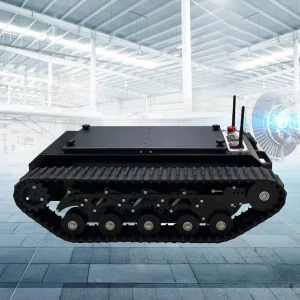
For universities and STEM programs, we offer the Lightweight Educational Tracked Robot Chassis. While it shares the "lightweight" philosophy of our quadruped line, its tracked system provides a stable platform for students to master Raspberry Pi integration and sensor fusion. This product exemplifies our commitment to building the talent pool for the future of the robotics industry.
Second, the Cost-to-Performance Ratio. By leveraging economies of scale, we can offer industrial-grade quadruped solutions at a fraction of the cost of Western competitors, without sacrificing quality. This enables large-scale deployments where companies might buy a fleet of 50 robots instead of just 2 or 3.

Bringing intelligent robots into every family, and making everyday life more convenient and intelligent.

With intelligent robot as the carrier and AI technology as the core, we aim to build an intelligent eco-system with hardware, software, service and content all integrated together.

Creativity, Resilience, Collaboration, Straightforwardness
Established in March 2012, Hangzhou Excitech Technology Co., Ltd. is a leading humanoid robots and smart service robots company. On 29 December, 2023, we were listed on the main board of the Hong Kong Stock Exchange (stock code: 9880.HK), becoming the first humanoid robot company listed on the HKEX.
Dedicated to the mission of 'bringing intelligent robots into every family', we have developed a full stack of humanoid and quadruped robotic technologies independently. Our solutions span various industries such as AI education, smart logistics, smart elderly care, and consumer service. Excitech is among the few global leaders in robotic motion planning, high-performance servo actuators, and the Robot Operating System Application Framework (ROSA 2.0).
When we discuss "lightweight" in the context of industrial quadruped robots, we are referring to a complex optimization of the strength-to-weight ratio. For a robot to be effective, its skeleton must be rigid enough to support payloads and handle the dynamic forces of running, yet light enough to conserve energy.
The "muscles" of our robots are high-torque density servo motors. Unlike standard industrial motors, these are designed for high transparency—meaning they can feel external forces and react (force control). This is what allows a quadruped robot to maintain balance on uneven rubble or ice. Our factory specializes in the mass production of these specialized actuators, ensuring each unit meets the rigorous demands of 24/7 operation.
A robot is only as good as its eyes. Our lightweight models utilize a combination of LiDAR (Light Detection and Ranging) and Depth Cameras. By employing SLAM algorithms, the robot builds a map of its environment as it moves, identifying "no-go zones" and optimizing its path. For global exporters, this means our robots can be deployed in environments where GPS is unavailable, such as underground mines or reinforced concrete warehouses.
In the era of the Industrial Internet of Things (IIoT), connectivity is paramount. Our robots support 5G and Wi-Fi 6, allowing them to stream high-bandwidth sensor data back to a central command center. This "Human-Robot Interaction" ensures that even while the robot is operating autonomously, a human supervisor can take remote control if a critical decision is needed.
The combination of these technologies makes our factory a leading force in the Lightweight Quadruped Robot market, providing tools that are not just machines, but intelligent partners in modern industry.
 Excitech Robot