Explore our premium range of industrial, municipal, and autonomous robotic technologies designed for challenging environments.
As offshore exploration, subsea asset maintenance, and marine scientific research expand rapidly, the reliance on high-performance custom underwater robots and specialized inspection equipment has reached historic highs. Industries are transitioning from basic tethered systems to semi-autonomous and fully autonomous unmanned platforms designed to operate in extreme depths, high-current environments, and highly volatile industrial facilities.
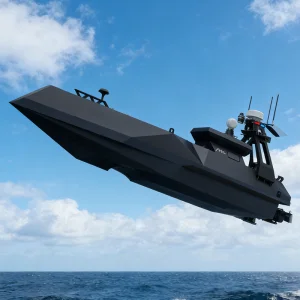
In modern oceanic operations, unmanned surface vessels (USVs) and remotely operated vehicles (ROVs) work in unison to perform complex deep-sea mapping and real-time data acquisition. The integration of 4D LiDAR, acoustic telemetry, and multi-sensor navigation suites allows operations in highly turbid conditions where visual clarity is minimal. This is highly reflected in platforms like our Advanced Deep-Ocean Environmental Monitoring Platform Unmanned Vessel, which serves as a remote command bridge for deep underwater monitoring gear.
Enterprise procurement departments within the offshore wind sector, municipal water management, and the oil and gas industries seek custom robotic systems that offer:
Hangzhou Excitech Technology Co., Ltd. sits at the forefront of China's Industry 4.0 automation wave. By leveraging localized micro-component ecosystems, state-of-the-art metal 3D printing, and automated PCB assembly lines, we guarantee a highly resilient supply chain that mitigates the vulnerabilities typical of legacy subsea hardware manufacturing.
Our intelligent factory implements end-to-end trace control, utilizing a complete stack of independently developed technologies. By integrating robotic motion planning, high-performance servo actuators, and artificial intelligence into the manufacturing loop, we slash R&D-to-delivery timelines by over 30% compared to Western counterparts. This enables our enterprise buyers to rapidly deploy custom modifications for specific subsea, terrestrial inspection, and cleaning challenges.
Engineered to inspect underwater piping, offshore oil rigs, and deep-sea telecommunication cable pathways with high-resolution acoustic imaging.
Optimized for structural integrity checks of offshore wind farm pylons, dynamic cable paths, and reservoir siltation monitoring.
Equipped with scientific payload arrays to track marine ecosystems, salinity levels, thermoclines, and deep-sea geological phenomena.
A Global Leader in Humanoid, Industrial, and Smart Service Robotics listed on the HKEX (Stock Code: 9880.HK)
Established in March 2012, Hangzhou Excitech Technology Co., Ltd. is a leading humanoid robots and smart service robots company. On 29 December, 2023, we were listed on the main board of the Hong Kong Stock Exchange (stock code: 9880.HK), and have become the first humanoid robot company listed on Hong Kong Stock Exchange.
Dedicated to the mission of 'bringing intelligent robots into every family, and making everyday life more convenient and intelligent', we have developed a full stack of humanoid robotic technologies independently. Building on our full-stack technologies, Excitech has engaged in the research and development, design, smart production, and commercialization of smart service robots, and has developed smart robotic solutions that integrate with hardware, software, service and contents. These solutions span various industries such as AI education, smart logistics, smart elderly care, business and consumer service.
Excitech is among the few global leaders in full-stack humanoid robotics technologies. Our full-stack technologies are a holistic combination of industry-leading robotic technologies (robotic motion planning and control technology, and high performance servo actuators), our AI technologies (human-like brain function and cerebellum function), integrated robotic and AI technologies (SLAM and autonomous technology, visual servo operation and human-robot interaction), and Robot Operating System Application Framework (ROSA 2.0), our proprietary robotics application framework.

Bringing intelligent robots into every family, and making everyday life more convenient and intelligent.

With intelligent robot as the carrier and AI technology as the core, we aim to build an intelligent eco-system with hardware, software, service and content all integrated together.

Creativity, Resilience, Collaboration, Straightforwardness
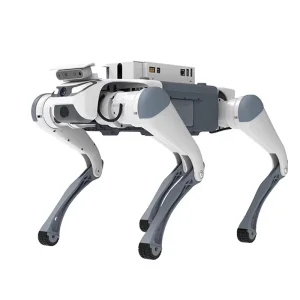
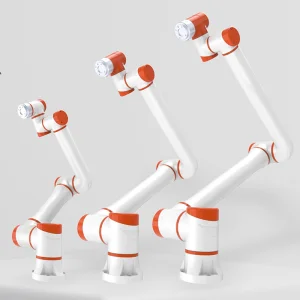
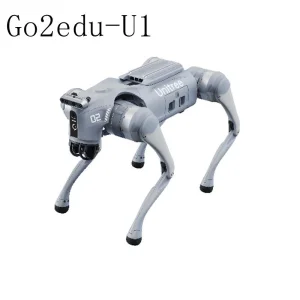
Discover our specialized aquatic, indoor-hygiene, and advanced research quadruped solutions designed for next-generation automation.
In-depth responses resolving engineering questions about custom subsea deployments and environmental cleaning systems.
Deep-sea systems rely on a hybrid telemetry framework. When real-time video feed is essential, tethered optical fibers are deployed to prevent signal degradation. For untethered autonomous vessels (AUVs), acoustic telemetry and long-range sub-surface pingers are used alongside high-frequency sonar systems (such as side-scan or multi-beam sonars) to navigate and reconstruct environmental data without relying on optical visibility.
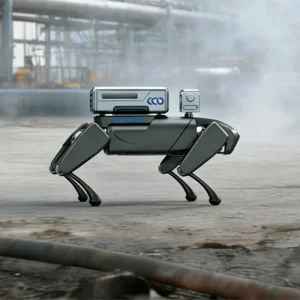
Yes. Our design framework allows for custom configurations conforming to explosion-proof directives (such as ATEX / IECEx). This is critical for inspection and maintenance robots deployed in oil and gas refineries, petrochemical storage tanks, and municipal structures filled with volatile bio-gases. Special pressure-sealed chambers and non-sparking materials are used in construction.
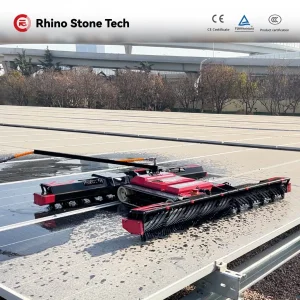
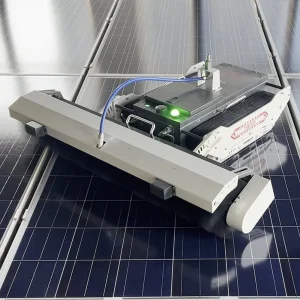
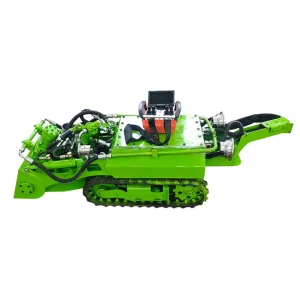
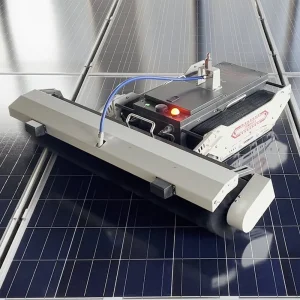
Tracked or crawler-type undercarriages maximize surface area contact, lowering the ground pressure exerted on delicate solar panels or unstable underwater mud layers. In solar cleaning operations, track-style robots distribute their weight evenly to prevent micro-cracks on the panels. For desilting applications, tracks prevent the robot from sinking into soft silt beds, providing reliable traction to push heavy debris and mud layers.
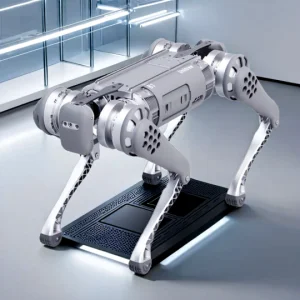
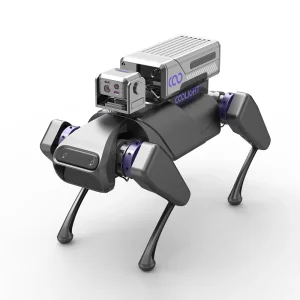
We provide comprehensive software development kits (SDKs) and full ROS/ROS2 (Robot Operating System) compatibility across our research-oriented platforms, including our programmable quadruped and unmanned research vessels. This allows engineering teams to design and test custom computer-vision pipelines, implement unique SLAM (Simultaneous Localization and Mapping) configurations, and control custom sensor payloads natively.
 Excitech Robot