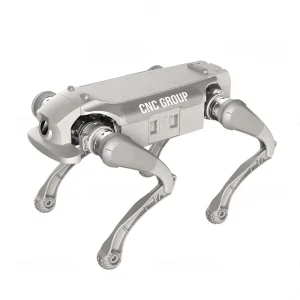
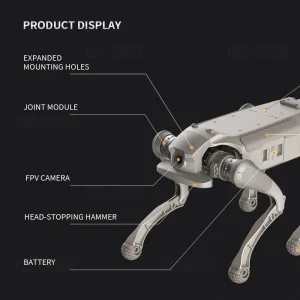
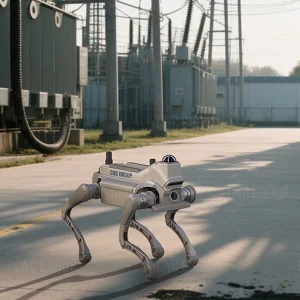
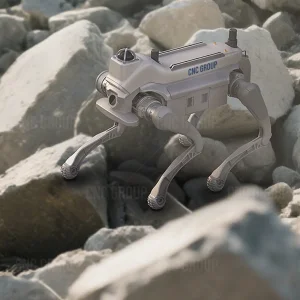
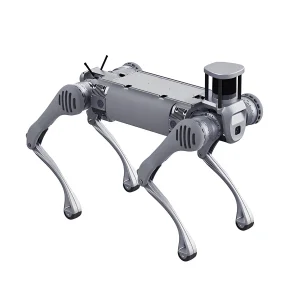
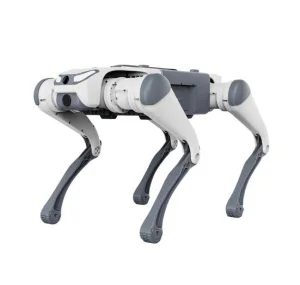
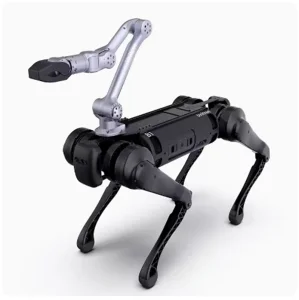
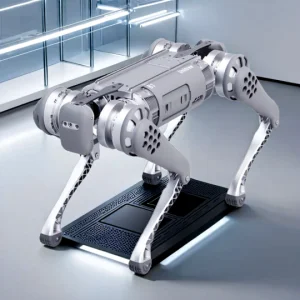
The global market for Night Vision Quadruped Robots has entered a phase of exponential growth. Traditionally, surveillance in low-light environments relied on static CCTV systems, but the demand for mobility has birthed a new era of four-legged bionic guardians. As of 2024, the integration of Thermal Imaging (FLIR), Lidar SLAM, and Infrared (IR) technology into quadruped platforms has revolutionized industries ranging from national defense to infrastructure management.
Total darkness is no longer a barrier. Our robots utilize advanced sensors to navigate complex terrains at night without human intervention.
Optimized power management systems allow for extended patrol cycles, covering over 10km on a single charge in sub-zero temperatures.
Real-time processing of visual data allows for instant threat detection and facial recognition even in pitch-black conditions.
Modern night vision quadrupeds are moving away from simple IR cameras. The trend is Multi-Spectral Fusion, where thermal data is overlaid onto high-definition 3D LIDAR maps. This allows operators to see "heat signatures" with spatial precision, identifying equipment overheating or human intruders behind foliage.
Manufacturing facilities and large-scale factories are now procuring "packs" of robot dogs. These units communicate via 5G networks, coordinating their movements to cover massive perimeters without overlapping, ensuring 100% visibility at all times.
The "one-size-fits-all" approach is dying. Factories are now requesting specialized payloads, such as gas leak detectors for night-time chemical plant inspections or water-resistant coatings for rainy night operations.
Global Partners
Active Support
Accuracy Rate
Patents Owned
The procurement demand from the Middle East, North America, and Europe has shifted toward high-reliability, low-maintenance bionic systems. Companies are no longer looking for "gadgets"; they are looking for ROI-driven industrial tools.
Inspecting pipelines in the dead of night requires thermal sensitivity to detect leaks that the human eye would miss. Our quadrupeds provide the perfect mobile sensor platform for these hazardous zones.
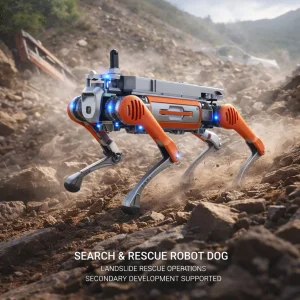
In the aftermath of natural disasters, night operations are the most critical. Bionic dogs can enter unstable buildings at night, using night vision to find survivors and relaying coordinates to rescue teams.
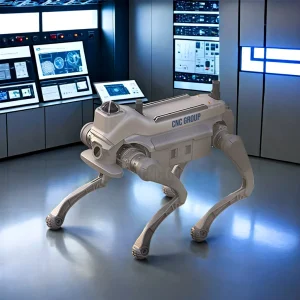
Monitoring heat signatures in server rooms 24/7. Our robots detect potential fire hazards before they escalate, preventing millions in potential data loss.
Based in Hangzhou, the heart of China's technological innovation, Excitech Technology combines the world's most robust supply chain with cutting-edge AI research. Why source from our factory?

Bringing intelligent robots into every family, and making everyday life more convenient and intelligent.

With intelligent robot as the carrier and AI technology as the core, we aim to build an intelligent eco-system with hardware, software, service and content all integrated together.

Creativity, Resilience, Collaboration, Straightforwardness
Established in March 2012, Hangzhou Excitech Technology Co., Ltd. is a leading humanoid robots and smart service robots company. On 29 December, 2023, we were listed on the main board of the Hong Kong Stock Exchange (stock code: 9880.HK), and have become the first humanoid robot company listed on Hong Kong Stock Exchange.
Dedicated to our mission, we have developed a full stack of humanoid robotic technologies independently. Building on our full-stack technologies, Excitech has engaged in the research and development, design, smart production, and commercialization of smart service robots, and has developed smart robotic solutions that integrate with hardware, software, service and contents. These solutions span various industries such as AI education, smart logistics, smart elderly care, business and consumer service.
Excitech is among the few global leaders in full-stack humanoid robotics technologies. Our full-stack technologies are a holistic combination of industry-leading robotic technologies (robotic motion planning and control technology, and high performance servo actuators), our AI technologies (human-like brain function and cerebellum function), integrated robotic and AI technologies (SLAM and autonomous technology, visual servo operation and human-robot interaction), and Robot Operating System Application Framework (ROSA 2.0), our proprietary robotics application framework.
 Excitech Robot