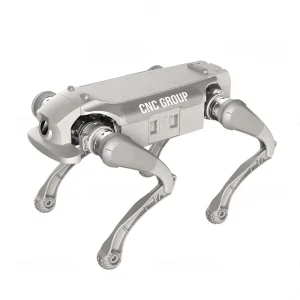
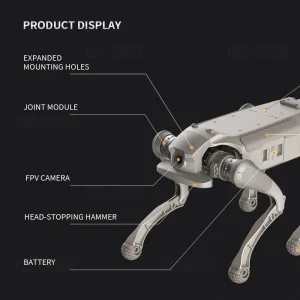
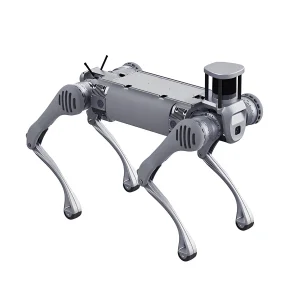
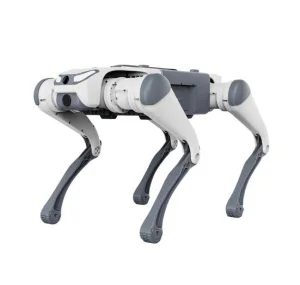
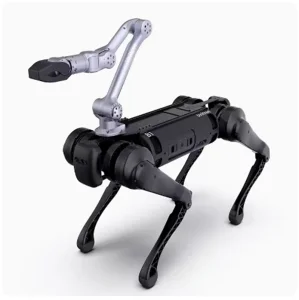
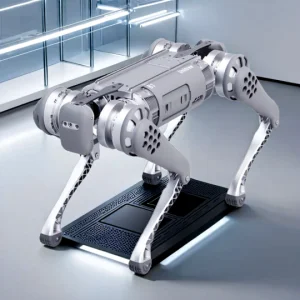
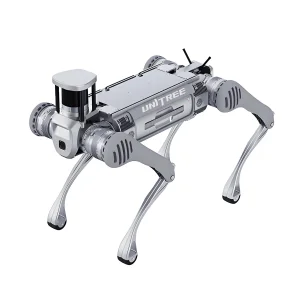
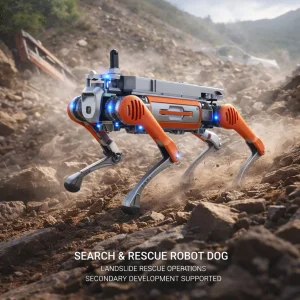
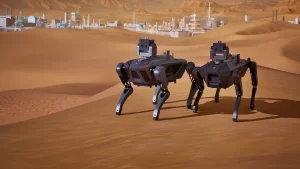
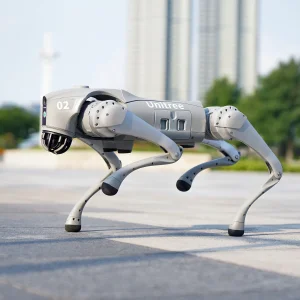
The integration of Building Information Modeling (BIM) with quadruped robotic platforms marks a pivotal shift in the architectural, engineering, and construction (AEC) industries. As a premier BIM scanning quadruped factory, we are witnessing an unprecedented demand for autonomous systems that can navigate complex, unstructured environments to deliver millimetric precision data.
From the high-rises of Manhattan to the expansive infrastructure projects in the Middle East, BIM quadruped robots are becoming indispensable. They replace manual surveying, reducing human error and significantly cutting down project timelines. The global market is expanding at a CAGR of over 25%, driven by the need for "Digital Twins" in facility management.
The current trend is moving toward Edge AI and 5G connectivity. Modern quadruped robots are no longer just "remote-controlled dogs"; they are mobile edge computing units capable of real-time SLAM (Simultaneous Localization and Mapping) and instantaneous data upload to cloud-based BIM platforms like Autodesk Revit and Navisworks.
International procurement teams are prioritizing robots with high payload capacity (to carry LiDAR scanners and thermal cameras), IP-rated durability for harsh construction sites, and open-source API compatibility for custom software integration. Our factory addresses these needs with a focus on ruggedized hardware and modular payloads.
Automated nightly scans of construction sites allow project managers to compare "As-Built" data against "As-Designed" models. This immediate discrepancy detection saves millions in potential rework costs.
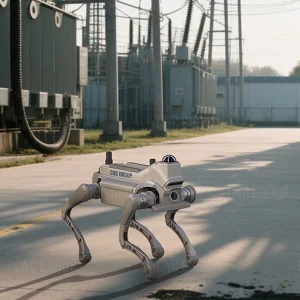
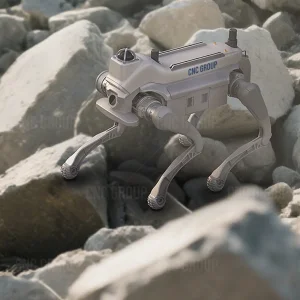
In nuclear power plants or chemical refineries, BIM scanning quadrupeds navigate stairs and obstacles where wheeled robots fail, ensuring site integrity without risking human lives.
Capturing high-resolution 3D point clouds of ancient architecture requires steady, non-intrusive movement. Quadruped robots provide the stability needed for delicate historical preservation scanning.
As a leading Chinese factory based in the heart of the global robotics supply chain, we offer unique advantages that Western counterparts cannot match:
Our robots undergo rigorous testing including vibration, extreme temperature, and water-resistance trials. This makes us the top choice for international firms looking for a reliable BIM scanning quadruped factory.

Bringing intelligent robots into every family, and making everyday life more convenient and intelligent.

With intelligent robot as the carrier and AI technology as the core, we aim to build an intelligent eco-system with hardware, software, service and content all integrated together.

Creativity, Resilience, Collaboration, Straightforwardness
Established in March 2012, Hangzhou Excitech Technology Co., Ltd. is a leading humanoid robots and smart service robots company. On 29 December, 2023, we were listed on the main board of the Hong Kong Stock Exchange (stock code: 9880.HK), and have become the first humanoid robot company listed on Hong Kong Stock Exchange.
Dedicated to the mission of 'bringing intelligent robots into every family, and making everyday life more convenient and intelligent', we have developed a full stack of humanoid robotic technologies independently. Building on our full-stack technologies, Excitech has engaged in the research and development, design, smart production, and commercialization of smart service robots, and has developed smart robotic solutions that integrate with hardware, software, service and contents. These solutions span various industries such as AI education, smart logistics, smart elderly care, business and consumer service.
Excitech is among the few global leaders in full-stack humanoid robotics technologies. Our full-stack technologies are a holistic combination of industry-leading robotic technologies (robotic motion planning and control technology, and high performance servo actuators), our AI technologies (human-like brain function and cerebellum function), integrated robotic and AI technologies (SLAM and autonomous technology, visual servo operation and human-robot interaction), and Robot Operating System Application Framework (ROSA 2.0), our proprietary robotics application framework.
 Excitech Robot