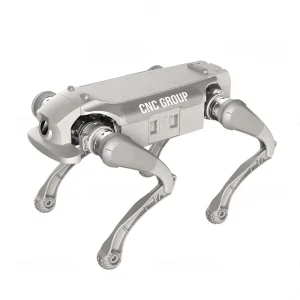
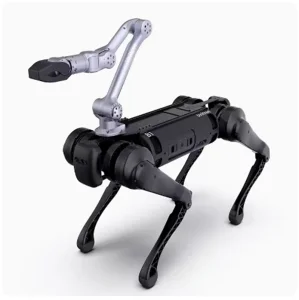
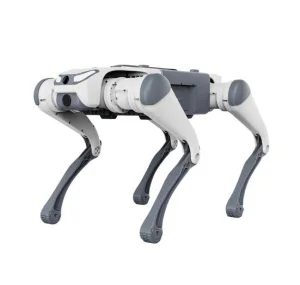
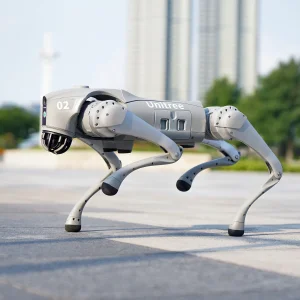
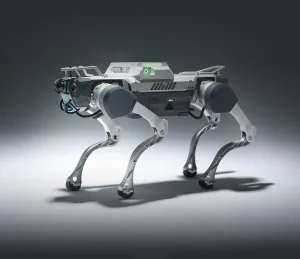
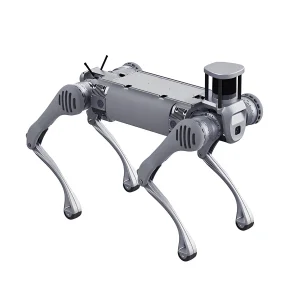
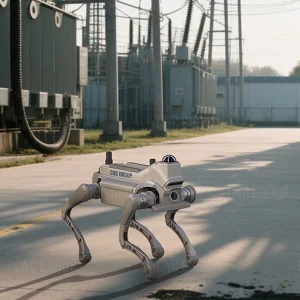
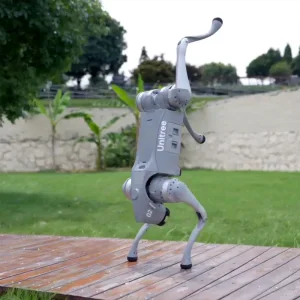
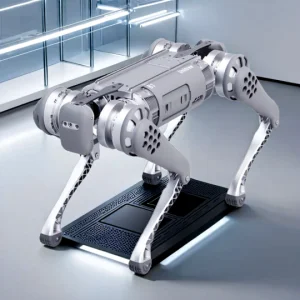
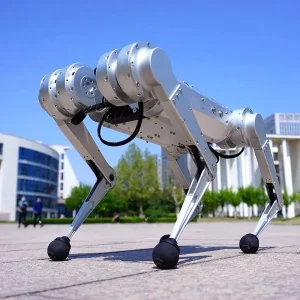
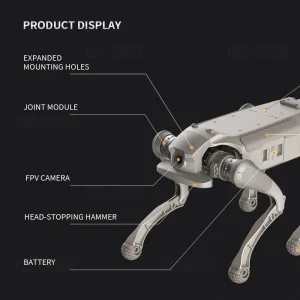
The landscape of AI-powered quadruped robots has evolved from laboratory prototypes into high-performance industrial assets. Across the globe, these "robot dogs" are no longer just technological novelties; they are critical tools for complex environment navigation, industrial inspection, and emergency response. From the rugged terrains of mining operations in Australia to the precise monitoring of electrical substations in Europe, quadruped robots are proving their worth by performing tasks that are too dangerous or repetitive for humans.
Leading quadruped robot factories are now integrating advanced Large Language Models (LLMs) and Edge AI to provide robots with real-time decision-making capabilities. This shift has catalyzed the growth of the market, with a projected CAGR of over 25% in the next five years. Industries such as oil and gas, construction, and logistics are leading the demand, seeking robots that can carry heavy payloads, endure extreme weather, and operate autonomously for extended periods.
Annual Growth Rate
Global Deployments
Standard Protection
Max Payload Capacity
The integration of ChatGPT-like models into quadruped robots allows for natural language interaction, enabling non-technical staff to command robots using simple voice instructions.
Transitioning from basic LiDAR to multi-sensor fusion (3D LiDAR + Depth Cameras) ensures centimeter-level mapping accuracy in GPS-denied environments like tunnels.
Factories are focusing on high-density battery technology and lightweight carbon-fiber frames to extend operational time from 2 hours to over 5 hours of continuous motion.
Enterprises worldwide are looking for more than just hardware; they require a comprehensive robotic ecosystem. Procurement needs have shifted towards "Platform-as-a-Service" models where the robot factory provides the hardware, API for secondary development, and ongoing cloud support. Localized application scenarios are diverse:
Located in Hangzhou, the heart of China's tech hub, we have immediate access to world-class motor, sensor, and chip manufacturers, ensuring rapid prototyping and production.
Our vertical integration allows us to offer industrial-grade quadruped robots at 40-60% of the cost of Western competitors without compromising on precision or durability.
Our engineering teams operate on a 24/7 cycle, allowing us to push firmware updates and hardware refinements significantly faster than the industry average.

Bringing intelligent robots into every family, and making everyday life more convenient and intelligent.

With intelligent robot as the carrier and AI technology as the core, we aim to build an intelligent eco-system with hardware, software, service and content all integrated together.

Creativity, Resilience, Collaboration, Straightforwardness
Established in March 2012, Hangzhou Excitech Technology Co., Ltd. is a leading humanoid robots and smart service robots company. On 29 December, 2023, we were listed on the main board of the Hong Kong Stock Exchange (stock code: 9880.HK), and have become the first humanoid robot company listed on Hong Kong Stock Exchange.
Dedicated to the mission of 'bringing intelligent robots into every family, and making everyday life more convenient and intelligent', we have developed a full stack of humanoid robotic technologies independently. Building on our full-stack technologies, Excitech has engaged in the research and development, design, smart production, and commercialization of smart service robots, and has developed smart robotic solutions that integrate with hardware, software, service and contents. These solutions span various industries such as AI education, smart logistics, smart elderly care, business and consumer service.
Excitech is among the few global leaders in full-stack humanoid robotics technologies. Our full-stack technologies are a holistic combination of industry-leading robotic technologies (robotic motion planning and control technology, and high performance servo actuators), our AI technologies (human-like brain function and cerebellum function), integrated robotic and AI technologies (SLAM and autonomous technology, visual servo operation and human-robot interaction), and Robot Operating System Application Framework (ROSA 2.0).
 Excitech Robot