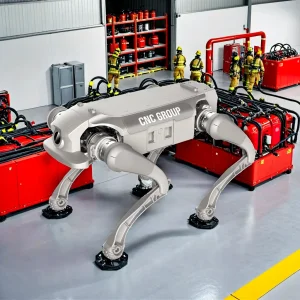
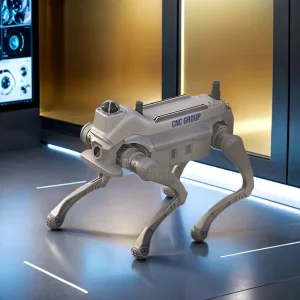
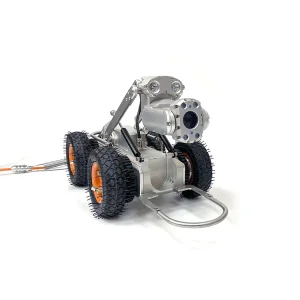
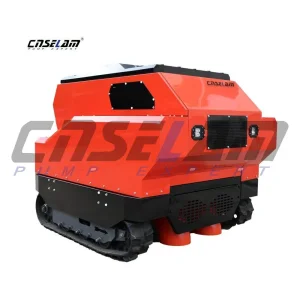
Explore our top-tier service robots and automated industrial solutions engineered to deploy seamless navigation, sensory fusion, and physical intelligence across dynamic environments.
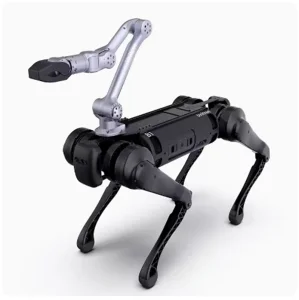
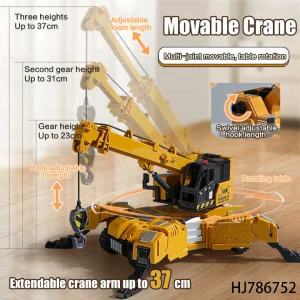
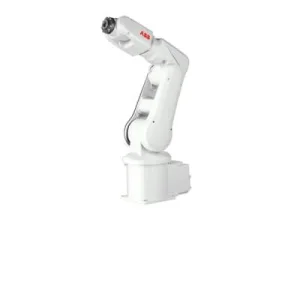
In the contemporary industrial landscape, the division between classical automation and intelligent mobility has vanished. Driven by structural shifts, labor deficits, and rapid innovations in deep learning, service robots have evolved from experimental tools into critical infrastructure. According to the International Federation of Robotics (IFR), the deployment of commercial service robots grows by double-digit rates annually, fueled by sectors requiring high precision, remote hazardous intervention, and collaborative operations.
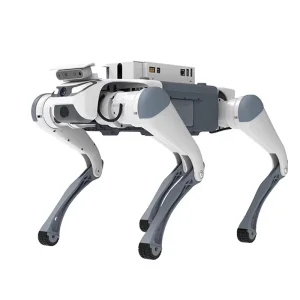
As top service robot manufacturers, we are building systems that map raw environmental data into physical action via advanced AI control layers. The market demands solutions that solve real-world problems. Whether deploying quadruped robots for rugged industrial inspections or integrating smart automated systems to sanitize commercial properties, modern procurement decisions depend on total system reliability, long-term ROI, and flexible software framework support.
The robotic sector is shifting from deterministic automation (where robots follow pre-programmed trajectories) to Embodied AI. In this new paradigm, systems sense, interpret, and dynamically react to unfamiliar conditions, making them suitable for complex applications like construction sites, public spaces, and industrial energy plants.
Established in March 2012, Hangzhou Excitech Technology Co., Ltd. stands as a pioneer in humanoid robots and smart service robots, offering proprietary full-stack technologies to partners worldwide.

Bringing intelligent robots into every family, and making everyday life more convenient and intelligent.

With intelligent robot as the carrier and AI technology as the core, we aim to build an intelligent eco-system with hardware, software, service and content all integrated together.

Creativity, Resilience, Collaboration, Straightforwardness define our approach to building reliable automated systems.
On December 29, 2023, Hangzhou Excitech Technology Co., Ltd. reached a significant milestone by listing on the main board of the Hong Kong Stock Exchange under Stock Code: 9880.HK. This listing marked us as the first humanoid robot enterprise to trade on the HKEX, providing global procurement agencies, institutional clients, and industrial developers with a highly transparent, financially secure, and compliant hardware development partner.
Dedicated to our core mission, we design, engineer, and commercially deploy intelligent service robots and tailored solutions. Our products are built on a full-stack technology architecture that covers everything from low-level mechanical actuators to high-level cloud coordination. Excitech's ecosystems serve various fields, including AI education, smart logistics, smart elderly care, and business/consumer services.
A look into Excitech’s custom system framework, which integrates sensor feedback, motor controller hardware, and deep learning neural networks.
Robust control algorithms allow our quadruped dogs and humanoid systems to cross uneven, unpredictable terrain. Our high-performance servo actuators generate rapid torque output to stabilize the robot when slipping.
We divide processing between cognitive reasoning (the AI Brain) and real-time reflex control (the AI Cerebellum). This dual structure allows the robot to handle high-level mission tasks while making split-second balance adjustments.
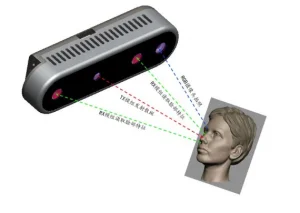
Integrating LiDAR, RGB-D cameras (like the Metasense 435), and IMUs enables centimeter-level mapping and autonomous navigation. This allows robots to inspect utility grids, pipelines, and subways without relying on external GPS signals.
The Robot Operating System Application Framework (ROSA 2.0) is the core software environment for our robots. It provides standard API controls, modular sensor drivers, and enhanced cyber security protocols. ROSA 2.0 makes it easy for commercial teams to integrate our hardware with existing ERP, industrial SCADA systems, and cloud management tools.
Procuring service robots for industrial, civil, or commercial operations requires looking beyond basic price tags. Technical managers and procurement specialists evaluate systems based on long-term performance, durability, and integration support. Below are the key indicators used by industrial procurement teams:
| Evaluation Parameter | Critical Factors to Monitor | Excitech Solutions & Safeguards |
|---|---|---|
| Mechanical Durability | IP rating (e.g. IP68 for sewer/underpass systems), joint torque thresholds, and operating temperature range (-20°C to 55°C). | Designed with reinforced alloy linkages, waterproof enclosures, and custom high-torque actuators built for heavy use. |
| System Compatibility | API modularity, support for ROS/ROS2, and low-latency SDK accessibility for custom development. | Powered by the ROSA 2.0 framework, offering open APIs and full compatibility with standard industrial stacks. |
| Battery & Duty Cycle | Battery life under load, support for self-charging docks, and modular, quick-swap power packs. | Features smart self-charging and optimized battery management systems (BMS) for extended operational uptimes. |
| Sensor Capabilities | LiDAR detection distance, RGB-D synchronization, and dynamic path re-planning latency. | Uses Metasense 435 RGB-D depth sensors combined with multi-echo LiDAR for fast navigation updates. |
Our robots are built to address specific challenges across diverse industrial and commercial sectors. Here is how Excitech systems optimize key operations:
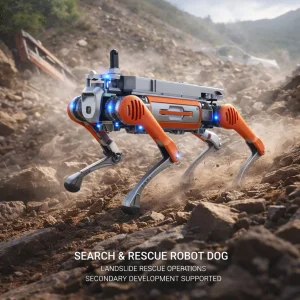
Manual inspections of power grids, petrochemical sites, and sewer networks are slow and hazardous. Our specialized quadruped inspection dogs and IP68 waterproof wheeled systems navigate difficult terrains and pipes, gathering real-time thermal and chemical data to keep human workers out of danger.
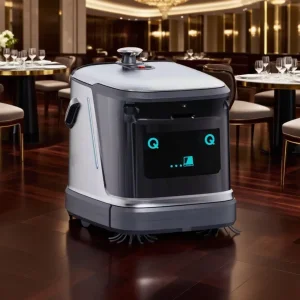
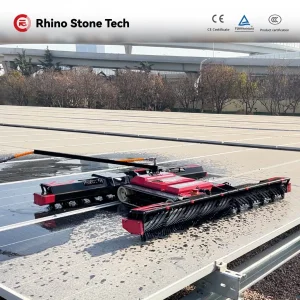
Large facilities like transit hubs, shopping centers, and warehouses require consistent cleaning to remain operational. Our self-charging commercial vacuum and PV solar panel crawler robots automate routine maintenance, reducing labor overhead and ensuring consistent cleaning quality.
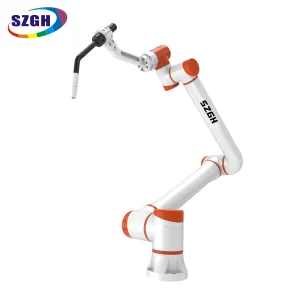
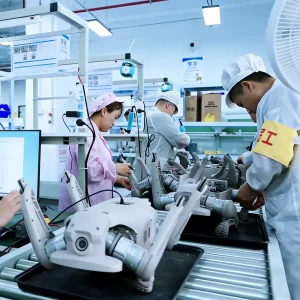
In modern manufacturing, adaptability is key. Excitech's collaborative robot arms, integrated with smart vision sensors, handle tasks ranging from pick-and-place sorting to precise product assembly. These systems work alongside human staff, boosting factory throughput and efficiency.
Deploying robotic systems in regions like North America, the European Union, and Asia-Pacific requires strict adherence to international safety and data standards. As a publicly traded manufacturer, Excitech maintains high compliance levels to ensure smooth integration into corporate operations.
The next decade of robotics will focus on improving autonomy and sensory intelligence. Excitech's research and development roadmap centers on three main technological advancements:
We are training our AI models on diverse motion and vision datasets. This allows our robots to handle complex tasks, learn new environments, and interact with objects more naturally.
We are developing lighter, higher-density servo drives. These new components will extend battery life, increase payload capacities, and improve the speed of our legged and humanoid systems.
We are expanding our cloud coordination tools. This software allows operators to manage, update, and monitor fleets of mixed robots (legged, wheeled, and arms) from a single control interface.
Get answers to common technical and operational questions regarding the deployment of service robots in commercial settings.
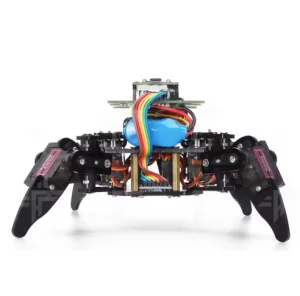
Explore our full line of specialized drainage systems, solar panel crawlers, and development kits built to streamline operations and research.
 Excitech Robot