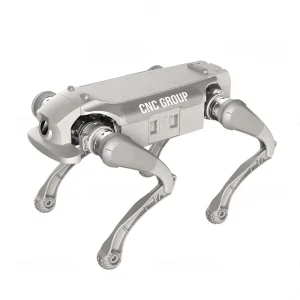
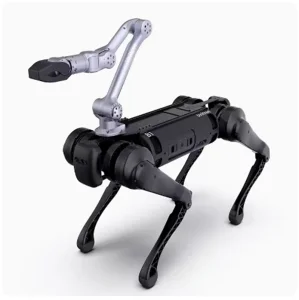
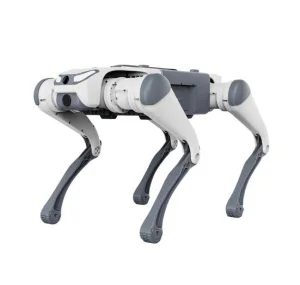
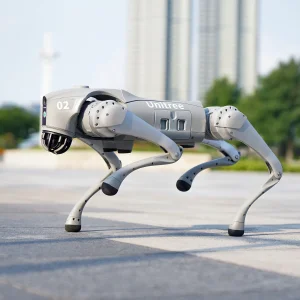
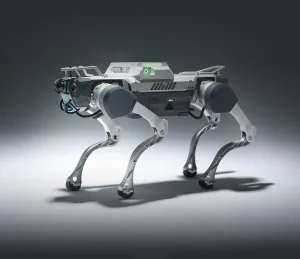
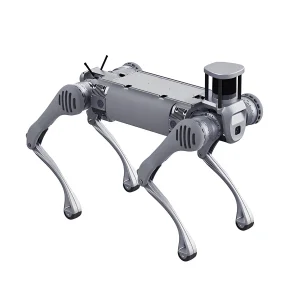
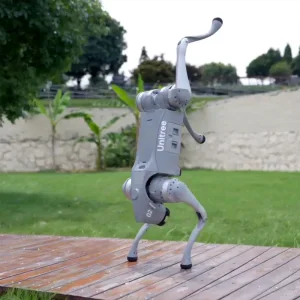
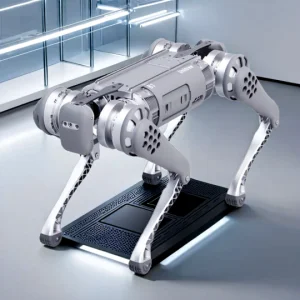
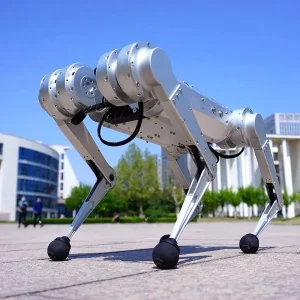
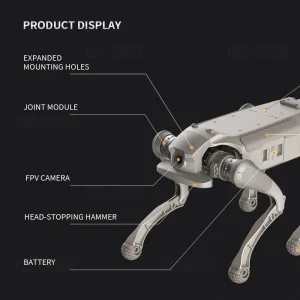
The global bionic robotics market is undergoing a seismic shift. Once confined to high-end military laboratories and science fiction, educational quadruped robots and their industrial counterparts have become a multi-billion dollar industry. From North America to the Asia-Pacific region, businesses are increasingly adopting "robot dogs" for complex tasks that were once deemed impossible or too dangerous for humans.
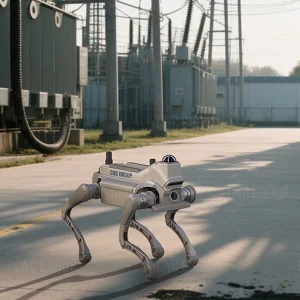
In the commercial sector, quadruped robots are no longer just novelties. They are active participants in logistics, last-mile delivery research, and emergency response training. In the industrial sector, these robots perform autonomous inspections in power plants, oil refineries, and hazardous environments where wheeled robots cannot navigate. The ability to climb stairs, traverse rubble, and maintain stability on uneven terrain makes the quadruped form factor the gold standard for mobile automation.
The global market for quadrupedal robots is projected to grow at a CAGR of over 25% through 2030, driven by AI integration.
Edge computing and Large Language Models (LLMs) are enabling robots to understand verbal commands and navigate autonomously.
Standardization of ROS (Robot Operating System) has lowered the barrier for enterprises to develop custom applications.
As a leading OEM/ODM educational quadruped robot manufacturer, we have identified several key trends shaping the future:
Global procurement teams are now looking beyond just hardware; they seek full-stack solutions that include software ecosystems, cloud integration, and localized technical support.
Enterprise procurement for bionic robots has evolved. It’s no longer about a single purchase; it’s about a long-term partnership. Our OEM/ODM services cater to various regional needs:
High demand for open-source platforms to teach AI, kinematics, and control theory in universities and research labs.
Autonomous inspection dogs used for patrolling substations, reading gauges, and thermal imaging to prevent failures.
Accompanying bionic robots for home entertainment and smart city "ambassadors" in malls and airports.
In Middle Eastern markets, there is a surge in demand for robots capable of operating in high-temperature, sandy environments. In Southeast Asia, the focus is on logistics and warehouse monitoring. As a flexible manufacturer, we provide localized hardware tuning to ensure performance regardless of the environment.
China has become the global epicenter for robotics manufacturing. By partnering with us, you gain access to:

Bringing intelligent robots into every family, and making everyday life more convenient and intelligent.

With intelligent robot as the carrier and AI technology as the core, we aim to build an intelligent eco-system with hardware, software, service and content all integrated together.

Creativity, Resilience, Collaboration, Straightforwardness
Established in March 2012, Hangzhou Excitech Technology Co., Ltd. is a leading humanoid robots and smart service robots company. On 29 December, 2023, we were listed on the main board of the Hong Kong Stock Exchange (stock code: 9880.HK), and have become the first humanoid robot company listed on Hong Kong Stock Exchange.
Dedicated to the mission of 'bringing intelligent robots into every family, and making everyday life more convenient and intelligent', we have developed a full stack of humanoid robotic technologies independently. Building on our full-stack technologies, Excitech has engaged in the research and development, design, smart production, and commercialization of smart service robots, and has developed smart robotic solutions that integrate with hardware, software, service and contents. These solutions span various industries such as AI education, smart logistics, smart elderly care, business and consumer service.
Excitech is among the few global leaders in full-stack humanoid robotics technologies. Our full-stack technologies are a holistic combination of industry-leading robotic technologies (robotic motion planning and control technology, and high performance servo actuators), our AI technologies (human-like brain function and cerebellum function), integrated robotic and AI technologies (SLAM and autonomous technology, visual servo operation and human-robot interaction), and Robot Operating System Application Framework (ROSA 2.0), our proprietary robotics application framework.
 Excitech Robot