Advanced bionic and service solutions for global healthcare markets.
Providing information increment in medical automation and robotic integration.
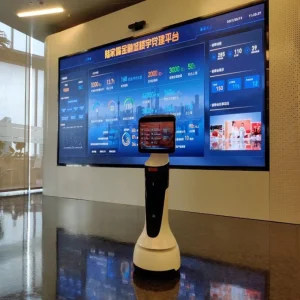
Our solutions address the critical need for contactless delivery in infectious disease wards and high-traffic hospital corridors. By utilizing SLAM (Simultaneous Localization and Mapping) and autonomous navigation, our robots ensure 24/7 delivery of medications, meals, and medical supplies, reducing nursing workload by 40%.
With the global aging population, our "Robots as a Companion" initiative integrates AI-driven emotional recognition and fall detection. These robots provide not just physical assistance but also social interaction, monitoring vital signs and notifying medical personnel via IoT integration during emergencies.
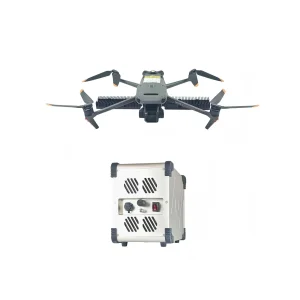
Post-pandemic healthcare demands rigorous hygiene protocols. Our robotic platforms carry high-intensity UV-C lamps or hydrogen peroxide sprayers, achieving 99.99% sterilization in surgical theaters and patient rooms without exposing human staff to chemical risks or pathogens.
Industrial Shift: The medical robotics market is transitioning from "Specialized Surgical Tools" to "General Purpose Service Agents." Hospitals in North America and Europe are increasingly seeking modular robotic platforms that can be repurposed for logistics, patient monitoring, and telepresence.
Procurement Bottlenecks: Many healthcare providers face challenges with proprietary software lock-ins. As a leading manufacturer, we champion the ROSA 2.0 (Robot Operating System Application Framework), offering open-source compatibility and easier integration with existing Hospital Information Systems (HIS).
China's role as a "Top Manufacturer" has evolved. We no longer just compete on cost; we lead in Servo Actuator Density and AI Cerebellum Functions. This allows for more fluid movement in complex hospital environments where traditional rigid robots fail to navigate safely around human staff.
Strategic buyers are now prioritizing "Total Cost of Ownership" (TCO) including maintenance and software updates. Our Hong Kong listing (9880.HK) provides the financial transparency and long-term stability that global healthcare institutions require for multi-year procurement contracts.
The convergence of Humanoid Design and Medical Precision.
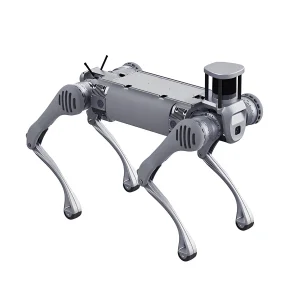
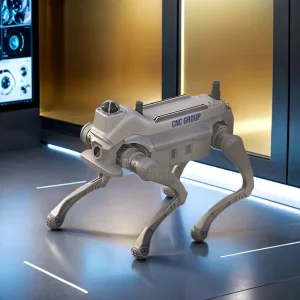
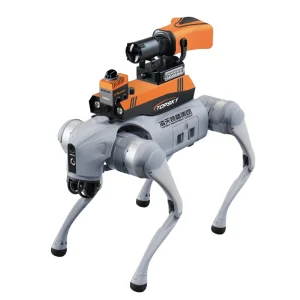
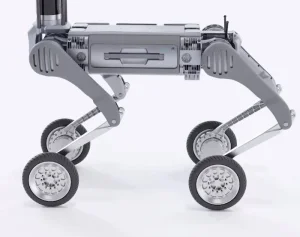
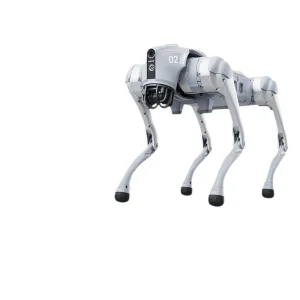
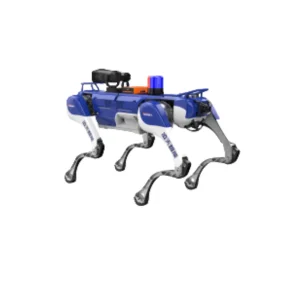
Refining quadruped and wheeled stability for uneven hospital floors and ramps.
LLM (Large Language Model) integration for intuitive patient communication and bedside assistance.
High-performance servo actuators enabling humanoid hands to handle delicate medical instruments.
Full AI "Brain" capable of independent decision-making in emergency triage scenarios.
Established Expertise and Global Recognition.

Bringing intelligent robots into every family, and making everyday life more convenient and intelligent.

With intelligent robot as the carrier and AI technology as the core, we aim to build an intelligent eco-system with hardware, software, service and content all integrated together.

Creativity, Resilience, Collaboration, Straightforwardness.
Established in March 2012, Hangzhou Excitech Technology Co., Ltd. is a leading humanoid robots and smart service robots company. On 29 December, 2023, we were listed on the main board of the Hong Kong Stock Exchange (stock code: 9880.HK), becoming the first humanoid robot company listed there.
We have developed a full stack of humanoid robotic technologies independently, ranging from robotic motion planning and control to high-performance servo actuators. Our AI technologies (human-like brain and cerebellum functions) are integrated via our proprietary ROSA 2.0 framework, ensuring seamless operation across AI education, smart logistics, and smart elderly care.
Full compliance with ISO 13485 for medical devices, CE-MDR for European markets, and FDA registration pathways for North America. We ensure all data privacy meets GDPR and HIPAA standards.
24/7 remote diagnostic support and localized on-site maintenance through our network of global partners in 50+ countries. We provide comprehensive SDKs for local developers.
Our commitment to "AI for Good" ensures our robots are designed with safety-first protocols, including mechanical emergency stops and encrypted communication channels.
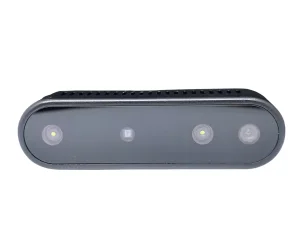
From precision cameras to heavy-duty industrial bionics.
 Excitech Robot