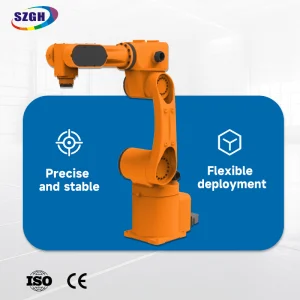
In the rapidly evolving landscape of automation, Anti-Collision Robots represent the pinnacle of safety and efficiency. As factories transition to Industry 4.0, the "iron cage" era is ending. Collaborative robots (cobots) and autonomous mobile robots (AMRs) now share spaces with humans, necessitating sophisticated obstacle detection and avoidance technologies.
Simultaneous Localization and Mapping (SLAM) powered by LiDAR allows robots to build real-time 3D maps, ensuring precision navigation in dynamic environments.
Used for close-range detection, these sensors identify transparent or dark objects that optical sensors might miss, providing a critical secondary safety layer.
Deep learning algorithms enable robots to distinguish between static machinery and moving personnel, predicting paths to prevent collisions before they occur.
China has become the global epicenter for robotics innovation, not just for assembly, but for high-level R&D. Wholesale buyers benefit from a unique ecosystem that combines scale with agility.
From high-performance servo actuators to advanced PCB boards, the entire supply chain is within a 100km radius of major hubs like Hangzhou and Shenzhen, drastically reducing lead times.
Chinese factories offer 30-50% better cost efficiency compared to European counterparts without compromising on ISO safety certifications.
Custom OEM/ODM requirements for anti-collision algorithms can be prototyped and tested in weeks, not months.
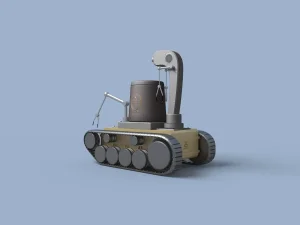
In massive distribution centers, anti-collision AGVs (Automated Guided Vehicles) manage "swarm" intelligence to optimize routes while avoiding human workers and other robots.
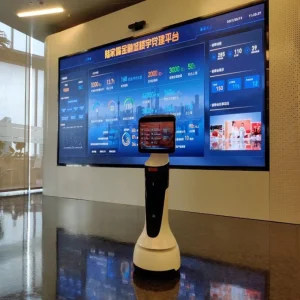
Service robots in hospitals use soft-collision tech to navigate crowded hallways, delivering medicine and food safely to patients.
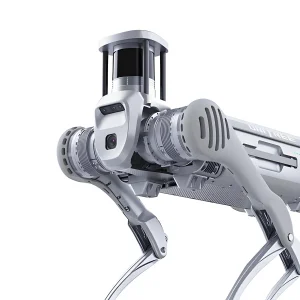
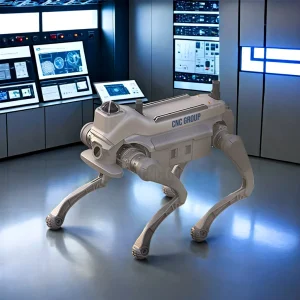
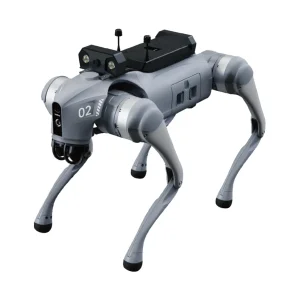
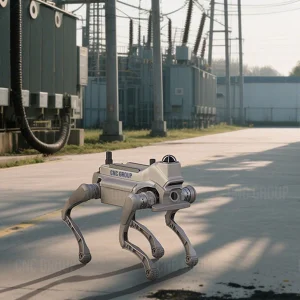
Bionic quadruped robots (like the Unitree B2) utilize multi-sensor fusion to patrol rugged construction sites, avoiding debris and moving machinery.
The next frontier is Edge AI, where the anti-collision logic is processed locally on the robot's "cerebellum" rather than the cloud. This reduces latency to microseconds, essential for high-speed industrial arms and bionic dogs operating in critical safety zones.

Bringing intelligent robots into every family, and making everyday life more convenient and intelligent.

With intelligent robot as the carrier and AI technology as the core, we aim to build an intelligent eco-system with hardware, software, service and content all integrated together.

Creativity, Resilience, Collaboration, Straightforwardness
Established in March 2012, Hangzhou Excitech Technology Co., Ltd. is a leading humanoid robots and smart service robots company. On 29 December, 2023, we were listed on the main board of the Hong Kong Stock Exchange (stock code: 9880.HK), becoming the first humanoid robot company listed on the HKEX.
Excitech is among the few global leaders in full-stack humanoid robotics technologies. Our technologies are a holistic combination of robotic motion planning, high-performance servo actuators, and our proprietary ROSA 2.0 (Robot Operating System Application Framework). We provide solutions spanning AI education, smart logistics, smart elderly care, and business services.
When sourcing anti-collision robots at scale, procurement officers must look beyond the price tag. Key metrics for evaluation include:
Our standard industrial robots feature a 360-degree detection radius of up to 25 meters via LiDAR, with a high-precision close-range "safety bubble" of 0.5 meters using ultrasonic sensors.
Yes, all our anti-collision systems are designed to meet ISO 10218 (Industrial Robots) and ISO/TS 15066 (Collaborative Robots) requirements, ensuring global export compliance.
Absolutely. Through our ROSA 2.0 framework, we offer open APIs for custom path planning and zone-specific speed reduction protocols based on your facility's unique risk map.
We utilize "Dynamic Predictive Avoidance." The AI analyzes the trajectory of the moving obstacle and recalculates its own path in real-time to avoid a collision while maintaining mission efficiency.
 Excitech Robot