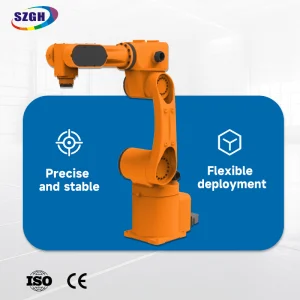
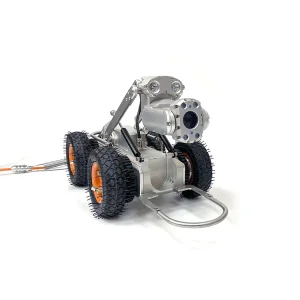
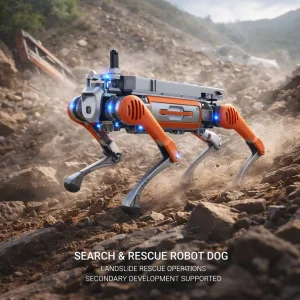
Explore our state-of-the-art robotic platforms, environmental monitoring tracked chassis, and AI-enabled quadruped systems tailored for agricultural research and field automation.
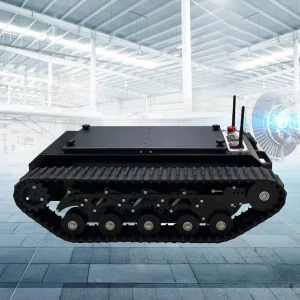
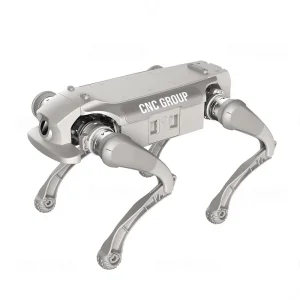
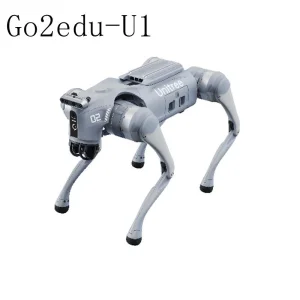
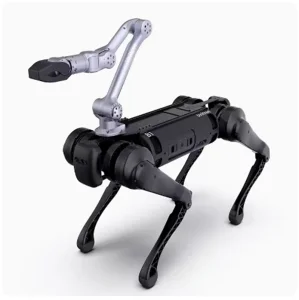
How modern agricultural robotics are solving the labor deficit, optimizing yield, and scaling ecological sustainability.
In the face of unprecedented global challenges—ranging from severe agricultural labor shortages and skyrocketing operational costs to climate change and the urgent demand for sustainable food production—the agricultural sector is undergoing its most significant technological transition: Autonomous Precision Agriculture. According to global industrial analyses, the market for agricultural robotics is projected to grow exponentially, moving from experimental niche applications to mainstream operational deployments in orchards, vineyards, open-field cultivation, and vertical greenhouses.
Historically, agricultural mechanization relied heavily on human-operated machinery, which was limited by labor availability, operating windows, and coarse application methods. Today, autonomous mobile robots (AMRs), quadruped robotic platforms, and highly specialized tracked utility chassis are redefining field logistics. By leveraging advanced sensors, deep-learning computer vision, and RTK-GNSS positioning, these systems perform tasks with sub-centimeter accuracy, drastically reducing chemical runoff, minimizing soil compaction, and operating continuously regardless of ambient light conditions.
Agricultural robots apply fertilizers and pesticides precisely at the plant level, reducing overall chemical dependency by up to 40% and protecting the surrounding ecosystem.
Robust industrial battery configurations and intelligent return-to-charge algorithms allow robotic fleets to run round-the-clock during critical planting and harvesting windows.
By automating strenuous tasks like weeding, crop scouting, and heavy material transport, farmers can reallocate human capital to higher-value managerial activities.
Adapting advanced robotic hardware to diverse, challenging geographical and crop conditions.
No two farms are alike. High-performance agricultural robots must adapt to varied soil conditions, weather patterns, and plant morphologies. Below are the key scenarios where our robust tracked and legged robotic systems have been successfully deployed.
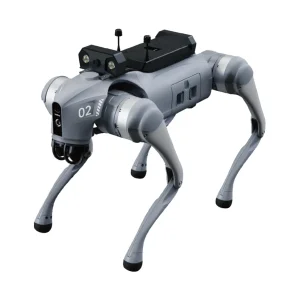
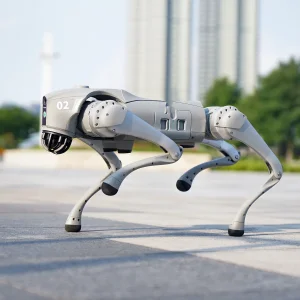
Equipped with 4D LiDAR and hybrid locomotion, our robots navigate narrow, sloping inter-rows in vineyards, carrying thermal cameras and chemical sprayers for canopy management and disease detection.
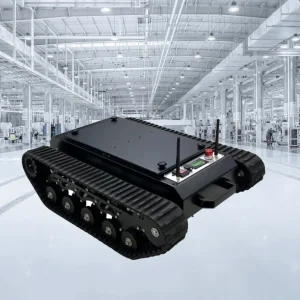
Using precise RTK-GPS and onboard AI vision, our tracked chassis steer between crop lines to perform mechanical weeding, eliminating the need for glyphosate and reducing labor costs.
Our IP68 waterproof tracked chassis, integrated with multi-sensor arrays, autonomously cross mud and shallow water beds to perform in-situ soil compaction analysis and water quality monitoring.
Why partnering with a leading Chinese robotics manufacturer ensures unrivaled cost efficiency, scale, and rapid technology iterations.
China has established itself as the global epicenter for advanced robotic manufacturing, thanks to a vertically integrated supply chain, a highly skilled engineering talent pool, and world-class raw material processing. As an industry-leading OEM/ODM partner, we leverage this localized ecosystem to offer key advantages:
Our strategic vision for autonomous farming platforms, artificial intelligence, and edge-computing integration.
Combining 3D/4D LiDAR systems with high-resolution stereo cameras and RTK-GNSS positioning to build highly accurate, dynamically updated field maps, enabling safe autonomous navigation in dense canopies.
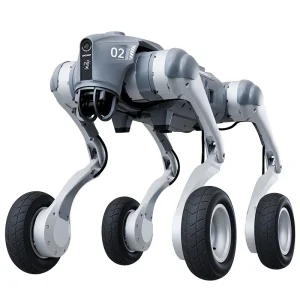
Developing and scaling legged-wheeled systems (like Go2-W) that combine the speed and efficiency of traditional tires with the obstacle-climbing capabilities of quadruped robots to navigate terraced farmlands.
Implementing advanced reinforcement learning models at the edge. The "Cerebellum" handles complex locomotion over mud and rocks, while the "Brain" executes real-time plant diagnostics and crop yield predictions.
Hangzhou Excitech Technology Co., Ltd. (Stock Code: 9880.HK) — Leading the Humanoid and Smart Service Robotics Industry.
Established in March 2012, Hangzhou Excitech Technology Co., Ltd. is a leading humanoid robots and smart service robots company. On 29 December, 2023, we were listed on the main board of the Hong Kong Stock Exchange (stock code: 9880.HK), and have become the first humanoid robot company listed on Hong Kong Stock Exchange.
Dedicated to the mission of 'bringing intelligent robots into every family, and making everyday life more convenient and intelligent', we have developed a full stack of humanoid robotic technologies independently. Building on our full-stack technologies, Excitech has engaged in the research and development, design, smart production, and commercialization of smart service robots, and has developed smart robotic solutions that integrate with hardware, software, service and contents. These solutions span various industries such as AI education, smart logistics, smart elderly care, business and consumer service.
Excitech is among the few global leaders in full-stack humanoid robotics technologies. Our full-stack technologies are a holistic combination of industry-leading robotic technologies (robotic motion planning and control technology, and high performance servo actuators), our AI technologies (human-like brain function and cerebellum function), integrated robotic and AI technologies (SLAM and autonomous technology, visual servo operation and human-robot interaction), and Robot Operating System Application Framework (ROSA 2.0), our proprietary robotics application framework.

Bringing intelligent robots into every family, and making everyday life more convenient and intelligent.

With intelligent robot as the carrier and AI technology as the core, we aim to build an intelligent eco-system with hardware, software, service and content all integrated together.

Creativity, Resilience, Collaboration, Straightforwardness
Ensuring seamless deployment, global certifications, and comprehensive after-sales ecosystems for international buyers.
Exporting high-technology agricultural equipment worldwide requires adherence to local laws, wireless spectrum allocations, and safety standards. At Excitech, we have established dedicated compliance frameworks to ensure our partners encounter zero friction when importing our robotic systems:
Our products are fully compliant with CE (Europe), FCC (USA), KC (South Korea), and RoHS directives. We actively maintain certificates for wireless transceiver hardware used in remote operations.
Every platform is delivered with complete ROS 2.0 (Robot Operating System) configuration files, C++/Python APIs, and comprehensive documentation to facilitate quick integration of custom payloads.
We support our regional distributors with modular replacement parts kits, specialized remote diagnostic services, and online engineering consulting channels to maximize customer uptime.
Discover our heavy-duty quadrupeds, humanoid hardware, and marine research platforms designed for specialized applications.
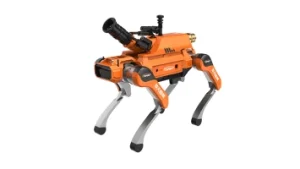
Clear, technical answers to common questions about agricultural robot implementation, hardware sourcing, and customization.
 Excitech Robot