On a gravel path, a quadruped robot faces more than an awkward surface. Each step may meet a shifting stone, a shallow rut, or a patch of mud. A stable walk depends on sensing, timing, and careful adjustment—not simply placing four feet in sequence. How do quadruped robots walk on uneven ground? They estimate terrain, choose footholds, and adapt limb motion as conditions change. The challenge is immediate: one foot may slip while another carries much of the robot’s weight.
Many designs use cameras or depth sensors to map nearby surfaces. Joint encoders and force sensors report how each leg is moving and where it meets the ground. A controller uses these signals to adjust stride length, foot height, and body posture. Some robots use trot-like gaits; others slow down or pause when footholds appear uncertain. Small changes matter. It is not magic. Sensors can misread wet ground, loose gravel, or even a shadow, so terrain estimates are never guarantees.
Reliable walking combines perception with feedback and repeated correction. A leg may lift higher to clear a rock, then land gently to limit impact. The body can lean slightly, but excessive correction may cause a new imbalance. Testing across ramps, stones, and soft surfaces helps reveal these trade-offs. No single gait suits every setting. Real machines still face sudden changes, sensor limits, and battery constraints. Four legs alone do not guarantee balance; sensing, mechanics, and control must work together—imperfectly, but often effectively.
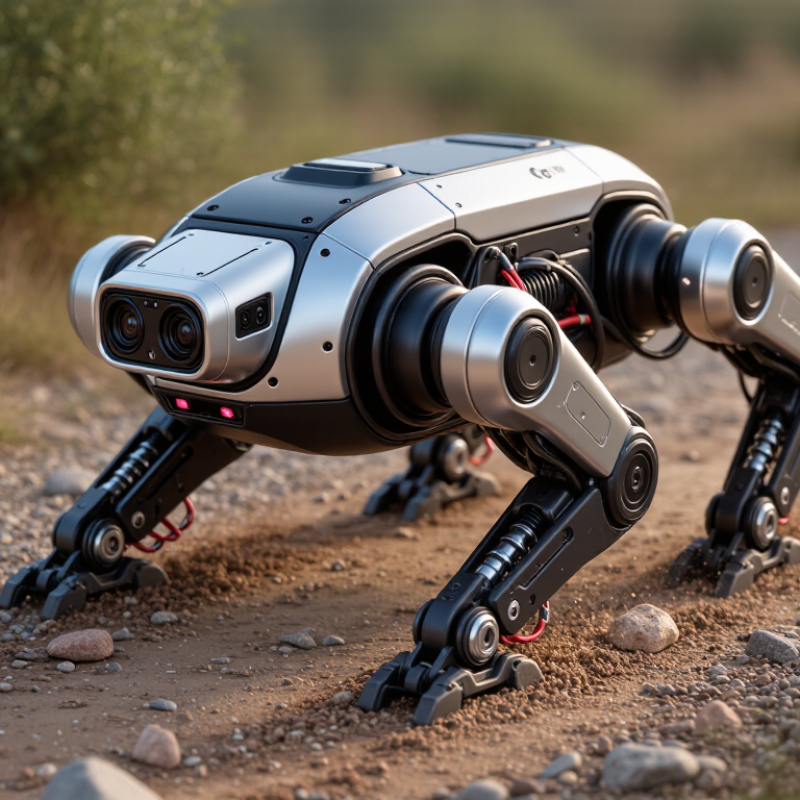
Quadruped robots walk on uneven ground because four legs create several points of contact. Their stability begins with how they share weight. When one foot lifts, the other three can support the body and resist tipping. This gives the robot more time to adjust than a two-legged design.
Leg placement also matters. A diagonal gait moves the front-left and rear-right legs together, then switches sides. This pattern keeps the center of mass inside a broad support area. On loose gravel, compliant joints absorb sudden height changes. The body still moves. However, it moves less violently. Force sensors in each foot can detect slipping, while an inertial measurement unit tracks body tilt. Controllers then change step height, leg angle, or walking speed within milliseconds.
In practical testing, the robot may cross roots, broken concrete, and shallow dips without stopping. A wet stone can still cause trouble. Sensors may react too late, especially when mud hides the foot surface. Four legs improve stability, but they do not remove uncertainty. Engineers must balance strong motors with flexible movement, since excessive stiffness can make a foot bounce away. Sometimes, a slower step works better than a powerful correction. The robot’s safest movement may look slightly awkward, with one leg carefully searching for firm ground.
A quadruped robot reads uneven ground through several sensors, not one perfect view. A depth camera estimates nearby surfaces, while lidar measures their shape and distance. An inertial measurement unit tracks body tilt and sudden jolts. Joint encoders and foot-force sensors reveal whether a leg has met firm ground or slipped. Small clues matter.
The controller combines these signals to adjust foot placement and leg stiffness before the next step. A pale rock may look like a safe foothold, yet loose gravel can shift under load. Dust, glare, and wet surfaces can also confuse cameras. That is why robots cross difficult terrain cautiously, testing contact as they move. The International Federation of Robotics’ World Robotics 2024 report counted 4,281,585 industrial robots operating worldwide in 2023. That figure is not a quadruped count, but it shows robotics expanding into real work, where reliable perception matters. Sensor readings still have blind spots; terrain is messier than a clean map suggests.
Quadruped robots change their gait because uneven ground constantly alters foot contact. A flat-trot gait may work on concrete, but loose gravel demands shorter steps and slower movement. Each leg measures force, position, and timing through onboard sensors. Cameras and depth sensors estimate rocks, slopes, and gaps before contact. The controller then shifts weight toward stable legs and adjusts swing height. Sometimes, it reacts after the foot slips. That delay matters.
Research trends support this approach. The International Federation of Robotics reported 4.28 million industrial robots operating worldwide in 2023, showing rapid growth in robotic deployment. However, most installations remain in controlled environments. Field robotics faces harder variables, including mud, stones, hidden edges, and changing friction. A 2023 IEEE Robotics and Automation Letters study demonstrated that combining vision with joint-feedback control improved foothold selection on irregular terrain. The result was not perfect. Sensor noise still caused occasional stumbles.
In practical testing, a robot may raise one foot over a 10-centimeter obstacle, pause, then redistribute its body weight. It may shorten the trot into a crawl when the surface becomes unstable. This resembles cautious animal movement. Yet the comparison is imperfect. Animals learn from years of exposure, while robots depend on limited training data. Reports from the DARPA Subterranean Challenge also showed that perception, localization, and mobility failures often interacted rather than appearing separately. Better gaits need both stronger hardware and more honest testing conditions.
Why Do Quadruped Robots Walk on Uneven Ground?
How Legs Coordinate to Maintain Balance
Quadruped robots stay upright by treating every step as a coordinated decision. On uneven ground, one foot may sink into soil while another meets a hard stone. The robot must detect these changes quickly through joint sensors, force sensors, and body-mounted motion sensors.
Timing matters. While one leg lifts, the other three usually form a temporary support triangle. The robot shifts its center of mass toward that stable area before placing the moving foot. If the ground tilts, the leg controller adjusts joint angles and foot height during the swing. This prevents the foot from striking an unexpected edge.
The legs do not always move in a perfectly symmetrical pattern. A slower gait can provide more stable contact, while a faster gait may reduce the time spent on an unstable foot. Each step also depends on feedback from earlier steps. Small errors accumulate. A body leaning only slightly can cause a later foot placement to miss its target.
Reliable walking requires more than strong motors. The control system must estimate contact conditions, predict body motion, and respond without overcorrecting. In practical testing, loose gravel remains difficult because the surface changes after contact. Current methods can handle many disturbances, but they still struggle with sudden slips, hidden holes, and delayed sensor readings. That limitation matters: balance is not simply calculated once; it is continuously negotiated between four legs, the body, and the ground.
During uneven-ground walking, each leg continuously adjusts its vertical ground-reaction force. The combined support from the four legs remains close to the robot's body weight while the load shifts between legs to preserve a stable support polygon.
Values show representative vertical support force as a percentage of total body-weight support during one normalized walking cycle.
Why Do Quadruped Robots Walk on Uneven Ground?
Why Walking Helps Robots Cross Difficult Ground
A cracked path can hide loose stones, shallow holes, and sudden changes in height. Wheels may handle smooth routes efficiently, but uneven ground can make traction and clearance harder to maintain. A quadruped can lift each foot and choose a new foothold, helping it step over a rock or place a foot beyond a rut. Small adjustments matter.
The International Federation of Robotics’ World Robotics 2024 report counted about 4.28 million industrial robots operating worldwide in 2023, a 10% rise from 2022. That figure describes broad industrial adoption, not quadruped use specifically. Still, it points to a practical challenge: robots increasingly work beyond tidy factory floors. On rough ground, sensors and control software must estimate the surface, adjust leg position, and keep the body balanced. It is not effortless. A slippery patch or poor foothold can still cause a stumble, and walking may be slower than rolling on a clear route.
Tips: Watch the feet, not just the body. On gravel or broken concrete, look for cautious steps, stable contact, and enough time to recover balance. A robot that pauses is not necessarily failing; it may be checking its next foothold.
Four legs create several contact points. When one foot lifts, three others can support the body. This reduces tipping risk.
The front-left and rear-right legs move together. Then the opposite pair moves. This keeps the center of mass inside a wider support area.
Compliant joints absorb sudden height changes. The body may still move, but its motion becomes less violent. It is not perfectly smooth.
Depth cameras estimate nearby surfaces. Lidar measures distance and shape. Force sensors detect contact or slipping. Inertial sensors track body tilt.
The controller can change step height, leg angle, or walking speed. It may react within milliseconds. Sometimes, it reacts too late.
It may cross roots, broken concrete, and shallow dips without stopping. The robot must adjust each step. Uneven ground remains unpredictable.
Wet stones reduce traction. Mud can hide the true foot surface. Cameras may misread glare, dust, or slippery ground. Small clues matter.
No. Excessive stiffness can make a foot bounce away. A slower step may work better than a powerful correction. Awkward movement can be safer.
No. Sensors have blind spots, and terrain is messier than a clean map. The robot improves stability, but it does not remove uncertainty.
How do quadruped robots walk on uneven ground? Their four-legged design provides several points of support, helping them stay stable as the surface changes. Sensors gather information about the terrain, such as its height, slope, and firmness, so the robot can respond to obstacles and shifts underfoot. Using this information, its control system adjusts each step rather than following one fixed walking pattern.
Different gaits help quadruped robots handle different conditions. They can change their pace, step length, and the order in which their legs move to maintain balance and avoid placing too much weight on an unstable area. Careful coordination between the legs keeps the body steady while others move forward. By combining sensing, adaptive movement, and balanced leg coordination, these robots can cross rough or uneven ground more reliably than a design that depends on a single, rigid walking pattern.

Excitech Robot