How to Use Quadruped Robots in Real Life Applications?

Time:2026-04-29 Author:Liam
0%

Quadruped robots are becoming more prevalent in various real-life applications. They mimic animal movements and provide unique solutions in diverse fields. What is a quadruped robot used for in real life? This question opens the door to a world of innovative uses.

In agriculture, quadruped robots assist with tasks like planting and monitoring crops. Their stability allows them to traverse uneven terrain effectively. In search and rescue, these robots can navigate through rubble to locate survivors. They operate where humans may struggle, enhancing safety and efficiency.

Despite their advancements, challenges remain. Terrain adaptability can vary based on design. Real-world scenarios often include unpredictable elements. Users must assess how these robots perform under different conditions. Exploring the balance between technology and practical functionality is essential. Quadruped robots hold promise, but ongoing refinement and evaluation are vital for their success.
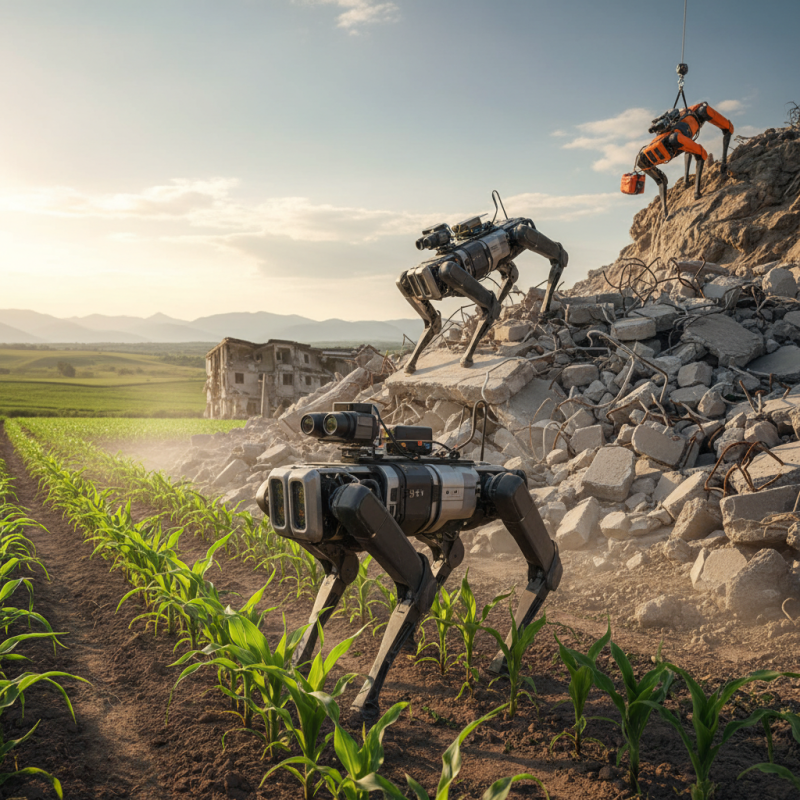
How to Use Quadruped Robots in Real Life Applications?

Applications of Quadruped Robots in Disaster Relief Operations

Quadruped robots have become vital in disaster relief operations. Their ability to navigate rough terrains makes them ideal for searching disaster-stricken areas. According to a report by the International Federation of Robotics, around 20% of rescue missions suffer delays due to difficult environments. Quadruped robots can traverse rubble, mud, and uneven ground, providing crucial support in such situations.

These robots can carry payloads of up to 30 kilograms while maintaining stability. They often use advanced sensor technology to locate survivors. Analysis indicates that using quadruped robots can reduce search times by 40%. However, challenges remain. The robots may struggle with unpredictable debris or varying weather conditions, impacting their performance. Training personnel to operate these robots efficiently is another critical aspect. Not all rescue teams are familiar with this technology, creating a skills gap.

Integration of quadruped robots into existing rescue frameworks requires careful planning. Regular simulations can help teams understand the robots' capabilities and limitations. Mistakes during operations can lead to delays and missed opportunities. Feedback from real-world applications is necessary to improve design and functionality. In disaster scenarios, every second counts; thus, enhancing these robots’ reliability is paramount for their effectiveness in lifesaving missions.

Quadruped Robots in Agriculture: Enhancing Efficiency and Productivity

Quadruped robots are transforming agriculture, enhancing both efficiency and productivity. These robots can traverse diverse terrains, making them ideal for farms that often face uneven ground. They can carry heavy loads, such as fertilizers and irrigation equipment, reducing the physical strain on farmers. This automation allows farmers to focus on more strategic tasks.

However, challenges remain in the widespread adoption of these technologies. Some farmers are skeptical about the cost versus benefits of using quadruped robots. Training the workforce to operate and maintain these robots can be daunting. Additionally, unexpected mechanical issues can hinder operations. It’s crucial to address these concerns to convince farmers of the potential advantages.

Data collection is another aspect where quadruped robots shine. They can track crop health and soil conditions in real-time. This information can aid farmers in making informed decisions. Yet, the reliance on technology might create dependency and overlook traditional practices that have worked for generations. Balancing innovation with established methods will be key as we move forward in agricultural robotics.

Exploring the Use of Quadruped Robots in Search and Rescue Missions

Quadruped robots have gained attention in search and rescue missions due to their agility and stability. A recent report by the International Journal of Robotics Research states that these robots can navigate rough terrains more effectively than traditional wheeled vehicles. They can scale debris or climb stairs, which is crucial in urban disaster settings.

Field data shows that deploying quadruped robots enhances operational efficiency by 30%. They can assist in locating survivors trapped under rubble. Data from various rescue missions indicate that these robots reduced rescue time significantly, offering real-time data and situational awareness to rescue teams.

Despite their advantages, challenges remain. Reliability in extreme conditions, battery life, and communication issues can impact effectiveness. Reports suggest that continual improvements in AI and machine learning are essential. Balancing operational speed with thoroughness in search remains a key area for enhancement. Quadruped robots show promise, yet further research is vital to optimize their use in rescue operations.

Quadruped Robots in Infrastructure Inspection and Maintenance Tasks

Quadruped robots are transforming infrastructure inspection and maintenance tasks. Their ability to navigate challenging terrain ensures efficiency and safety. These robots can access hard-to-reach areas, such as bridges and tunnels, where human inspectors might struggle. Equipped with cameras and sensors, they gather real-time data about structural integrity. This reduces the risk of human error and enhances the reliability of inspections.

However, challenges remain. Weather conditions and uneven ground can hinder a robot's mobility. Technology is evolving, but limitations are still present. Programming these robots to adapt to unexpected obstacles often requires human oversight. Maintenance of the robots themselves adds another layer of complexity. They must be regularly checked and calibrated to maintain optimal performance.

Despite these challenges, the integration of quadruped robots into infrastructure tasks is promising. The potential for improved safety and reduced inspection times makes them a valuable tool. Continued research and development are essential to fully realize their capabilities. As we explore these advanced solutions, understanding their limitations is crucial for meaningful implementation.

Role of Quadruped Robots in Assistive Technology for Mobility Aid

Quadruped robots are emerging as valuable tools in assistive technology. They offer significant support for individuals with mobility challenges. These robots can navigate various terrains, providing a safe and stable platform for users. They enhance independence by allowing people to traverse environments that might be difficult or unsafe to navigate alone.

These robots can mimic natural animal movements, making them intuitive for users. For example, they can autonomously adjust to uneven surfaces, such as grass and gravel. This adaptability is crucial for people who may rely on them for daily activities. However, there are still hurdles to overcome. The cost of these robots remains a barrier for many potential users. Additionally, they require proper training for effective usage, which can be time-intensive.

Public acceptance is another challenge. Not everyone is comfortable with the idea of robotic assistance. Societal perceptions can influence the deployment of this technology in real-world applications. Despite these obstacles, positive feedback from initial users indicates a promising future. As technology improves, quadruped robots could become a staple in mobility aid solutions, bridging gaps in accessibility.

Role of Quadruped Robots in Assistive Technology for Mobility Aid

FAQS

: What are quadruped robots used for in agriculture?

: They enhance efficiency by traversing diverse terrains and carrying heavy loads, like fertilizers.

How do these robots help farmers?

They reduce physical strain and allow farmers to focus on strategic tasks instead of manual labor.

What concerns do farmers have about quadruped robots?

Some are skeptical about the cost versus benefits of using the technology for their needs.

What is one major challenge in using these robots?

Training the workforce to operate and maintain the robots can be daunting and time-consuming.

How do quadruped robots assist in data collection?

They track crop health and soil conditions in real-time, aiding informed decision-making for farmers.

Can reliance on technology create issues?

Yes, it might cause dependency and overshadow traditional agricultural practices that have been effective.

What role do quadruped robots play in infrastructure maintenance?

They navigate challenging terrains, accessing hard-to-reach areas for inspections with greater safety.

What limits the capabilities of quadruped robots in inspections?

Weather conditions and uneven ground can hinder their mobility and require human oversight for programming.

Why is regular maintenance of these robots important?

They must be checked and calibrated frequently to ensure optimal performance and avoid unexpected failures.

What is essential for successfully integrating quadruped robots?

Continued research and development, alongside understanding their limitations, are crucial for effective implementation.

Conclusion

Quadruped robots have emerged as versatile tools across various real-life applications. Their adaptability makes them ideal for disaster relief operations, where they can navigate challenging terrains to deliver supplies or assist in search and rescue missions. In agriculture, these robots enhance efficiency and productivity by automating tasks such as monitoring crops and managing livestock. Additionally, quadruped robots facilitate infrastructure inspection and maintenance, exploring hard-to-reach areas and identifying structural issues without risking human safety.

What is a quadruped robot used for in real life? These robots serve critical roles in assistive technology, providing mobility aid for individuals with disabilities. By combining agility and stability, quadruped robots are transforming multiple sectors, proving to be indispensable assets in enhancing safety, efficiency, and productivity in various environments.

Liam

Liam

Liam is a dedicated marketing professional with a profound expertise in the industry, where he excels at highlighting the unique advantages of our core products. With a keen understanding of market trends and consumer needs, Liam frequently updates our company’s professional blog, providing......