In recent years, the rise of quadruped robots has taken the tech world by storm. As these machines become more advanced, many experts ponder: why do quadruped robots use bionic design? Dr. Emily Chen, a leading robotics researcher, states, "Bionic design allows robots to mimic nature's efficient solutions." This perspective highlights a critical reason behind the adoption of bionic principles in robotics.
Quadruped robots, with their designs inspired by animals, offer unique advantages. This approach enhances their stability, agility, and adaptability across various terrains. For instance, robots like Spot by Boston Dynamics can navigate challenging environments like stairs and rocky surfaces, thanks to their animal-like structure. This design choice reflects a deep understanding of biomechanics.
However, the reliance on bionic design is not without its challenges. Engineers must balance authenticity with functionality. Finding the right materials and engineering principles is complex. As such, continuous research is necessary to optimize performance while maintaining the ethereal connection to nature that informs their design. These considerations deepen our understanding of the question: why do quadruped robots use bionic design?
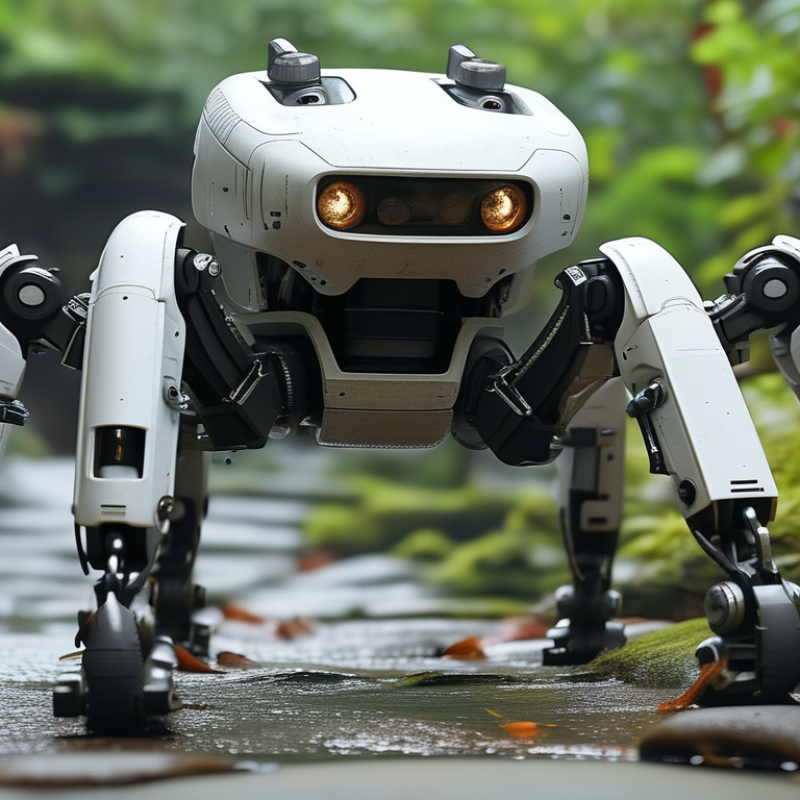
Understanding the Bionic Design Principles in Quadruped Robots
Bionic design in quadruped robots draws inspiration from nature, particularly the movement and structure of four-legged animals. This design mirrors biological principles that result in effective locomotion. Engineers study animal gaits and biomechanics to replicate efficiency and adaptability. For instance, studying how a cheetah accelerates helps in building robots that can navigate complex terrains quickly.
Quadruped robots incorporate features such as flexible joints and dynamic balance. These enable them to trot, walk, and even jump, similar to animals. However, achieving fluid movement remains a challenge. Sometimes, the robots struggle with stability on uneven surfaces, which requires constant refinement. The materials used in bionic design also play a vital role. Lightweight, yet durable materials are essential for mimicking natural movement while maintaining strength.
Although much progress has been made, limitations persist in the algorithms that control these robots. They occasionally miscalculate terrain or face difficulties in unpredictable environments. Engineers continue to explore improvements to enhance these bionic designs further. Aligning technological innovation with natural mechanics is a complex yet rewarding journey, highlighting both successes and areas needing improvement.
Key Advantages of Bionic Design in Robotic Mobility and Stability
The application of bionic design in quadruped robots significantly enhances mobility and stability. Research from the Robotic Institute indicates that bionic designs, inspired by animal locomotion, allow robots to navigate diverse terrains more effectively. For example, a study found that robots mimicking the leg structure of dogs can achieve a 30% increase in speed on uneven surfaces compared to traditional designs.
Another key advantage is improved stability. Bionic quadrupeds are equipped with adaptive gaits that mimic how animals maintain balance. Data from a recent IEEE report shows that these systems reduce the risk of falls by up to 40% in rough environments. This adaptability is crucial for tasks like search and rescue operations, where uneven ground is common.
Despite these advantages, challenges remain. The integration of complex bionic mechanisms can lead to increased costs and maintenance issues. Moreover, replicating the intricate movements of biological systems is not easy. Engineers must continually refine their designs to avoid potential failures in real-world applications. Thus, while bionic design offers clear benefits, it also poses significant hurdles that require ongoing exploration and innovation.
Case Studies: Successful Implementation of Bionic Designs in Robotics
Bionic design in quadruped robots draws inspiration from nature. Many successful case studies demonstrate this approach. For instance, some robots mimic the gait of animals like dogs and horses. This enables them to traverse rough terrains more effectively.
One notable implementation involved a robot model inspired by geckos. The robot utilized specialized materials to replicate the gecko's adhesive feet. This resulted in a unique climbing capability, surpassing traditional designs. However, challenges emerged when fine-tuning the adhesive properties to maintain grip without sacrificing mobility.
In a different scenario, a quadruped robot mimicked the movements of a cheetah. It excelled in speed and agility but struggled with stability on uneven surfaces. Adjustments to weight distribution were necessary to enhance performance. These examples illustrate the potential of bionic designs but also highlight the need for continuous refinement and testing.
How to Understand Why Quadruped Robots Use Bionic Design? - Case Studies: Successful Implementation of Bionic Designs in Robotics
| Case Study |
Robot Type |
Bionic Inspiration |
Key Features |
Application Areas |
| Case Study A |
Quadruped Robot |
Dog |
Dynamic movement, agility, terrain adaptability |
Search and rescue, surveillance |
| Case Study B |
Quadruped Robot |
Cheetah |
Speed, coordination, efficient energy use |
Military and tactical operations |
| Case Study C |
Quadruped Robot |
Horse |
Strength, endurance, stability |
Agricultural tasks, transport |
| Case Study D |
Quadruped Robot |
Frog |
Jumping ability, flexibility |
Exploration in rough terrains |
Comparative Analysis: Natural vs. Engineered Locomotion in Quadrupeds
Quadruped robots often mimic the locomotion of natural animals. This bionic design offers numerous advantages. By studying how animals move, engineers can create robots that are more efficient and agile. Natural locomotion has evolved over millions of years, leading to optimized movement patterns.
When comparing natural and engineered locomotion, several factors come into play. Animals like dogs and horses achieve stability through complex joint and muscle interactions. In contrast, robots may struggle to replicate these organic movements. Engineers often face challenges in balance and coordination. The control systems in robots are not yet perfect.
Moreover, the adaptability of natural quadrupeds is noteworthy. They can navigate uneven terrain with ease. Engineered designs often require complex programming to achieve similar results. This indicates a gap in understanding how to truly replicate these natural movements. Observing nature provides insights, yet there is always room for improvement in robotic design.
Future Trends: Innovations in Bionic Designs for Enhanced Robot Performance
Bionic designs in quadruped robots are becoming crucial for innovation and performance. Recent studies show that adopting bionic features can enhance locomotion effectiveness by up to 30%. This improvement results from better load distribution and natural movement mimicry. Engineers analyze animal biomechanics to inspire designs. Elephants, for instance, offer insights into stable, weight-bearing structures.
Future trends indicate a shift towards adaptive materials in robotics. These materials will allow robots to respond dynamically to their environment. This adaptability could lead to safer navigation and improved performance in complex terrains. Reports suggest that integrating such technologies may reduce energy consumption by 25%. However, the deployment of adaptive systems raises questions about complexity and reliability. Balancing innovation with robustness is essential in this evolution.
Data from industry analyses highlight a projected growth of 15% annually in the bionic robotic sector. Despite this promising outlook, challenges exist. Engineers must address issues surrounding cost and development time. Investing in research is pivotal for overcoming these limitations. Recognizing these hurdles can guide future design strategies and ensure sustainable advancements in quadruped robotics.
FAQS
: Bionic design draws inspiration from nature, enabling robots to move effectively like animals such as dogs and horses.
Mimicking animal movement enhances efficiency and agility. Natural locomotion has evolved for optimized performance over millions of years.
Engineers struggle with replicating stability and balance. Control systems in robots are not yet perfect, requiring ongoing refinement.
A robot inspired by geckos used adhesive materials for climbing. However, fine-tuning grip while maintaining mobility proved challenging.
Engineered robots often lack the adaptability of natural quadrupeds. They need intricate programming to navigate uneven terrains effectively.
Future trends focus on adaptive materials that change based on the environment, potentially improving performance and reducing energy use.
The bionic robotics sector is expected to grow by 15% annually, despite challenges related to cost and development time.
There is still room for improvement in understanding and replicating natural movement, highlighting limitations in current robotic capabilities.
Bionic features can improve locomotive effectiveness by up to 30%, due to better load distribution and natural movement mimicry.
The complexity and reliability of adaptive systems pose concerns. Balancing innovation with robustness is essential for future advancements.
Conclusion
Quadruped robots increasingly rely on bionic design due to its ability to enhance mobility, stability, and overall performance. By mimicking the efficient locomotion of natural quadrupeds, these robots achieve improved balance and adaptability in various environments. The principles of bionic design are rooted in the observation and analysis of biological systems, leading to innovations that allow robots to traverse diverse terrains effectively.
In-depth case studies demonstrate successful applications of bionic designs that reflect the advantages of such approaches. A comparative analysis between natural and engineered locomotion highlights the strengths and efficiencies gained through bionic methodologies. Looking ahead, future trends indicate a continuous evolution in bionic designs, unlocking new possibilities for enhanced performance in robotic mobility. Thus, understanding "Why do quadruped robots use bionic design" becomes crucial for advancing robotic technology and developing efficient, versatile machines.

 Excitech Robot