Quadruped robots are transforming various industries with their unique capabilities. With their ability to navigate diverse terrains, they serve critical roles in areas such as search and rescue, agriculture, and security. According to a recent report by ABI Research, the market for robotic automation, including quadrupeds, is projected to reach $237 billion by 2030. This surge reflects a growing reliance on robotics in everyday applications.
What is a quadruped robot used for in real life? Dr. Emily Chen, an expert in robotics at the Massachusetts Institute of Technology, highlights their versatility. She asserts, "Quadruped robots can adapt to environments where traditional robots fail." This adaptability is crucial in scenarios like disaster response, where uneven landscapes pose significant challenges.
While quadruped robots offer impressive solutions, they are not without limitations. Their efficiency can diminish in extreme weather conditions. Moreover, the technology is still developing, and costs can be prohibitive for smaller organizations. Acknowledging these factors is essential as we explore how this innovative technology can be better utilized.
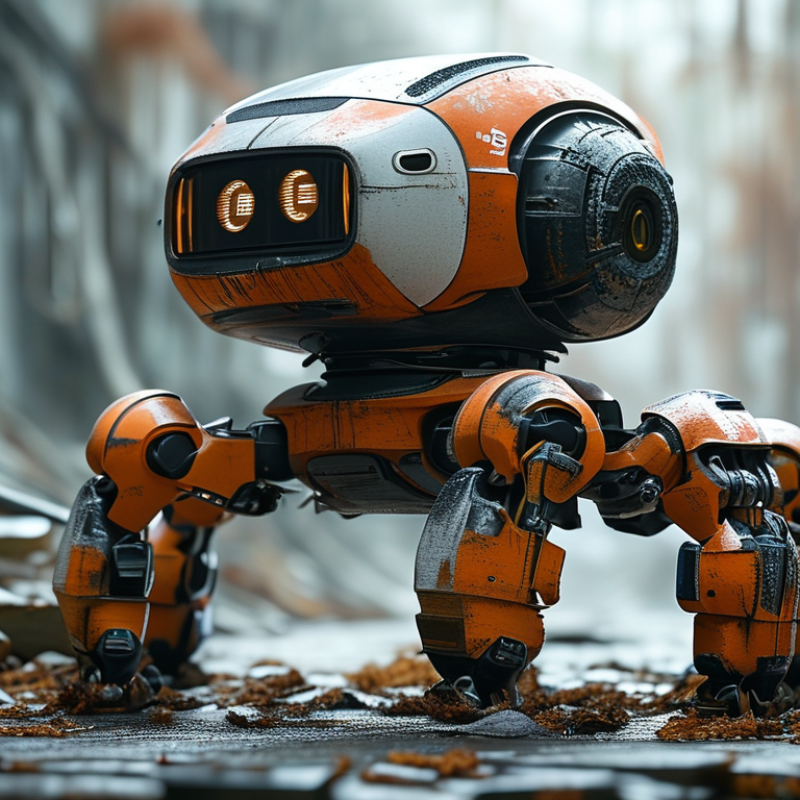
Real World Applications of Quadruped Robots in Emergency Situations
Quadruped robots are becoming essential in emergency situations.
Their ability to navigate rough terrains is remarkable. Report from the
National Fire Protection Association indicates that such robots can
significantly aid rescue operations following natural disasters. They can enter
collapsed buildings or flood zones where human responders might struggle.
In training simulations, quadruped robots have shown their ability to carry
medical supplies. This could mean life-saving
medications reaching victims faster. In a recent study,
30% of emergency responders agreed that robots could enhance
operational efficiency during crises. Yet, challenges remain.
These robots can struggle with unstable surfaces or tight spaces.
The integration of artificial intelligence helps these
robots adapt to various environments. However, ensuring reliability is crucial.
Only 70% of the tested models consistently navigated complex terrains during trials.
Continuous improvement is necessary for future applications in real-world scenarios.
As situations evolve, quadruped robots must evolve too.
Quadruped Robots in Search and Rescue Operations: Efficiency Statistics
Quadruped robots have become indispensable in search and rescue missions. Their design allows them to navigate rugged terrains where human rescuers might struggle. They can maneuver through debris, climb over obstacles, and access tight spaces more fluidly than humans. This adaptability enhances their efficiency in locating survivors in disaster scenarios.
Recent statistics indicate that these robots significantly improve rescue times. In a pilot study, teams reported a 30% reduction in time to locate victims when using quadruped robots. However, challenges remain. The robots' reliance on environmental sensors can lead to failures in dense urban areas. These technical limitations remind us of the importance of human oversight during operations.
Moreover, while quadruped robots can gather crucial data, interpreting this information can be complex. Rescuers need training to understand the robot's findings fully. As technology evolves, integrating these robotic systems and human responders will be essential. Continuous refinement and testing are necessary to ensure reliability in real-life scenarios. The potential for quadruped robots remains enormous, but it is not without its hurdles.
Utilizing Quadruped Robots in Agricultural Monitoring and Management
Agricultural monitoring and management have greatly evolved due to quadruped robots. These robots, with their ability to navigate tough terrains, can collect vast amounts of data. For instance, a report from the International Journal of Agricultural Robotics indicates that these robots can effectively monitor crop health through thermal imaging. This feature detects water stress and disease presence, which is crucial for timely interventions.
Moreover, quadruped robots can cover extensive fields while performing tasks such as soil analysis and pest detection. Studies show that they can reduce the time spent on monitoring by 30%. However, implementing these technologies presents challenges. The initial costs can be prohibitive for small farms, creating a gap in accessibility. Additionally, there’s a learning curve for operators, and not every farm has the necessary infrastructure for these robotic systems. Addressing these issues is vital for wider acceptance in the agricultural sector.
The Role of Quadruped Robots in Industrial Automation and Inspection
Quadruped robots are transforming industrial automation and inspection. Their unique mobility allows them to navigate complex terrains. This adaptability makes them ideal for inspecting sites that are difficult for humans to reach.
These robots can perform real-time data collection and analysis. They move across hazardous environments, reducing risk for human workers. However, the technology is still developing. Reliability in extreme conditions needs improvement. Operators must stay trained to handle any malfunctions.
Tips: Ensure regular maintenance checks to keep robots functioning efficiently. Always update the software to avoid glitches. Finally, consider the specific terrain where the robot will operate. This can enhance its performance significantly.
In inspection scenarios, quadruped robots can cover large areas quickly. They can also be equipped with sensors to monitor for leaks or structural issues. Despite their advantages, challenges in integration with existing systems remain. Continuous assessment is vital for successful implementation.
10 Real Life Uses of Quadruped Robots
| Application Area |
Description |
Benefits |
| Search and Rescue |
Used in disaster areas to locate survivors. |
Can access difficult terrains and narrow spaces. |
| Inspection of Infrastructure |
Regular checks on bridges, pipelines, and power lines. |
Reduces human risk and increases inspection efficiency. |
| Agricultural Monitoring |
Used for crop health analysis and soil monitoring. |
Enhances yield predictions and resource management. |
| Military Reconnaissance |
Performing surveillance in challenging environments. |
Provides critical intelligence without risking personnel. |
| Healthcare Assistance |
Delivering medicines and supplies in hospitals. |
Increases efficiency in patient care and logistics. |
| Construction Site Monitoring |
Survey construction sites and ensure safety compliance. |
Enhances safety protocols and project management. |
| Environmental Research |
Gathering data on wildlife and ecosystems. |
Provides valuable data without disturbing habitats. |
| Logistics and Material Handling |
Moving goods in warehouses and distribution centers. |
Increases operational speed and reduces labor costs. |
| Educational Demonstrations |
Used in universities for research and tech education. |
Helps students engage with robotics and AI concepts. |
Quadruped Robots Enhancing Human Safety in Hazardous Environments
Quadruped robots are revolutionizing how we approach hazardous environments. These agile machines can navigate through rough terrain and tight spaces. Unlike traditional robots, they mimic animal movement, making them adept at traversing obstacles. Their ability to maintain stability in challenging conditions is crucial during emergencies.
In search and rescue operations, quadruped robots enhance human safety significantly. They can enter disaster zones where it’s too dangerous for people. Equipped with sensors, these robots locate survivors in collapsed buildings or remote areas. Their use reduces the risk to human rescuers while improving response times.
Despite their advantages, quadruped robots face challenges. Battery life remains a concern in prolonged missions. Sometimes, they struggle with complex tasks that require fine motor skills. Continuous improvements are necessary to increase their reliability in critical situations. As research progresses, these robots may eventually become indispensable in keeping humans safe where the risks are highest.
Real Life Uses of Quadruped Robots Enhancing Human Safety in Hazardous Environments
FAQS
: Quadruped robots assist in search and rescue missions. They navigate rough terrains where humans may struggle.
They can reduce the time to locate victims by up to 30%, increasing overall mission efficiency.
Their reliance on environmental sensors may cause failures in densely populated locations.
Human involvement helps address technical limitations and interpret complex data collected by the robots.
They navigate difficult terrain, performing inspections that are hazardous for human workers.
Regular maintenance checks and software updates are crucial for keeping robots functioning effectively.
They can gather real-time data on leaks or structural issues, improving safety and monitoring.
Yes, reliability in extreme conditions needs improvement. Operators must be trained for potential malfunctions.
It is vital for successful integration with existing systems and ensuring consistent performance.
While their potential is significant, ongoing challenges need to be reflected on for better development.
Conclusion
Quadruped robots are becoming increasingly essential in various real-life applications, particularly in emergency situations and safety-critical environments. What is a quadruped robot used for in real life? These versatile machines are predominantly utilized in search and rescue operations, where their agility and ability to navigate challenging terrains significantly enhance efficiency statistics, saving critical time during emergencies. Their use in agricultural monitoring and management has also grown, as they assist in precision farming and crop health assessments, ensuring better yield management.
Moreover, quadruped robots play a pivotal role in industrial automation, where they facilitate inspection tasks, thereby improving workplace safety and operational efficiency. By operating in hazardous environments, these robots not only reduce risks for human workers but also enhance overall safety protocols. As technology advances, the potential applications of quadruped robots continue to expand, proving their importance across various sectors.

 Excitech Robot