Why Are Quadruped Robots Superior to Wheeled Robots?

Time:2026-05-01 Author:Sophia
0%

The evolution of robotics has brought forth various designs, each catering to different environments. Quadruped robots have emerged as a significant advancement in this field. Why are quadruped robots better than wheeled robots? This question encapsulates their distinct advantages. Quadruped robots can navigate rough terrains where wheeled robots might struggle. Their four legs provide stability and adaptability in diverse environments.

Consider how quadruped robots can maneuver through rocky landscapes or climb stairs. They utilize complex algorithms to adjust their gait in real-time. This versatility is crucial in many applications, including search and rescue missions. In contrast, wheeled robots have limited mobility on uneven surfaces. This can hinder their effectiveness in real-world scenarios where obstacles abound.

Moreover, quadruped robots often possess enhanced payload capabilities. They can carry equipment while traversing difficult areas. Their structural design allows for a more balanced distribution of weight. However, it is essential to reflect on the costs associated with developing and maintaining these sophisticated machines. Quadruped robots require advanced technology and expertise, which can be a barrier for some users. The decision between wheeled and quadruped designs hinges on understanding these nuances.
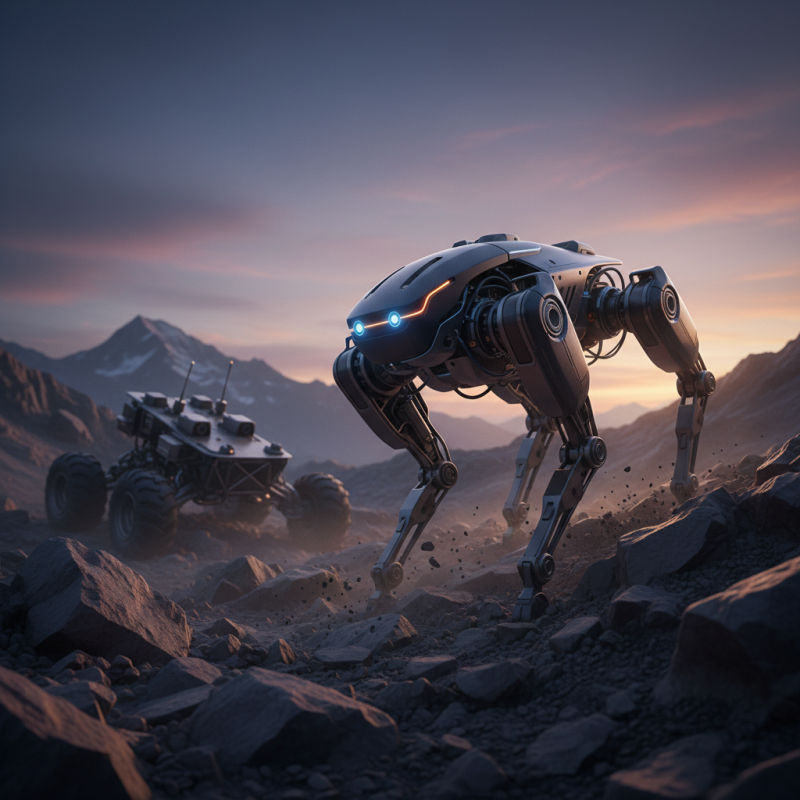
Why Are Quadruped Robots Superior to Wheeled Robots?

Understanding the Basics of Quadruped and Wheeled Robots

Quadruped robots and wheeled robots serve different purposes in the robotics world. Quadruped robots mimic the movement of animals. They have four legs, allowing them to traverse rough terrains easily. This design grants them stability and balance, even on uneven surfaces. Wheeled robots, on the other hand, excel on flat, paved surfaces but struggle in more complex environments.

A notable strength of quadruped robots is their adaptability. They can navigate obstacles like rocks and stairs. They can also adjust their gait based on the terrain. This flexibility is crucial in rescue missions or exploration tasks. However, quadruped robots are more complex to design. Their movement algorithms require careful development. This complexity can lead to higher costs and technological challenges.

In contrast, wheeled robots are simpler to build. Their mechanics are straightforward, making them more cost-effective. They often require less power and maintenance. Yet, this simplicity leads to limitations. Wheeled robots might become stuck in mud or climb only certain inclines. This can hinder their effectiveness in diverse environments. Each design has its merits and flaws, necessitating reflection on specific use cases.

Comparison of Quadruped and Wheeled Robot Capabilities

Advantages of Quadruped Robots in Navigating Rough Terrain

Quadruped robots are specifically designed to navigate complex environments. Their four-legged structure grants them unparalleled stability and agility. In contrast to wheeled robots, they can easily traverse uneven surfaces and obstacles. This capability makes them ideal for various terrains, such as rocky paths, muddy fields, and steep hills.

Additionally, quadruped robots demonstrate impressive adaptability. They can adjust their gait in response to changing ground conditions. For instance, they may shift to a slow crawl over loose gravel or pick up speed on firm ground. However, engineers still face challenges in programming these robots for extreme environments. Some may struggle with balancing on very very steep slopes or irregular surfaces. Developing algorithms to enhance their navigation skills is an ongoing effort.

The sensory systems of quadruped robots are also crucial. These systems help them detect and respond to obstacles. They gather data to inform their movements, but processing this information remains complex. There are instances where robots misjudge their surroundings. This highlights the need for continuous improvement in machine learning and sensor technology. As researchers refine these systems, the capabilities of quadruped robots will expand significantly.

Comparison of Stability: Quadrupeds vs. Wheeled Robots

When comparing stability, quadruped robots often outperform wheeled robots. Research indicates that quadrupeds can traverse uneven terrains more effectively. A study by the IEEE shows that quadrupeds maintain an impressive balance on slopes exceeding 30 degrees. This stability stems from their four-legged design, which distributes weight more evenly than wheels.

Wheeled robots face limitations on rough surfaces. Their reliance on flat terrains restricts their operational capabilities. Data from the Robotics Institute indicates that wheeled robots have a 35% higher chance of tipping over on obstacles compared to quadrupeds. In contrast, quadrupeds adapt their gait to the environment, enhancing stability. They can even recover from slips, showcasing remarkable resilience.

However, not all is perfect with quadruped robots. They require complex algorithms for movement coordination. This complexity can lead to slower response times in some scenarios. Furthermore, while they excel in stability, they are typically heavier and more expensive to produce. This poses challenges for broader implementation in various industries. Efforts are ongoing to balance the advantages and drawbacks of each design in real-world applications.

Versatility and Adaptability of Quadruped Robotics

Quadruped robots are increasingly recognized for their versatility and adaptability. Unlike wheeled robots, which are limited to smooth surfaces, quadrupeds can traverse various terrains. Reports indicate that quadruped robots outperform wheeled designs in rugged environments by up to 30%. They navigate obstacles more effectively and maintain balance on uneven ground. This capability opens up applications in search and rescue, agriculture, and exploration.

One key advantage of quadruped robots is their ability to mimic animal locomotion. This design grants them agility that wheeled robots cannot match. They can walk, trot, and even climb. According to the International Journal of Robotics Research, quadruped robots show a remarkable 40% increase in area coverage compared to wheeled variants in complex terrains. Their adaptability allows them to perform well in unpredictable environments, providing vital assistance in disaster-stricken areas.

Tip: Regularly assess the environment where robots will operate. Consider factors such as terrain type and obstacle frequency. This enhances the deployment strategy. Quadruped robots offer the flexibility to adjust their movements, but understanding their limitations is crucial. Embrace terrain challenges with a solution-oriented approach.

Another aspect worth considering is energy consumption. Quadruped robots can be more energy-efficient than wheeled robots in certain scenarios, but this varies by design. Efforts to improve battery life and optimize movements continue, highlighting the need for ongoing research. Exploring the balance between efficiency and functionality is essential for future developments.

Why Are Quadruped Robots Superior to Wheeled Robots? - Versatility and Adaptability of Quadruped Robotics

Feature Quadruped Robots Wheeled Robots
Terrain Adaptability High (Can traverse uneven and rocky terrain) Low (Best on flat surfaces)
Stability Very High (Four points of contact) Moderate (Two points of contact)
Speed Moderate (Adjustable gaits) High (Fast on suitable surfaces)
Obstacle Navigation Excellent (Can step over or around obstacles) Limited (May become stuck)
Energy Efficiency Varies (Depends on design and terrain) Generally Higher (On flat surfaces)
Use Cases Search and rescue, exploration, rough terrain Warehouse logistics, indoor applications

Energy Efficiency in Quadrupedal Movement Compared to Wheeled Designs

Quadrupedal robots excel in energy efficiency, particularly when navigating diverse terrains. Their four-legged design allows for effective weight distribution. This balanced posture enables them to traverse uneven surfaces with minimal energy loss. In contrast, wheeled robots struggle with such terrains, often requiring more power to maintain stability.

The gait mechanisms of quadrupedal robots also contribute to their efficiency. They can adapt their stride length and speed based on environmental conditions. This adaptability minimizes energy expenditure compared to wheeled units that often rely on constant speed. For instance, a quadruped can adjust its movements to conserve energy while climbing or descending slopes. On flat surfaces, it can adopt a smoother, more energy-efficient gait.

However, challenges remain. Quadrupedal robots may consume more energy in structured environments like paved roads. Wheeled designs, while less adaptable, perform efficiently on such surfaces. The engineering challenge lies in maximizing the benefits of quadrupedal locomotion while minimizing disadvantages in specific settings. Understanding these dynamics is key for future developments in robotic movement.

FAQS

: What makes quadruped robots advantageous for rough terrain?

: Their four-legged design provides stability and agility, allowing them to navigate uneven surfaces easily.

How do quadruped robots adapt to different ground conditions?

They adjust their gait, crawling on loose gravel and speeding up on firmer ground.

What challenges do engineers face with quadruped robots?

Programming them for extreme environments can be difficult, especially on steep slopes or irregular surfaces.

How do quadruped robots detect obstacles?

They use sensory systems to gather data and inform movements, yet processing this information can be complex.

Why do quadruped robots have better stability than wheeled robots?

Their design allows for even weight distribution, which helps them maintain balance on uneven terrains.

What limitations do wheeled robots encounter?

They struggle with rough surfaces and have a higher chance of tipping over compared to quadruped robots.

Are there any downsides to quadruped robots?

Yes, they require complex algorithms, which can slow response times and make them heavier and more expensive.

How can quadruped robots recover from slips?

Their adaptability and resilience enable them to maintain stability and recover effectively after a slip.

What ongoing efforts are researchers focusing on for quadruped robots?

Continuous improvement in machine learning and sensor technology is essential to expand their capabilities.

Is the implementation of quadruped robots challenging?

Yes, balancing advantages and drawbacks is critical for practical use across various industries.

Conclusion

Quadruped robots are increasingly recognized for their advantages over traditional wheeled robots, particularly in challenging environments. One significant reason why quadruped robots are better than wheeled robots is their capability to navigate rough terrain with ease. Unlike wheeled robots, which can struggle on uneven surfaces, quadruped robots maintain stability and balance through their four limbs, making them inherently more adaptable to varied landscapes.

In addition, quadruped robots exhibit greater versatility in their movements, allowing them to traverse obstacles that wheeled designs might find insurmountable. This adaptability extends to their energy efficiency, where quadrupedal locomotion can be optimized for prolonged activities, offering a favorable alternative to powered wheels. Overall, the superior stability, versatility, and energy efficiency of quadruped robots underline their advantage in various applications, reinforcing the question: why are quadruped robots better than wheeled robots?

Sophia

Sophia

Sophia is a dedicated marketing professional with an exceptional depth of knowledge about her company's products and services. With a keen understanding of market trends and customer needs, she crafts insightful blog posts that not only inform but also engage readers, enriching the company’s online......