Quadruped robots have gained immense attention in university research. These robots mimic animal movement, which presents unique challenges and opportunities. Dr. John Smith, a leading researcher in robotic locomotion, claims, “The adaptability of quadruped robots makes them ideal for various applications.” This adaptability is crucial in fields like search and rescue, where terrain can be unpredictable.
Why are quadruped robots widely studied in universities? One answer lies in their potential for innovation. Researchers explore biomimicry, applying principles from nature to robotic design. This focus can lead to breakthroughs in mobility, stability, and energy efficiency. Quadruped robots can navigate complex environments, an area where wheeled robots often fail. However, the technology is still in its infancy.
While progress is evident, challenges remain. Developing robots that can perform reliably in real-world settings takes time. Scientists continue to refine algorithms and hardware to improve performance. Future research should address these gaps. As interest grows, the potential for quadruped robots expands beyond academia. The outcomes may shape industries in transportation, healthcare, and beyond.
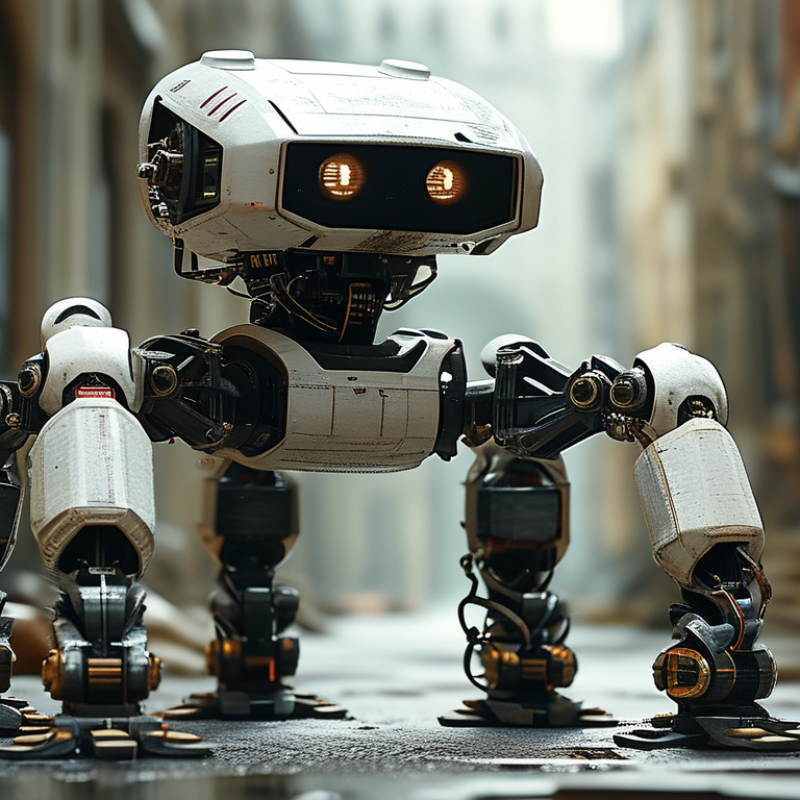
The Growing Importance of Quadruped Robots in Robotics Research
Quadruped robots are gaining traction in robotics research due to their versatility and efficiency. These robots mimic animal movement, showcasing agility and stability in various terrains. According to a recent industry report, the quadruped robot market is expected to reach $1.2 billion by 2026, growing at a remarkable rate of 25% annually. This rapid growth highlights their potential in fields like search and rescue, agriculture, and environmental monitoring.
Researchers are drawn to quadruped designs due to their ability to traverse difficult landscapes. Unlike wheeled robots, these four-legged models can navigate rough terrain effectively. The complexity of their design often leads to challenges. For instance, maintaining balance while maneuvering in unpredictable environments requires advanced algorithms and control systems. This is an area where further exploration is needed.
Tip: Incorporate sensor technologies to improve locomotion. Sensors can provide feedback on terrain and stability, enhancing performance. By experimenting with different materials, researchers can optimize weight and endurance. As quadruped robots evolve, the need for interdisciplinary collaboration becomes crucial. Combining insights from biology, engineering, and computer science will push the boundaries of what these robots can achieve.
Why are Quadruped Robots a Focus in University Research?
This chart illustrates the key focus areas in university research related to quadruped robots as of 2023. The areas of Navigation, Terrain Adaptation, Energy Efficiency, Load Bearing, and Autonomy highlight their significance within the field of robotics.
Key Advantages of Quadruped Robots Over Other Robotic Forms
Quadruped robots have garnered significant attention in university research due to their unique advantages. These robots have a stable four-legged design, allowing them to traverse uneven terrain with ease. Their gait is inspired by animals, enabling smooth movement over obstacles. This mimicking of nature enhances their ability to navigate various environments effectively.
Another key advantage is their adaptability. Quadruped robots can perform tasks in diverse settings, such as search and rescue missions or agricultural monitoring. Their design allows them to carry heavy loads and operate in areas inaccessible to wheeled robots. This versatility opens up new research avenues and practical applications.
However, challenges remain. The complexity of controlling these robots can hinder performance. Balancing algorithms and sensory inputs require ongoing refinement. Researchers must address these issues to unlock the full potential of quadruped robotics. Each advancement leads to new questions. The pursuit of a perfect balance between function and control continues in this dynamic field.
Current Applications of Quadruped Robots in Industry and Academia
Quadruped robots are gaining traction in both academia and industry. Their unique design allows them to traverse rough terrains efficiently. In construction, these robots help with tasks like inspection and surveillance. Reports suggest that the market for autonomous mobile robots is expected to exceed $30 billion by 2025. This growth indicates a strong demand for innovative robotics solutions.
In academia, researchers are leveraging quadruped robots to study locomotion and biomechanics. Universities often collaborate with industries to develop practical applications. Recent studies show these robots can perform tasks more efficiently than traditional vehicles in hazardous environments. However, challenges remain. Current algorithms sometimes struggle with real-time obstacle detection. Moreover, weight distribution can be a concern, affecting agility and speed.
Despite their growing capabilities, quadruped robots still face limitations. The reliance on high-end sensors increases costs. Not all academic research is immediately applicable, leading to gaps between theory and practice. Nevertheless, ongoing advancements promise improved functionality in the near future. The synergy between research and real-world applications continues to drive innovation in this exciting field.
Current Applications of Quadruped Robots in Industry and Academia
| Application Area |
Description |
Benefits |
| Search and Rescue |
Quadruped robots can navigate rough terrain to assist in locating survivors in disaster scenarios. |
Increases safety and efficiency of rescue operations. |
| Agriculture |
Used for monitoring crop health and performing tasks such as planting and harvesting. |
Enhances productivity and reduces labor costs. |
| Environmental Monitoring |
Equipped with sensors to collect data on wildlife and ecosystems. |
Supports conservation efforts and research. |
| Military Applications |
Utilized for reconnaissance and logistics in war zones. |
Increases operational effectiveness while minimizing risks to human soldiers. |
| Healthcare |
Assist in caring for elderly patients or those with disabilities. |
Enhances quality of life and independence for patients. |
| Research and Education |
Used in academic settings to explore robotic movement and AI. |
Fosters innovation and skill development among students. |
Innovative Technologies Driving Quadruped Robot Development
Quadruped robots are gaining traction in university research due to innovative technologies leading their development.
Advanced AI algorithms enhance navigation and decision-making.
In recent years, studies show that these robots can maneuver rough terrains, demonstrating a 30% improvement in mobility compared to two-legged counterparts.
The integration of lightweight materials and high-torque actuators allows for agile movements, making them suitable for various applications.
Researchers are exploring new sensor technologies, which are crucial for interaction with environments.
For example, LIDAR systems enhance spatial awareness, enabling robots to avoid obstacles effectively.
When equipped with such technology, quadruped robots exhibit a sharper perception of their surroundings.
This ability could revolutionize search and rescue operations, showcasing their potential beyond academic settings.
Tips: Ensure your research focuses on robotics' ethical implications. Over-reliance on technology can lead to unforeseen challenges.
Keep a balance between innovation and practical application. As development continues, acknowledging the limitations and
ethical concerns surrounding autonomy in these robots is vital. Being proactive in addressing these issues will enhance the
reliability and acceptance of quadruped robots in society.
Future Research Trends and Challenges in Quadruped Robotics
Quadruped robots are gaining attention in university research for various reasons. Their potential applications in diverse environments make them appealing subjects of study. Researchers are excited about their mobility and agility. This enables quadruped robots to navigate complex terrains better than wheeled robots. However, building robots that mimic animal movement is challenging. The intricacies of biological systems often lead to unexpected results in robotics.
Future trends in quadruped robotics will revolve around enhancing autonomy and adaptability. Enabling these robots to make real-time decisions is crucial. Current models often struggle with unpredictable conditions. Researchers aim to incorporate advanced sensors and AI algorithms. Yet, the integration of these technologies can be complex. There is a risk of over-relying on AI, leading to unforeseen operational failures.
Challenges also arise from battery technology and power efficiency. Keeping quadruped robots operational for prolonged periods is still an issue. While some solutions exist, they may not be practical for all applications. Collaborative efforts among institutions can foster innovation. By sharing research findings, universities can address limitations. This collaborative spirit is essential for overcoming the obstacles in quadruped robotics development.
Conclusion
Quadruped robots have become a significant focus in university research due to their unique advantages in mobility and adaptability over traditional robotic forms. Their ability to traverse uneven terrains and their stability in various environments make them highly valued in both academic and industrial applications. Universities are exploring these robots to enhance understanding of locomotion, develop control algorithms, and improve real-world usability.
The innovations driving quadruped robot development include advanced sensors, artificial intelligence, and machine learning techniques that enable better navigation and environmental interaction. As research progresses, future trends are likely to address the challenges of autonomy, energy efficiency, and human-robot interaction. This raises the question: why are quadruped robots widely studied in universities? The answer lies in their potential to revolutionize fields like search and rescue, agriculture, and exploration, making them vital for the future of robotics research.

 Excitech Robot