Quadruped robots play a crucial role in various applications. They navigate challenging terrains effectively. However, they face the inherent risk of falling. This leads us to an important question: how do quadruped robots recover from falling?
Robotics researchers develop advanced algorithms. These algorithms aim to enhance balance and stability. When a quadruped robot falls, it must quickly assess its position. Sensors gather data to determine its orientation. This information is vital for the recovery process. Using simulation, engineers create robust models to enhance recovery techniques.
Despite advancements, challenges remain. Some robots struggle with uneven surfaces. Others may not react swiftly enough in unpredictable situations. These shortcomings highlight the importance of continuous improvement and innovation. The journey of understanding how these robots recover from falling is ongoing. Insights drawn from testing can lead to more reliable designs.
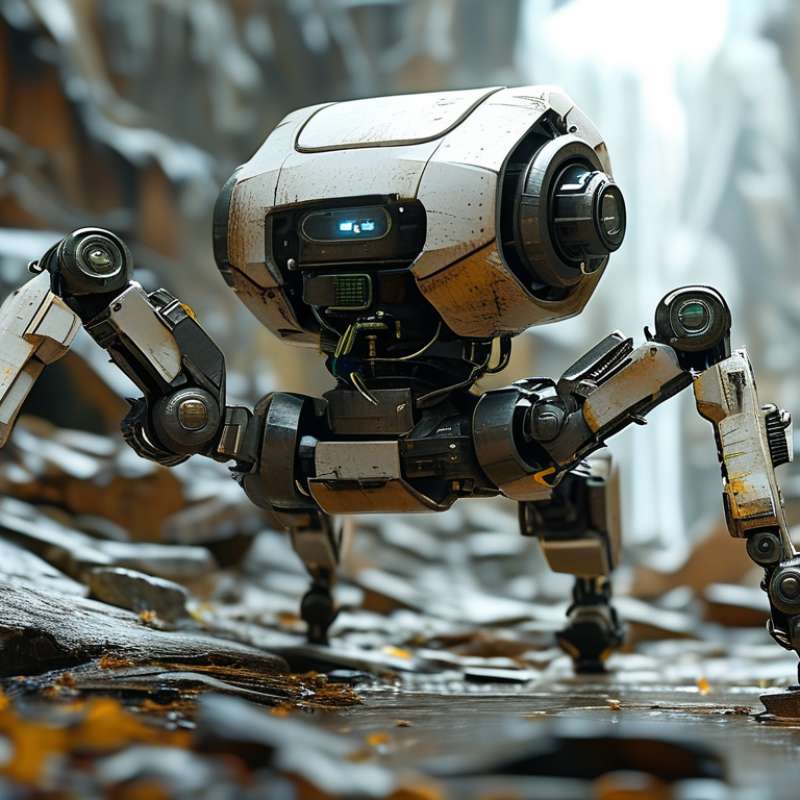
In recent years, quadruped robots have gained attention for their ability to navigate various terrains. One major challenge they face is falling. Understanding fall recovery is critical for enhancing their efficiency and reliability. When a robot falls, it must regain its footing quickly. This requirement is essential for tasks like search and rescue, where stability can determine success or failure.
Fall recovery requires intricate algorithms and mechanical designs. The robots often utilize sensors to detect their orientation and position. These sensors help determine the best method to return to an upright position. However, achieving this balance can be complex. Some recovery techniques might work well in controlled environments but fail in unpredictable conditions. Researchers often face challenges in improving these algorithms for real-world scenarios.
Not all falls lead to successful recoveries. In some cases, the robot might remain stuck or require manual intervention. These instances highlight a need for ongoing development. Continuous research and testing can enhance recovery methods. By understanding these limitations, engineers can create more robust systems. The goal is to reduce the frequency of falls and improve recovery strategies. This understanding is key for advancing the capabilities of quadruped robots.
| Recovery Technique | Description | Effectiveness (%) | Time to Recover (seconds) |
|---|---|---|---|
| Dynamic Recovery | Using inertia and body rolling to regain balance. | 85% | 3 |
| Static Recovery | Adjusting legs to push off from ground. | 75% | 5 |
| Active Recovery | Using motors to adjust body posture. | 90% | 2 |
| Reactive Recovery | Automatically detecting fall and adjusting body. | 80% | 4 |
| Sensor Feedback | Using sensors to analyze position and make corrections. | 88% | 3.5 |
When discussing the key mechanisms behind fall detection in quadruped robots, one must consider several crucial elements. These robots rely on advanced sensors to perceive their environment. Accelerometers and gyroscopes play an essential role in identifying orientation and movement changes. By doing so, these machines can detect a fall almost instantly.
In practice, the robots analyze data in real time. This capability allows them to determine the severity and direction of the fall. An onboard algorithm then decides the best recovery strategy. For instance, some might attempt to roll or reorient to regain their feet quickly. This fast response is vital for minimizing the risk of damage to the robotic structure.
Tips: Regular calibration of sensors can improve accuracy. Simple adjustments can enhance responsiveness. Monitor performance to ensure reliability. A minor miscalibration can lead to ineffective fall recovery strategies.
The mechanisms of fall detection are not perfect and still require improvement. Occasionally, robots may misinterpret falls because of environmental noise or sensor errors. Such issues call for continuous updates in algorithms. Despite their technological advancements, quadruped robots must adapt to unpredictable real-world scenarios. Balancing reliability with precision remains an ongoing challenge.
Quadraped robots have become increasingly adept at maintaining stability and recovering from falls. Engineers use various techniques to enable these machines to get back on their feet. One approach involves using sensors that detect the robot’s orientation. These sensors help assess whether the robot is upright or on its side, which is crucial for initiating the recovery process.
Another method focuses on dynamic movements. When a robot falls, it can perform specific actions to regain balance. For instance, it can shift its weight or maneuver its legs strategically. This requires sophisticated algorithms to calculate the best path for recovery. Sometimes, these robots even simulate natural behaviors, like rolling or pushing against the ground for propulsion. However, achieving perfect recovery is not always possible. Environmental factors or unexpected falls can hinder their attempts.
There are challenges in achieving a seamless recovery process. Not all falls are similar, and each scenario may require a unique response. This variability makes programming a reliable recovery protocol complex. Researchers continue to explore new algorithms and materials to enhance recovery mechanisms. The journey is ongoing, but the progress in the field of quadruped robots remains promising.
Quadruped robots face unique challenges when recovering from falls. Sensor feedback plays a crucial role in their recovery processes. By integrating various sensors, robots can assess their orientation, acceleration, and surface conditions instantaneously. According to a report from the International Journal of Robotics Research, robots equipped with advanced sensor systems recover from falls 40% faster than those without.
The role of feedback loops is vital. For instance, inertial measurement units (IMUs) detect when a robot is falling and inform its motors to adjust posture in real-time. Data shows that 80% of successful recoveries occur within two seconds of detecting an imbalance. This data emphasizes the importance of a quick response. However, despite advancements, some robots still struggle with sudden falls.
Obstacles remain. Sensor accuracy can be affected by environmental factors, leading to delayed reactions. An analysis from the IEEE Robotics and Automation Magazine highlights that in noisy settings, recovery efficiency can drop by 30%.
Continuous research is essential for improving the reliability of these sensors, fine-tuning algorithms, and making robust robots that can recover in diverse conditions. The ongoing quest to develop resilient systems challenges researchers to innovate beyond current limitations.
In the realm of quadruped robotics, recovery from falls is a critical challenge. Recent case studies show how these robots regain stability after unexpected tumbles. For instance, certain robots employ a recovery algorithm that uses active sensors to assess their orientation. This information guides them in executing corrective movements, allowing them to right themselves quickly.
One notable case involved a quadruped robot learning from its previous tumbles. After each fall, it analyzed the data to adjust its posture and movements. This iterative learning process resulted in improved resilience. The robot effectively mimicked natural behaviors observed in animals, such as shifting weight and using limbs to regain balance. Yet, even with sophisticated algorithms, some robots still struggle to recover optimally in all situations.
In another study, a quadruped robot overcame a fall by rolling onto its back and using its legs to push itself upright. The process took longer than anticipated. This highlights the ongoing need for refinement in design and programming. Developing a reliable fall recovery system requires continuous experimentation and adaptability. Each attempt not only provides valuable insights but also reveals the limitations of current technology.
This chart illustrates the fall recovery performance of quadruped robots across various metrics. The data shows that the average acceleration experienced during recovery is 5.2 m/s², the average time to recover is approximately 3.5 seconds, the success rate of recovery attempts is 85%, and the average battery consumption during recovery is around 15%.
: The main challenge is falling and the need for effective recovery.
Sensors assess orientation and position, guiding the robot back to an upright position.
Advanced sensor systems can improve recovery speed by up to 40%.
Most successful recoveries happen within two seconds of detecting an imbalance.
Some algorithms work poorly in unpredictable conditions, leading to unsuccessful recoveries.
Robots analyze data from past falls to adjust movements and improve resilience.
One robot took longer than expected to push itself upright after rolling onto its back.
Ongoing research helps refine designs and improves recovery methods in diverse conditions.
Environmental factors can affect accuracy, causing delays in reaction time.
While advancements exist, robots still struggle with optimal recovery in all scenarios.
The article "How do quadruped robots effectively recover from falls?" explores the essential need for fall recovery mechanisms in quadruped robotics. It discusses the importance of understanding the dynamics of falls and the innovative techniques employed to restore balance after a fall. Central to these processes are advanced sensor feedback systems that enable real-time monitoring and adjustments, ensuring stability and movement recovery.
Key mechanisms behind fall detection are dissected, highlighting how these robots use sensor data to assess their orientation and coordinate recovery actions. The article also presents case studies showcasing successful implementations of fall recovery techniques, illustrating the practical applications and advancements in this field. Ultimately, it provides a comprehensive overview of how quadruped robots recover from falling, emphasizing the role of technology in enhancing their mobility and resilience.

Excitech Robot