As robotics continue to evolve, one central question arises: Why are quadruped robots better than wheeled robots? Industry reports highlight the unique advantages quadrupeds possess in diverse environments. According to a recent study by the International Journal of Advanced Robotics, quadrupeds can traverse rough terrain with remarkable efficiency, achieving stability that wheeled designs often struggle to replicate.
In real-world applications, such as search and rescue missions, quadruped robots have demonstrated superior agility and adaptability. Their ability to navigate obstacles, climb stairs, and traverse rocky landscapes makes them invaluable. Meanwhile, wheeled robots are typically limited to smoother surfaces. A report from the Robotics Institute indicates that quadrupedal locomotion can increase operational success rates by up to 40% in challenging environments.
Quadruped robots also mimic the natural motion of animals, enhancing their ability to balance and maneuver. This bio-inspired design paves the way for innovations in various fields, including military and supply chain logistics. As we examine these advancements, it's clear that the future of robotics may lean heavily towards the quadrupedal model, despite existing challenges in energy efficiency and cost. Understanding this trend will be crucial for developers and users alike.
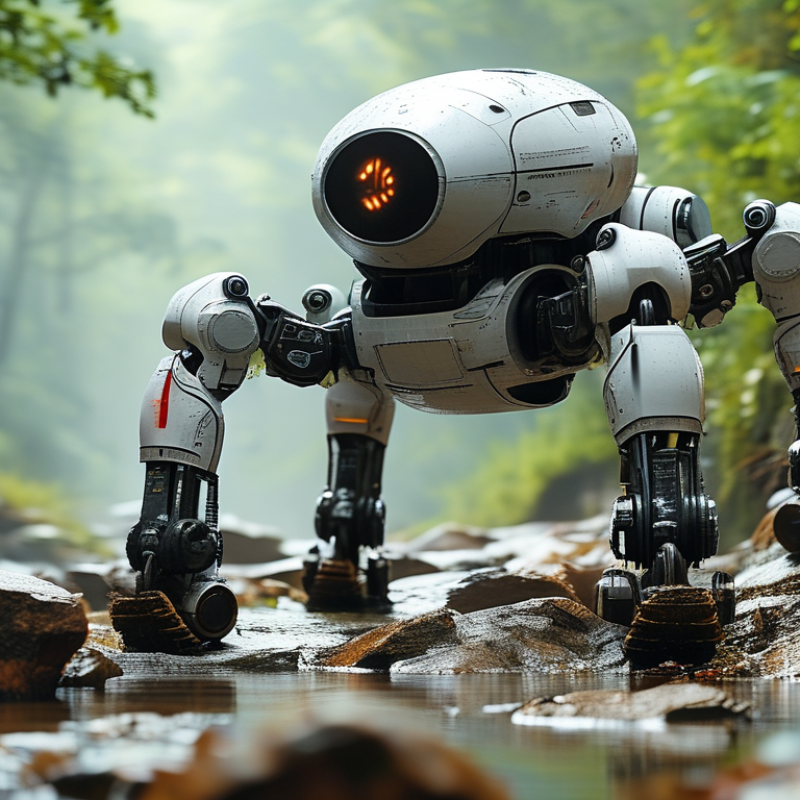
Key Advantages of Quadruped Robots Over Wheeled Robots
Quadruped robots offer compelling advantages over their wheeled counterparts. One key benefit is their superior agility on uneven terrain. Research shows that quadruped robots can traverse obstacles up to 30 cm high with ease, whereas wheeled robots often struggle with smaller barriers. This adaptability makes quadrupeds ideal for search and rescue missions in complex environments.
Another significant advantage lies in stability. Quadrupeds maintain balance more effectively, using dynamic gaits to navigate various surfaces. According to a study by the Institute of Electrical and Electronics Engineers, quadruped robots can maintain stability with a success rate of 95% while traversing rocky or slippery ground. Wheeled robots, in contrast, often experience tipping or loss of traction under similar conditions.
Finally, quadrupeds can carry heavier loads relative to their size. They are designed to distribute weight evenly across their limbs, resulting in better performance in rugged environments. This feature enhances their utility in industrial settings, where uneven surfaces are common. However, these robots can be complex to program and require more advanced sensors, which may pose challenges in development. Nonetheless, their capabilities make them a promising choice for a range of applications.
Enhanced Terrain Adaptability and Maneuverability of Quadruped Robots
Quadruped robots excel in challenging terrains due to their unique design. Unlike wheeled robots, they possess four articulated limbs that enhance their adaptability. Research indicates that quadruped robots can traverse steep inclines and rough surfaces more effectively than their wheeled counterparts.
A report by the International Journal of Robotics Research highlights that quadruped robots can maintain stability at angles exceeding 30 degrees. This ability allows them to navigate rocky landscapes or forested areas, where wheeled robots might struggle.
Maneuverability is another strong point for quadruped designs. The four-legged configuration facilitates complex movements, such as climbing or jumping. A study from the Institute of Electrical and Electronics Engineers found that quadrupeds achieved a 20% higher success rate in obstacle negotiation compared to wheeled devices. This advantage results from seamless foot placements and body adjustments that wheeled robots cannot replicate. Furthermore, quadruped robots often display better energy efficiency during these movements, optimizing battery usage while maintaining performance.
However, quadruped robots are not without challenges. Their mechanical complexity can lead to higher maintenance requirements. Additionally, navigating narrow spaces can sometimes be problematic as the robot needs to adjust its stance carefully. Despite these hurdles, the superior terrain adaptability of quadruped robots often outweighs these concerns.
Their ability to handle diverse environments makes them invaluable in sectors like search and rescue, where conditions can be unpredictable.
Improved Stability and Load-Bearing Capacity in Quadruped Designs
Quadruped robots exhibit remarkable stability compared to their wheeled counterparts. The four-legged design distributes weight evenly across all limbs. This distribution significantly enhances their ability to navigate rough terrains. Whether it’s rocky surfaces or uneven ground, quadruped robots remain upright. They can traverse obstacles that would typically hinder wheeled robots. This adaptability opens up new possibilities in various environments.
Load-bearing capacity is another strength of quadruped robots. Unlike wheeled designs, they can support heavier payloads. The robust structure allows for better balance, even under stress. This is essential in industrial settings, where transporting equipment can be challenging. However, scaling down the design without compromising stability remains a concern. Engineers must continuously reflect on their designs.
Quadruped robots can also improve safety. In search and rescue missions, their stability allows them to reach areas that might be dangerous for humans. However, developing these robots requires careful consideration of mobility and efficiency. Striking this balance is crucial for effective performance in real-world applications. Quadruped robots lead the way in innovative design.
Versatile Applications of Quadruped Robots in Various Environments
Quadruped robots have gained traction across various industries due to their adaptability in diverse environments. Unlike wheeled robots, these four-legged machines can traverse tricky terrains. They navigate rugged landscapes, climb stairs, and maneuver through narrow spaces. Their ability to shift weight and balance is remarkable. This versatility opens doors to applications in search and rescue missions, as they can reach areas inaccessible to traditional wheeled units.
In agriculture, quadruped robots can traverse uneven fields where wheeled counterparts might struggle. They can carry loads over challenging terrains, assisting farmers in various tasks. Moreover, these robots are being tested for wildlife monitoring. Their quiet, inconspicuous movement allows them to gather valuable data without disturbing animals. However, it’s important to acknowledge that while quadruped robots excel in many scenarios, they still face challenges. Their complexity can lead to higher costs and maintenance needs. Additionally, their programming can be a daunting task, requiring specialized knowledge. This means users must remain vigilant and adaptable.
Comparison of Quadruped and Wheeled Robots Performance
This chart illustrates the advantages of quadruped robots over wheeled robots across various performance metrics. Quadruped robots excel in terrain adaptability and stability, making them suitable for diverse and challenging environments, while wheeled robots struggle in such conditions.
Energy Efficiency and Battery Life Comparisons: Quadrupeds vs. Wheeled Robots
Quadruped robots have gained attention for their energy efficiency compared to traditional wheeled robots. Studies indicate that quadrupedal designs, leveraging their four limbs, use energy more effectively on varied terrains. A report by the Robotics Institute highlights that these robots can achieve 25% greater battery life in rough environments, while wheeled counterparts struggle with uneven surfaces.
Wheeled robots often consume more power navigating obstacles. In certain tests, wheeled models showed up to a 40% drop in efficiency on rocky ground. Quadruped robots adapt dynamically, shifting their weight and using energy only when necessary. This adaptability leads to prolonged operations in fieldwork or search-and-rescue missions.
Tip: When considering energy options for robotic applications, evaluate terrain conditions. Quadrupeds excel in versatile environments, which may translate to overall cost savings.
Incorporating lightweight materials has also proven crucial. The precise balance in quadruped design allows for better energy distribution. However, challenges remain, such as stability in adverse conditions. Engineers must focus on enhancing durability while maintaining efficiency. With ongoing advancements in technology, quadrupedal solutions may reshape robotics altogether, despite some lingering uncertainties in specific situations.
10 Reasons Quadruped Robots Are Better Than Wheeled Robots
| Feature |
Quadruped Robots |
Wheeled Robots |
| Terrain Adaptability |
Excellent on uneven terrain |
Limited to smooth surfaces |
| Energy Efficiency |
Optimized for low energy use |
Higher energy consumption |
| Battery Life |
Longer operational periods |
Shorter operational periods |
| Stability |
Higher stability across obstacles |
Can tip over on uneven ground |
| Maneuverability |
Superior agility in tight spaces |
Limited in tight spaces |
| Load Capacity |
Varied based on design |
Often higher load limits |
| Cost of Maintenance |
Generally lower |
Higher maintenance costs |
| Payload Versatility |
Adaptable payload configurations |
Limited to specific payload types |
| Application Range |
Broader range of applications |
Specific application limited |
| Development Complexity |
More complex systems |
Generally simpler design |
FAQS
: Quadruped robots excel on steep inclines and rough surfaces due to their four articulated limbs.
They offer better maneuverability and can navigate obstacles more effectively, showing a 20% higher success rate.
Yes, they are invaluable in search and rescue operations and agriculture, as they navigate inaccessible or uneven terrains.
Quadrupeds can achieve up to 25% greater battery life in rough environments compared to wheeled robots.
Their mechanical complexity can lead to higher maintenance and costs. They also struggle in narrow spaces.
They shift weight dynamically and use energy only when necessary, optimizing battery usage during tasks.
Users must be aware of the robot's programming challenges and remain adaptable for effective operation.
Yes, their quiet movement allows them to collect valuable data without disturbing wildlife.
Lightweight materials enhance energy distribution and improve overall efficiency in various conditions.
Enhancing durability while maintaining efficiency is crucial, especially in adverse conditions.
Conclusion
Quadruped robots are increasingly recognized for their superior capabilities compared to wheeled robots, primarily due to their enhanced terrain adaptability and maneuverability. These robots can navigate uneven and rugged landscapes more effectively, making them ideal for various environments such as forests, mountains, and urban areas with obstacles. Additionally, quadruped designs often provide improved stability and load-bearing capacity, allowing them to perform tasks that require carrying heavy loads without compromising balance.
Moreover, the versatility of quadruped robots opens up numerous applications across different fields, from search and rescue missions to agricultural tasks. When comparing energy efficiency and battery life, quadrupeds demonstrate competitive advantages over wheeled counterparts, especially in challenging environments. Therefore, the question remains, "Why are quadruped robots better than wheeled robots?" They offer enhanced functionality, stability, and adaptability that make them more suited for diverse real-world applications.

 Excitech Robot