How to Identify Factors Limiting the Speed of Quadruped Robots?

Time:2026-06-07 Author:Henry
0%

Understanding what limits the speed of quadruped robots is critical for their development. These robots are designed for various applications, including search and rescue, logistics, and entertainment. However, they struggle to reach high speeds due to several factors.

One primary limitation is their mechanical design. The joint configurations, leg lengths, and materials used play significant roles. These elements can hinder agility and increase energy consumption. Another key factor involves the control algorithms that govern their movements. If these algorithms are not optimized, they can result in slower reactions and less fluid locomotion.

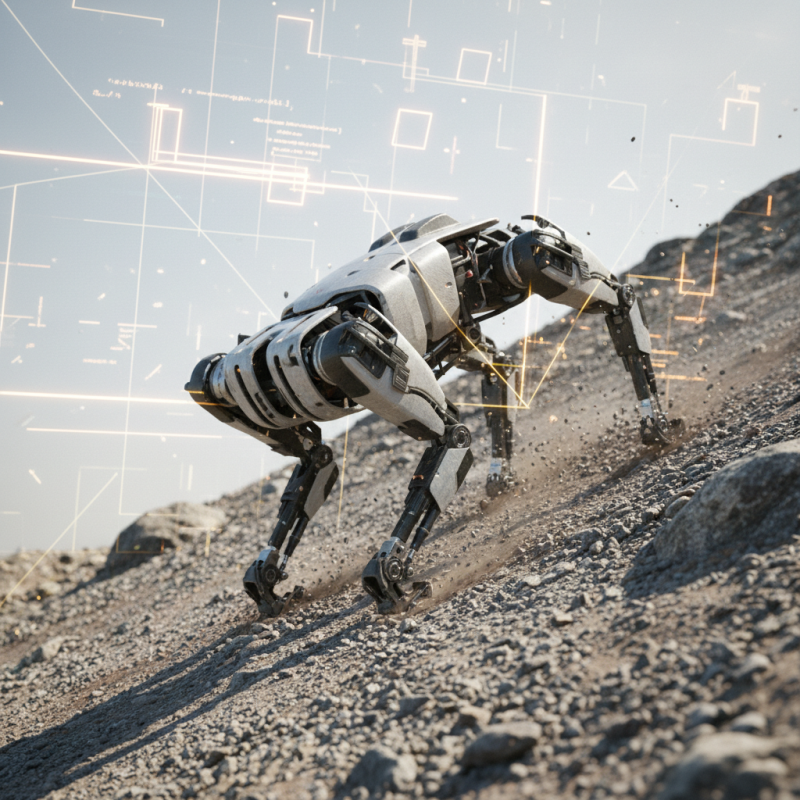
Environmental conditions also impact speed. Terrain roughness, obstacles, and slope increases can dictate how fast a quadruped can move. These robots must adapt to diverse environments, which complicates their speed capabilities. Identifying and addressing these challenges is crucial for enhancing performance and utility in real-world applications.
How to Identify Factors Limiting the Speed of Quadruped Robots?

Identification of Physical Constraints Affecting Quadruped Robot Speed

Quadruped robots are fascinating machines. They mimic animal locomotion and can traverse complex terrains. However, several physical constraints limit their speed. Understanding these factors is crucial for improving robot performance.

One primary constraint is the robot's weight. Heavily built quadrupeds struggle to lift their legs quickly. This inertia slows them down significantly. Additionally, the material used for construction affects speed. Heavier materials may provide durability but reduce overall agility.

Another aspect is the leg design and joint articulation. If joints lack flexibility, movements become restricted. This rigidity can hinder speed. Furthermore, power delivery systems also play a vital role. Inefficient energy transfer reduces the speed potential. Identifying these limitations requires testing and analysis. Insights from real-world experiments can guide improvements.

Analysis of Terrain Influence on Quadruped Robot Movement Efficiency

When analyzing the terrain's influence on quadruped robot movement, several key factors emerge. Different terrains present unique challenges that affect speed and efficiency. For example, loose sand requires different locomotion techniques compared to rocky surfaces. A quadruped robot may struggle with stability while navigating uneven ground. Such terrain variations can drastically alter its speed.

Additionally, the robot's design plays a critical role. The limb structure, weight distribution, and foot design can significantly affect its ability to traverse varying surfaces. For instance, broader feet tend to provide better support in soft terrains. However, these may compromise speed on hard surfaces. This interplay between design and terrain highlights a need for continuous improvement in robot engineering.

Researchers must also consider how terrain interacts with power consumption. Navigating uphill requires more energy, potentially slowing the robot down. Exploration of energy-efficient gait designs could address this issue. A quadruped robot's effectiveness hinges on its adaptability, but understanding terrain limitations remains vital. Testing in diverse conditions is crucial for optimization.

Examination of Mechanical Design Aspects Limiting Speed in Quadruped Robots

Quadruped robots have gained attention for their potential in diverse applications. However, their speed is often limited by various mechanical design aspects. The key to understanding these limitations lies in analyzing the components that affect both performance and agility.

One significant factor is the actuator design. The choice of motors and servos directly influences speed and efficiency. Lightweight materials can enhance movement but may compromise durability. Engineers often grapple with this trade-off, leading to a need for constant iteration. Striking the right balance is crucial for optimal performance.

Tip: Always consider the material selection carefully. Lightweight options are great but check for strength and reliability.

Another aspect is the leg configuration. Longer legs can cover more distance quickly, but they may decrease stability. Shorter, sturdier legs offer better balance but limit speed. Testing different configurations can provide insights into the best design for specific tasks.

Tip: Experiment with leg angles and lengths during the prototyping phase. Small adjustments can lead to significant improvements in speed.

Incorporating feedback loops during the design phase can lead to a better understanding of these mechanical limitations. Iterative testing and refinement are essential for advancing quadruped robot technology. This ongoing process presents both challenges and opportunities for innovation in robotic design.

Impact of Algorithms and Control Systems on Quadruped Robot Velocity

Understanding the impact of algorithms and control systems is crucial for improving quadruped robot velocity. These systems dictate how effectively a robot can navigate different terrains. Efficient algorithms can analyze sensor data, allowing the robot to adapt its movements dynamically. For instance, a well-designed path-planning algorithm can help a quadruped avoid obstacles quickly and efficiently.

Control systems also play a significant role in enhancing speed. PID controllers, for example, can adjust a robot's gait in real-time, ensuring stability and rapid acceleration. However, relying solely on predetermined algorithms may limit adaptability. In unpredictable environments, these systems might struggle to respond adequately to sudden changes. Thus, a balance between speed and adaptability is essential.

Moreover, the interaction between hardware limitations and algorithms must be considered. High-speed motors can enhance performance, yet inefficient algorithms may hinder the potential. These contradictions highlight the need for continuous refinement in both software and hardware. With ongoing research, the future of quadruped robots may see remarkable advancements in velocity and maneuverability.

Factors Limiting the Speed of Quadruped Robots

Assessment of Environmental Factors and Their Effects on Motion Dynamics

Understanding environmental factors is essential for enhancing the motion dynamics of quadruped robots. When assessing terrain types, studies show that soft, uneven surfaces can reduce a robot's speed by up to 50%. The friction and stability on various surfaces can drastically affect a robot's ability to maintain momentum. For instance, wet grass poses challenges that dry, solid ground does not. This highlights the need for comprehensive testing across different environments to clarify performance limitations.

The weight of a quadruped robot also influences its speed. Heavier robots often struggle on softer terrains, leading to inefficient movement patterns. According to the Robotics Institute, optimal weight-to-power ratios are crucial for balancing speed and stability. Researchers have found that robots designed for varying weight capacities can achieve up to 30% faster speeds under ideal conditions. However, a mismatch between expected and actual robot capabilities can lead to unexpected failures during field tests, signaling areas needing refinement. Exploring these dynamics is vital for developing more effective quadruped designs.

FAQS

: What limits the speed of quadruped robots?

: Several factors like weight, materials, leg design, and joint flexibility limit their speed.

How does robot weight affect speed?

Heavily built robots struggle to lift their legs quickly, leading to reduced speed.

What role does material choice play in quadruped robot speed?

Heavier materials may enhance durability but hinder overall agility and speed.

Why is leg design important for speed?

Rigid joints lead to limited movement, which can significantly slow down the robot.

How do algorithms impact quadruped robot velocity?

Efficient algorithms help robots navigate terrains effectively and adapt movements in real-time.

What is the function of control systems in enhancing speed?

Control systems like PID adjust gaits to maintain stability and allow rapid acceleration.

Can predetermined algorithms limit a robot's adaptability?

Yes, they may struggle with unexpected changes in environments, reducing speed and efficiency.

Why are hardware limitations important to consider?

High-speed motors need efficient algorithms; otherwise, performance may not meet potential.

What is the significance of ongoing research in quadruped robots?

Continuous improvements in both software and hardware could lead to better velocity and maneuverability.

What challenges exist in enhancing robot speed?

Balancing speed with adaptability is crucial, yet constant refinement is often required.

Conclusion

In addressing the question of "What limits the speed of quadruped robots," this article explores several critical factors that impede their velocity. Firstly, it identifies physical constraints inherent in the robots' design, such as weight distribution and joint flexibility, which directly affect their ability to move quickly. Furthermore, the analysis examines how different terrains impact movement efficiency, highlighting that uneven or complex surfaces can significantly reduce speed.

Additionally, the article delves into mechanical design aspects, emphasizing how the choice of materials and structural configurations can either enhance or limit a robot’s speed. It also considers the role of algorithms and control systems, which are essential for optimizing velocity and responsiveness in dynamic environments. Lastly, environmental factors—such as friction, obstacles, and weather conditions—are assessed for their influence on the motion dynamics of quadruped robots. Through this comprehensive investigation, the article provides valuable insights into the multifaceted limitations on quadruped robot speed.

Henry

Henry

Henry is a dedicated marketing professional with a profound expertise in the company's offerings. With years of experience in the industry, he possesses an impressive understanding of the market dynamics and consumer behaviors that drive success. Henry is committed to sharing his insights through......