How to Choose Quadruped Robots With Obstacle Avoidance?

Time:2026-09-07 Author:Charlotte
0%

Quadruped robots are moving from controlled demonstrations into mines, construction sites, power facilities, and emergency inspections. These environments contain loose cables, wet floors, stairs, pipes, rubble, and moving workers. Why do quadruped robots need obstacle avoidance? Because four-legged mobility alone does not guarantee safe, reliable operation. A robot may climb uneven ground, yet still collide with a low beam or misjudge a transparent barrier.

The International Federation of Robotics reported 541,302 industrial robots installed worldwide in 2023 in its World Robotics 2024 report. This figure shows the continuing expansion of automated machines across industrial environments. However, quadruped robots face more variable terrain than fixed robotic arms. Their selection therefore requires practical testing, not impressive videos. Check depth-camera range, LiDAR performance, terrain recognition, stopping distance, recovery behavior, and operation under dust or poor lighting. Small details matter.

NIST research on robot performance and mobility testing also emphasizes measurable, repeatable evaluation. Buyers should request test conditions, sensor specifications, and failure-rate evidence. A robot that avoids obstacles indoors may struggle outdoors after rain. That gap deserves attention.

There is no universal obstacle-avoidance score. This is an industry weakness. A careful buyer should compare field trials, maintenance records, software update policies, and operator training requirements. The right quadruped robot is not simply the fastest model. It is the platform that detects hazards early, reacts predictably, and remains useful when the environment becomes untidy.
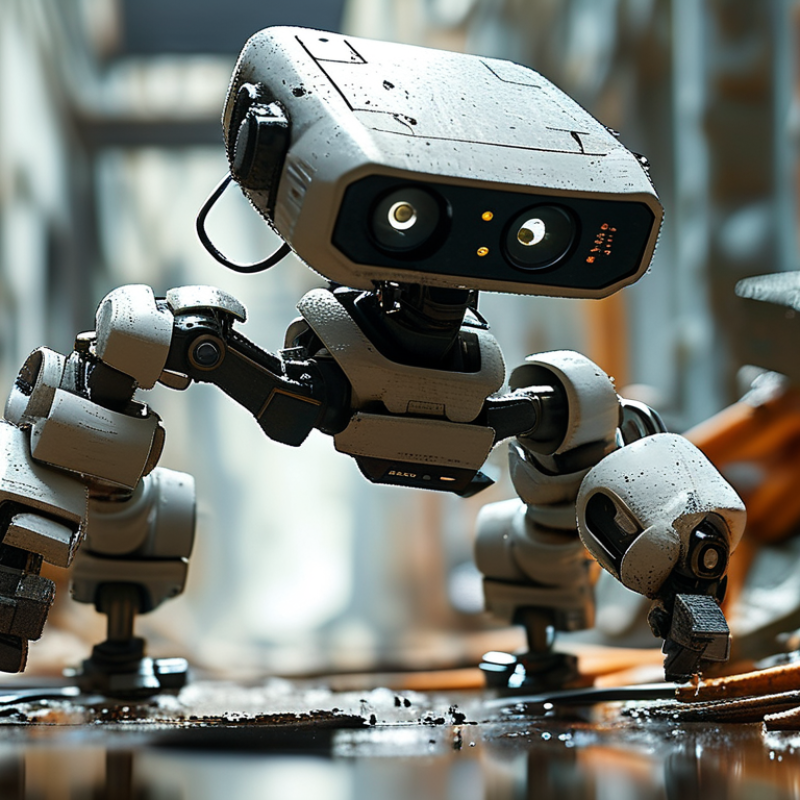
How to Choose Quadruped Robots With Obstacle Avoidance?

Define the Mission and Operating Environment

Choosing a quadruped robot with obstacle avoidance begins with a precise mission definition. Start with the mission. Is it inspecting pipelines, mapping construction areas, supporting emergency teams, or carrying sensors across uneven ground? Each task demands different walking speeds, payload capacity, battery duration, and navigation accuracy.

Describe the operating environment in measurable detail. Record floor types, stair heights, loose gravel, wet surfaces, narrow passages, and typical lighting. A warehouse may contain reflective metal, glass doors, and moving workers. A hillside may include mud, roots, sudden drops, and poor satellite visibility. These conditions affect whether the robot needs depth cameras, lidar, thermal sensing, or multiple systems working together.

During field trials, test obstacle avoidance with realistic clutter, not clean demonstrations. Place cables near the floor, boxes at different heights, and obstacles partly hidden by shadows. Measure stopping distance, recovery time, false alarms, and performance after dust or rain exposure. A robot that avoids a chair may still fail beside a transparent panel. That assumption fails.

Define acceptable risk before comparing specifications. Keep people outside the test area, follow local safety requirements, and provide a manual control option. Review recorded failures with an experienced operator. Even careful testing has limits. Battery weight can change balance, and software updates may alter behavior. Select a platform that can be inspected, maintained, and independently evaluated in the exact environment where it will work.

Compare Locomotion, Payload, and Terrain-Crossing Capabilities

How to Choose Quadruped Robots With Obstacle Avoidance

Obstacle avoidance is useful only when locomotion remains stable. Compare gait control, payload, and terrain performance together. On a gravel path, a robot may clear a curb yet lose balance during a sharp turn. Look for adaptive walking modes, reliable foot placement, and controlled recovery after a slip. Speed alone is misleading. Measure walking speed while carrying the intended camera, tools, or sensor package. Check how depth sensors or lidar respond to low obstacles, dark surfaces, and narrow gaps.

Payload affects every movement, not just battery life. An overloaded platform may climb stairs slowly, twist its joints, and stop before reaching an obstacle. Check rated payload, center-of-mass limits, and behavior when the load is mounted high. Then inspect terrain-crossing details: maximum slope, step height, gap width, turning radius, and ground clearance. These figures should come from repeatable tests, not optimistic demonstrations. I once overestimated a robot after watching it cross clean concrete. Later, loose stones exposed poor foot contact and delayed recovery. That failure changed my evaluation checklist.

Tips: Test the complete system outdoors. Carry the real payload. Repeat each route at least three times. Record slips, stops, recovery time, and battery drop. Use obstacle sensors as assistance, not a substitute for supervision. Ask whether performance changes in dust, rain, darkness, or radio interference. Small gaps matter.

How to Choose Quadruped Robots With Obstacle Avoidance?

Comparison of representative quadruped robot classes by locomotion, payload, and terrain-crossing capability.

Robot Class Typical Payload Walking Speed Step Height Maximum Slope
Compact Inspection 5 kg 1.5 m/s 15 cm 30°
Medium Industrial 20 kg 2.0 m/s 30 cm 35°
Heavy-Duty Research 50 kg 1.5 m/s 40 cm 40°

The chart uses a normalized 0–10 capability score so payload, speed, step height, and slope performance can be compared in one view. For obstacle avoidance, prioritize step height, slope control, stable low-speed locomotion, and reliable terrain perception before selecting the highest payload class. Actual performance varies with battery level, payload position, surface friction, and autonomous navigation software.

Evaluate Obstacle-Detection Sensors and Avoidance Intelligence

When choosing a quadruped robot, obstacle avoidance deserves more attention than walking speed. A fast robot with weak perception can still collide with a chair leg, glass door, or loose cable. The International Federation of Robotics reported nearly 205,000 professional service robots sold in 2023, a 30% increase from the previous year. This growth raises expectations for safer, more dependable autonomous movement.

Evaluate the sensor combination, not a single specification. LiDAR can measure room geometry accurately, while stereo cameras add object shape and visual context. Depth cameras help detect low obstacles, but bright sunlight, dust, and reflective floors may reduce their reliability. Ultrasonic sensors can provide a useful backup. They are not enough alone. Ask for detection distance, update frequency, minimum obstacle size, and performance in darkness. Then test the robot around black mats, narrow poles, wet floors, and transparent panels.

Avoidance intelligence matters just as much as sensing hardware. The system should slow down before turning, select another route, and recover after a blocked path. Check whether it distinguishes a person from a fixed wall. Review collision logs and emergency-stop response times. ISO 13482 provides a useful reference for personal-care robot safety, although it may not cover every quadruped application. I would not trust a polished demonstration. In field testing, one missed cable can matter more than ten successful crossings. That is an uncomfortable limitation. A careful evaluation should include repeated trials, changing lighting, uneven ground, and sensor failures.

How to Choose Quadruped Robots With Obstacle Avoidance? - Evaluate Obstacle-Detection Sensors and Avoidance Intelligence
Evaluation Dimension Sensor or Capability Typical Practical Characteristics Obstacle-Detection Strengths Important Limitations Recommended Evaluation Check
Primary 3D Perception LiDAR Measures distance using laser pulses and produces a 2D or 3D point cloud. Typical mobile-robot systems use detection ranges from several meters to more than 100 meters, depending on sensor class and target reflectivity. Accurate geometry measurement; works in darkness; useful for mapping, stairs, walls, rocks, and uneven terrain. Performance can decrease with heavy rain, fog, dust, transparent surfaces, very dark materials, or highly reflective surfaces. Adds power, weight, and cost. Check minimum detectable object size, vertical field of view, scan rate, blind zones, operation in dust or rain, and whether the software uses the full 3D point cloud.
Visual Depth Depth camera Uses active infrared projection or time-of-flight measurement to estimate pixel-level depth. Effective range is commonly from under 1 meter to several meters, depending on the model and environment. Provides rich information about object shape, edges, drop-offs, cables, vegetation, and human activity. Can be affected by direct sunlight, reflective or transparent objects, low-texture surfaces, rain, fog, and infrared interference. Test detection of thin poles, black objects, glass, low obstacles, and stair edges at the robot’s actual walking speed.
Stereo Perception Binocular or stereo cameras Calculates depth from the difference between two camera views. Depth accuracy generally improves with a wider baseline, higher image quality, and stronger scene texture. Supports long-range visual awareness, semantic recognition, and obstacle classification without active illumination. Weak on textureless walls, repetitive patterns, low light, glare, and scenes with limited visual detail. Verify depth accuracy at short range, low-light performance, frame rate, image latency, and behavior when one camera view is partially blocked.
Short-Range Protection Ultrasonic sensors Use sound waves to detect nearby objects. Practical sensing is generally limited to short distances, often a few centimeters to several meters. Low-cost supplementary protection for close obstacles and blind spots; can detect some dark surfaces that challenge cameras. Limited angular resolution; soft materials, angled surfaces, temperature, wind, and cross-talk can affect readings. Check coverage around the legs, body, and rear corners, plus the minimum detection distance and reaction time.
Weather and Motion Robustness Millimeter-wave radar Detects objects using radio waves and can estimate range and relative velocity. It is commonly used as a complementary sensor rather than the sole source of terrain geometry. Works in darkness and can remain useful in rain, dust, and light fog; supports moving-object detection. Usually provides less detailed shape information than LiDAR or cameras and may produce multipath reflections or ambiguous object outlines. Evaluate detection of moving people, vehicles, wet objects, and obstacles partially hidden by dust or vegetation.
State Estimation IMU, joint encoders, and foot-contact sensing Measures body acceleration, angular motion, joint position, and contact conditions. These sensors are fundamental for estimating posture, velocity, and support stability. Helps the robot maintain balance, detect slips, estimate terrain contact, and continue operating when external perception is temporarily degraded. Sensor drift, vibration, leg-impact shocks, incorrect contact assumptions, or calibration errors can reduce terrain-estimation accuracy. Check recovery from foot slip, sudden impacts, partial contact loss, and operation on compliant or loose ground.
Sensor Fusion LiDAR, cameras, IMU, and leg-state fusion Combines complementary measurements into a shared map, terrain model, or local obstacle representation. Improves redundancy, handles more environmental conditions, and reduces dependence on a single sensor modality. Fusion quality depends on time synchronization, calibration, coordinate transforms, processing latency, and failure handling. Ask whether the robot reports sensor health, isolates failed sensors, and maintains safe behavior when one data source becomes unavailable.
Obstacle Classification Geometric and semantic recognition Identifies obstacle height, width, slope, traversability, and sometimes object categories such as people, vehicles, stairs, or vegetation. Allows the robot to distinguish between passable terrain, climbable obstacles, hazardous edges, and objects that require a wider detour. Classification errors may occur with unusual terrain, changing lighting, occlusion, clutter, or objects outside the training data. Test narrow gaps, low bars, irregular rocks, transparent barriers, hanging cables, and moving pedestrians.
Traversability Analysis Terrain and slope assessment Estimates surface height variation, slope, roughness, step height, foothold quality, and the probability of stable contact. Improves route selection on gravel, grass, mud, stairs, ramps, rubble, and uneven industrial floors. Wet, loose, deformable, or visually uniform surfaces can be difficult to assess before contact. Measure successful travel rate, foot-placement accuracy, slip frequency, and stability on representative terrain.
Local Planning Reactive collision avoidance Generates immediate steering, stopping, body-motion, or gait adjustments when an obstacle enters the safety zone. Fast response to unexpected objects and useful protection in dynamic environments. May produce oscillation, overly conservative motion, dead ends, or abrupt stops if the local map is incomplete. Measure perception-to-action latency, stopping distance, clearance, and behavior when obstacles appear suddenly.
Global Planning Map-based route planning Uses a persistent map or continuously updated world model to select a route around obstacles and toward a target. Reduces repeated dead ends and supports complex routes through rooms, corridors, outdoor paths, and multi-level areas. Maps can become outdated when objects move; localization may degrade in repetitive, changing, or feature-poor environments. Evaluate route completion, replanning time, localization recovery, and performance when the planned path is blocked.
Gait Adaptation Obstacle-aware foot placement and gait control Adjusts step height, stride length, body posture, speed, and foothold selection according to perceived terrain. Enables the robot to step over small obstacles, climb suitable steps, maintain balance, and reduce unnecessary collisions. Large steps, unstable footholds, slippery surfaces, and narrow supports may exceed the robot’s mechanical limits. Check maximum step height, minimum foothold area, side-slope capability, recovery from missteps, and transition speed.
Dynamic-Object Handling Human and moving-object avoidance Tracks object position and velocity, predicts short-term motion, and maintains a configurable safety buffer. Important for warehouses, construction areas, campuses, public spaces, and inspection routes with changing traffic. Prediction is uncertain when people change direction abruptly or when objects are partially occluded. Test crossing pedestrians, approaching vehicles, groups, occlusion, and emergency-stop behavior.
Safety Intelligence Protective stop and fail-safe behavior Uses emergency stop logic, speed limits, collision margins, watchdogs, and controlled recovery when perception or control faults occur. Limits injury, equipment damage, and uncontrolled motion when obstacles are too close or system confidence is low. Overly sensitive settings reduce productivity, while weak settings increase collision risk. Verify independent emergency-stop paths, braking distance, fault response, remote override, and restart authorization.
Performance Metrics Obstacle-avoidance effectiveness Should be assessed using measurable results rather than sensor count alone. Useful indicators include obstacle-detection rate, false-alarm rate, collision rate, near-miss rate, route-completion rate, and recovery time. Results vary with speed, lighting, weather, terrain, obstacle size, sensor placement, and payload. Use the same test course and operating conditions to compare systems, and report results at multiple speeds and payloads.
Integration and Maintenance Calibration, synchronization, diagnostics, and software updates Reliable avoidance requires calibrated sensors, synchronized timestamps, stable mounting, health monitoring, and repeatable software configuration. Maintains consistent perception quality and makes faults easier to identify before field operation. Misalignment, dirty sensor windows, loose mounts, firmware changes, and unverified updates can reduce safety margins. Check calibration procedures, diagnostic logs, sensor-cleaning requirements, update rollback, and preventive-maintenance intervals.
Practical selection principle: choose a quadruped robot whose sensor combination, perception latency, terrain model, gait adaptation, and fail-safe behavior match the actual obstacles, weather, lighting, speed, payload, and operating environment.

Check Control Systems, Navigation, and Human-Safety Features

How to Choose Quadruped Robots With Obstacle Avoidance?

Control quality matters more than impressive walking videos. Look for whole-body control, torque monitoring, and adaptive foot placement. These functions help the robot recover when one foot slips on wet concrete. A remote operator should be able to stop movement instantly. Local emergency stops, speed limits, and safe shutdown modes are essential. The IFR’s World Robotics 2024 report recorded 541,302 industrial robot installations worldwide in 2023. This growth shows why dependable control and human-aware operation deserve serious testing.

Navigation should combine lidar, depth cameras, inertial sensors, and terrain mapping. One sensor can fail in dust, darkness, or reflective corridors. Check whether the robot detects stairs, cables, glass, and moving workers.

Human-safety features should include person detection, collision reduction, geofencing, and controlled recovery after communication loss. ISO 13482 offers useful guidance for personal-care robot safety, although it may not answer every quadruped-specific risk.

Standards are helpful, not magical.

Ask for measurable field data, not only laboratory claims. Test stopping distance, detection range, battery performance, and navigation accuracy on uneven floors. The robot should slow near people and explain its status through visible or audible signals. No sensor stack is perfect. A camera may miss a dark object, while lidar may misread thin wires. That uncomfortable gap requires supervision, conservative settings, and repeated site trials.

Assess Battery Life, Maintenance, Software, and Total Cost

Choosing a quadruped robot requires more than checking walking speed. Battery life affects every inspection route. Ask for runtime under real loads, uneven floors, and obstacle avoidance. A laboratory figure may not survive dust, slopes, or repeated stops.

The International Federation of Robotics reported 541,302 industrial robot installations worldwide in 2023. That scale shows growing automation, but quadruped performance still depends heavily on field conditions. I would request a logged trial, not a brochure promise.

Maintenance costs often appear after deployment. Examine joint replacement intervals, battery cycle life, sensor cleaning, and technician training. Software matters equally. Reliable systems should record blocked paths, failed climbs, battery temperature, and recovery actions.

Updates should support offline operation and clear rollback procedures. Compatibility with existing inspection software can prevent expensive manual data transfers. My own mistake would be measuring purchase price first. A lower price can hide difficult repairs and limited support.

Tips:

Test the robot on your actual route for several days. Measure energy used per mission, not only advertised runtime. Calculate total cost over five years, including batteries, service visits, training, software fees, spare parts, and downtime.

Compare three scenarios: normal work, heavy obstacle use, and one failed mission. The U.S. Department of Energy highlights temperature, charging behavior, and cycling as major influences on lithium-ion battery aging. That deserves a line in every procurement worksheet. Expect some uncertainty. Real operations are rarely clean.

FAQS

: Why is obstacle avoidance alone insufficient?

: Obstacle avoidance helps only when walking remains stable. A robot may clear a curb, then fall during a sharp turn. Speed can deceive.

How should locomotion performance be tested?

Test adaptive gaits, foot placement, turning, and recovery after slips. Repeat the same outdoor route at least three times. Record stops, slips, and recovery time.

Why does payload affect terrain performance?

Payload changes balance, joint effort, climbing speed, and battery use. Test with the actual camera, tools, or sensors attached. A high-mounted load may cause twisting.

Which terrain measurements matter most?

Check maximum slope, step height, gap width, ground clearance, and turning radius. Use repeatable tests instead of polished demonstrations. Small gaps matter.

How can sensors be evaluated properly?

Test depth sensors and lidar near dark surfaces, low obstacles, narrow gaps, cables, stairs, and glass. Dust, rain, darkness, and reflections may reduce detection accuracy.

What control features improve safe operation?

Look for whole-body control, torque monitoring, adaptive foot placement, and instant remote stopping. Local emergency stops and speed limits are also important. Controls can still fail.

What should human-safety functions include?

Useful functions include person detection, collision reduction, geofencing, and controlled recovery after communication loss. The robot should slow near people and show clear status signals.

How should navigation reliability be checked?

Combine lidar, depth cameras, inertial sensors, and terrain mapping. Test uneven floors and measure stopping distance, detection range, battery drop, and navigation accuracy. One sensor is never enough.

Conclusion

Choosing a quadruped robot with obstacle avoidance begins by clearly defining its mission and operating environment. Consider whether it will work indoors, outdoors, on uneven ground, or in areas with stairs, debris, narrow passages, and changing weather. Compare each robot’s locomotion stability, payload capacity, climbing ability, balance, and terrain-crossing performance. Why do quadruped robots need obstacle avoidance? Because detecting and responding to obstacles helps them move safely, reduce collisions, protect equipment, and maintain reliable operation in unpredictable environments.

Next, evaluate the robot’s sensors, such as cameras, depth systems, and other environmental detection technologies, along with the intelligence used to interpret surroundings and select safe routes. Examine its control system, navigation accuracy, remote and autonomous operating modes, emergency stop functions, speed limits, and human-safety features. Battery endurance, charging requirements, maintenance needs, software updates, data management, training, and long-term operating costs should also be considered. The best choice is not necessarily the most advanced model, but the one that delivers dependable performance, safe navigation, and sustainable value for its specific mission.

Charlotte

Charlotte

Charlotte is a seasoned marketing professional with a deep understanding of the company's portfolio and a passion for elevating its presence in the market. With a keen eye for detail and a commitment to excellence, she ensures that our professional blog is regularly updated with insightful articles......