Protecting quadruped robots from damage is essential for their longevity and performance. As technology advances, these robots are being integrated into various fields, from agriculture to search and rescue. However, their intricate mechanics and electronics make them vulnerable to various hazards. Understanding how to protect quadruped robots from damage can significantly increase their lifespan and reliability.
Implementing robust protective measures can minimize wear and tear. Customizable armor kits, for example, can shield against impacts and abrasions. Furthermore, sensors can help detect environmental hazards ahead of time, allowing for timely evasive actions. Regular maintenance checks are crucial, as they can identify weak points before they lead to serious failures.
Despite these strategies, challenges remain. No solution is foolproof, and environmental conditions often shift unexpectedly. The balance between protection and mobility is delicate. Designers must continually adapt to new threats while maintaining the efficiency of these sophisticated machines. Finding effective ways to protect quadruped robots requires ongoing evaluation and innovation.
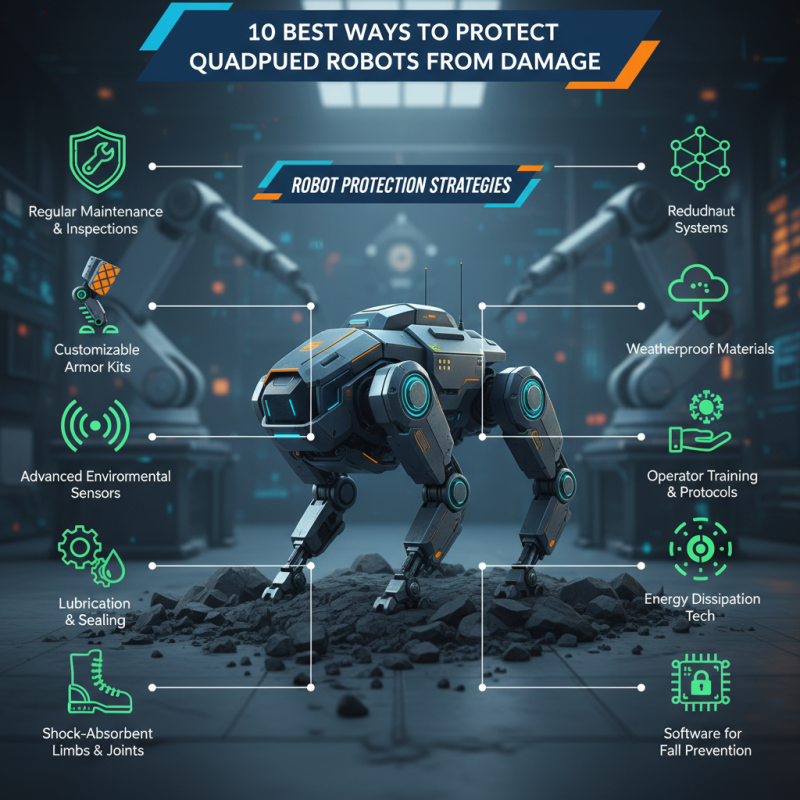
Understanding the vulnerabilities of quadruped robots is crucial for their protection. These robots, often resembling animals, face unique challenges. Their legs and joints are constantly under pressure during movement. This can lead to mechanical wear or fracture. Environmental factors can also pose risks, from extreme weather to rough terrain. Mud, water, and debris can jam motors or sensors, resulting in decreased performance.
Effective strategies include designing robust protective casings. These casings can shield intricate components from dust and moisture. Regular maintenance is essential too. Checking for signs of wear can prevent significant malfunctions. Additionally, programming these robots to recognize obstacles helps in avoiding potential damage. This intelligence allows them to navigate complex environments safely.
Despite these measures, there are limitations. Some robots may still struggle with steep inclines or loose gravel. Testing in varied scenarios reveals these imperfections. Such insights guide future improvements. Continual learning is vital for enhancing their resilience in real-world applications. The journey of protecting quadruped robots is ongoing, reminding developers of the need for innovation.
Material selection is crucial for enhancing the durability of quadruped robots. Choosing the right materials can protect them from wear and tear in rugged environments.
Lightweight but strong materials, like carbon fiber or high-strength alloys, can reduce damage during collisions and falls.
These materials offer a balance between strength and mobility, which is essential for a robot's efficiency.
Tip: Consider using shock-absorbing materials in critical areas. They can significantly reduce impact damage.
Rubber or specialized foam can absorb shocks effectively. Also, protective coatings can shield surfaces from scratches and corrosion.
These measures enhance durability without adding too much weight.
Another important factor is testing different materials in real-world conditions. What works in theory might fail in practice.
Performance can vary based on environmental factors like temperature and humidity.
Conducting extensive field tests can reveal weaknesses and areas for improvement.
This iterative process ensures that the robot can withstand unpredictable challenges.
Effective shock absorption mechanisms are essential for protecting quadruped robots from damage. When these robots traverse uneven terrains, they encounter unpredictable shocks. To mitigate this risk, engineers can incorporate materials and structures designed to absorb impact effectively. Foam-based padding is one option. It can be strategically placed within the robot’s joints and extremities.
Adding springs can also enhance shock absorption. They allow for more controlled movement. This reduces the risk of damage during sudden stops or jumps. Careful calibration of spring tension is crucial though. Overly stiff springs can lead to increased stress rather than relief.
Tips for better shock absorption include using diverse materials in construction. Combining hard and soft materials leads to better energy dispersion. Additionally, regular inspections are vital. Any worn components should be replaced promptly to maintain optimal performance. Flexibility and adaptability in design are key; what works in one environment might not in another.
When designing quadruped robots, integrating protective casings and shields is vital.
These features guard against impacts, moisture, and dirt. Failure to do so can lead to unwanted repairs and downtime.
An effective protective casing should be lightweight yet durable. Materials like polycarbonate
or high-density foam are ideal. These options can absorb shocks and prevent structural damage.
Tips:
Ensure casings are fitted snugly. Loose protection can cause rattling and reduce efficiency. Periodically inspect the shields for
wear and tear. This maintenance helps catch issues before they escalate.
Unforeseen conditions can still pose risks, so adaptability in design is crucial.
Consider adding flexible joints for enhanced mobility. They can adapt the robot's posture,
reducing stress on rigid components. This modification can extend the lifespan of your robot.
Please remember that perfection is an unrealistic expectation.
Always assess and refine your designs based on real-world conditions.
Regular maintenance is crucial for the longevity and performance of quadruped robots. Routine checks on joints and motors help identify wear and tear early. Mechanisms can become less responsive over time, leading to potential damage. A well-maintained robot performs better and lasts longer. Inspecting battery life is equally important. Regularly replacing batteries ensures optimal performance. A failing battery can affect not only mobility but overall functionality.
Calibrating sensors routinely helps maintain accuracy. Misalignment can cause robots to misjudge distances, leading to accidents. Inspecting the software is essential too. Bugs may surface, affecting performance. Continuous updates can enhance reliability and fix known issues. Dust and debris can accumulate, hindering movement. Cleaning robots regularly can mitigate this problem. Neglecting cleaning may seem trivial, but it can result in mechanical failures.
Monitoring performance metrics offers insight into how well the robot is functioning. These insights help in planning future maintenance. Using wear indicators is a beneficial technique. It provides a clear picture of when critical parts may need replacement. However, frequent checks require commitment. Balancing time for maintenance with other tasks can be challenging. Routine maintenance efforts may sometimes feel tedious, but the benefits far outweigh the inconvenience.
: Choosing the right materials enhances durability and protects robots from wear and tear.
Lightweight materials like carbon fiber or high-strength alloys are ideal for reducing damage.
They significantly reduce impact damage in critical areas, protecting vital components.
Test in real-world conditions; theory may not always match practical performance.
They guard against impacts and moisture, preventing unwanted repairs and downtime.
Periodic inspections help catch wear and tear before it escalates into major issues.
Regularly check joints, motors, and battery life to identify wear and prevent damage.
Dust and debris can hinder movement and lead to mechanical failures if neglected.
They provide insights into functionality and help plan necessary maintenance actions.
Balancing maintenance time with other tasks can be difficult but necessary for performance.
In today's rapidly advancing robotics field, ensuring the safety and longevity of quadruped robots is paramount. Understanding the vulnerabilities of these robots is the first step in strategizing effective protection methods. Material selection plays a crucial role in enhancing durability; choosing high-quality, resilient materials can significantly reduce wear and tear. Implementing effective shock absorption mechanisms further ensures that robots can withstand impacts during operations.
Additionally, incorporating protective casings and shields can defend against environmental hazards. Regular maintenance practices are vital for keeping these robots performing at their best while extending their lifespan. Overall, these strategies comprehensively answer the question of how to protect quadruped robots from damage, enabling them to operate reliably in diverse settings.

Excitech Robot