7 Best Quadruped Robots Why Do They Use Different Gaits?

Time:2026-10-07 Author:Aria
0%

Why do quadruped robots have different gaits? The answer begins with terrain, speed, stability, and energy use. A slow crawl can place three feet on the ground, creating a wide support base. A trot moves diagonal leg pairs together, improving speed without demanding extreme control. A gallop produces longer airborne phases, but it also increases impact forces and recovery risk.

This distinction matters as the market expands. The International Federation of Robotics reported about 205,000 professional service robots sold worldwide in 2023. However, its data groups robots by application, not gait. That limitation makes quadruped comparisons less precise. ABI Research and other mobility studies also identify inspection, security, logistics, and industrial monitoring as important growth areas. These tasks rarely share the same floor. Concrete, gravel, stairs, wet grass, and metal grating each require different foot timing.

ETH Zurich robotics professor Marco Hutter explains the practical principle: “Legged robots can adapt their footholds to uneven terrain.” His point captures the central engineering challenge. A gait is not merely a walking pattern. It is a control strategy for balancing motion, traction, battery life, and mechanical stress.

The best robot is not always the fastest. It may be the one that stays upright beside a pipeline at night. Real deployments remain imperfect. Laboratory results can hide dust, rain, weak wireless signals, and human obstacles. This guide compares seven leading quadruped robots and examines how their gait choices reflect different missions, designs, and compromises.
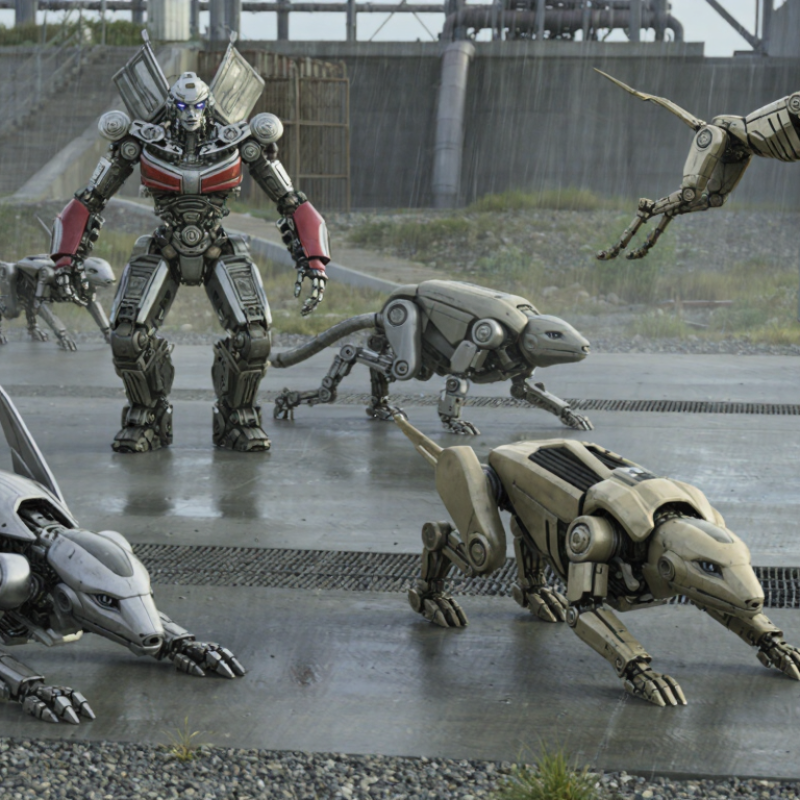
7 Best Quadruped Robots Why Do They Use Different Gaits?

What Defines a Quadruped Robot and Its Main Applications

A quadruped robot is a mobile machine supported by four articulated legs. Each leg usually contains powered joints, position sensors, and contact detection. This structure helps the robot cross gravel, stairs, grass, and uneven floors. Unlike wheeled platforms, it can lift each foot over small obstacles. That advantage comes with a cost. Leg control requires constant balance calculations and precise timing.

Different gaits describe how the legs move together. A walk keeps at least three feet on the ground, improving stability. A trot moves diagonal leg pairs, offering faster travel with moderate control demands. A bound or gallop can increase speed, but it creates larger impacts and higher energy use. Engineers select gaits according to terrain, payload, battery limits, and safety requirements. The “best” gait is rarely universal.

Main applications include industrial inspection, emergency mapping, agricultural monitoring, and research on locomotion. In a dim plant, a robot may carry thermal cameras near hot equipment. Outdoors, it can record soil conditions while avoiding fragile plants. Emergency teams may use its sensors to inspect unstable structures from a safer distance. However, performance can decline on loose sand, wet surfaces, or crowded sites. Foot slippage remains a practical weakness. Careful testing matters more than impressive demonstrations. A reliable system needs clear operating limits, human supervision, regular maintenance, and secure handling of recorded data.

Why do quadruped robots use different gaits? Gait selection balances stability, speed, energy efficiency, and terrain adaptability. The duty factor represents the approximate percentage of each stride that a foot remains in contact with the ground. Higher values generally improve stability, while lower values support faster movement but require greater balance and control.

Seven Notable Quadruped Robots and Their Distinctive Features

7 Best Quadruped Robots: Why Do They Use Different Gaits?

Seven notable quadruped robots show how design follows purpose. A lightweight inspection robot uses a careful walking gait on narrow factory floors. A heavy rescue robot uses a slower, wider stance for balance among broken surfaces. A fast research platform uses a bounding gait, lifting several legs during each stride. It looks unstable, yet its sensors correct movement quickly. An amphibious quadruped combines walking with floating support. Its sealed joints protect internal systems near shallow water. A stair-climbing robot uses deliberate diagonal steps and strong foot placement. A small educational robot favors smooth trotting, making control experiments easier. The seventh, an industrial carrier, uses a low-speed crawl while transporting tools across uneven ground.

Different gaits manage trade-offs between speed, energy, traction, and stability. Trotting saves time on firm ground. Crawling offers greater security when one foot slips. Bounding can cover open terrain quickly, but it demands excellent balance software. In field testing, dust, loose gravel, and poor lighting often change the expected result. Engineers sometimes overestimate laboratory performance. That mistake deserves attention.

Tips: Watch the robot’s feet, not only its body. Stable contact patterns reveal more than speed alone. Check battery endurance, joint protection, sensor placement, and recovery behavior after a stumble. A robot that moves beautifully may still struggle with wet tiles or a sudden curb. Test it there.

How Robot Structure Influences Movement and Stability

7 Best Quadruped Robots: Why Do They Use Different Gaits?

Quadruped robots do not share one ideal gait. Their body structure strongly shapes how they move and stay stable. A robot with long legs can clear uneven ground efficiently, but its raised center of mass may increase tipping risk. Shorter legs usually provide a lower stance and steadier support. They may, however, reduce speed and obstacle clearance.

Joint range also changes gait selection. A flexible hip and ankle arrangement can support walking, trotting, pacing, or bounding. Each gait changes how many feet touch the ground and how forces travel through the frame. A slow walk keeps at least three feet planted during much of the cycle. This creates a wide support area. A trot lifts diagonal legs together, improving speed but demanding faster balance correction.

Weight distribution matters too. Heavy batteries placed near the center can reduce unwanted rotation. Motors mounted far along the legs may increase swing effort. Sensors then need cleaner data from foot contact, body tilt, and ground vibration. In field testing, small mechanical differences can produce surprisingly different results. A design may perform well on concrete but struggle on loose gravel. That is not always a software failure. The explanation remains incomplete without considering terrain, control delay, and joint friction. Even experienced engineers must question assumptions when a robot stumbles unexpectedly. Stability is built through structure, timing, and repeated testing.

Why Quadruped Robots Use Walking, Trotting, Pacing, and Galloping Gaits

Quadruped robots change gaits because movement demands change. Walking is the safest option on uneven ground. At least three feet usually support the body, creating a stable triangle. This helps a robot step over stones, cables, and shallow gaps. It moves slowly, though, and consumes more time during long inspections.

Trotting pairs diagonal legs, such as the front-left and rear-right legs. This pattern increases speed while preserving reasonable stability. It suits paved paths, warehouses, and firm trails. Pacing moves the legs on each side together. The motion can feel smoother on flat surfaces, but it may create more side-to-side body roll. Controllers must adjust foot placement and trunk movement carefully. Small timing errors can become obvious.

Galloping uses short moments when all feet leave the ground. It offers high speed, but landing forces rise sharply. The robot needs strong joints, accurate sensors, and fast balance corrections. Field tests often show that the fastest gait is not the most useful one. A gallop may fail on loose gravel. A careful walk may succeed. Terrain, battery level, payload, and mission risk should guide gait selection. This choice is not perfect. Even advanced control systems can misjudge a slippery step. Continuous testing remains essential.

7 Best Quadruped Robots: Why Do They Use Different Gaits? — Walking, Trotting, Pacing, and Galloping Gaits
Quadruped Robot Profile Primary Gait Footfall Pattern Typical Operating Priority Terrain Suitability Main Advantage Key Limitation
1. Precision Research Quadruped Walking One or more feet remain on the ground for most of the movement cycle. A duty factor above 0.5 is typical. Stable sensor experiments, accurate foot placement, and repeatable motion. Laboratory floors, uneven test surfaces, loose gravel, and moderate slopes. Highest static stability Lower forward speed and longer travel time.
2. General-Purpose Inspection Quadruped Walk-to-Trot Uses a slow walking sequence at low speed and a diagonal-pair sequence when faster travel is needed. Balanced combination of stability, mobility, and inspection time. Industrial walkways, stairs, ramps, concrete, and compact soil. Flexible speed selection Requires gait transitions and careful balance control.
3. Fast Outdoor Survey Quadruped Trotting Diagonal legs move together, commonly forming a two-beat rhythm with approximately two legs supporting the body at a time. Efficient movement over long distances while maintaining dynamic balance. Trails, grass, packed dirt, and moderately uneven ground. Good speed-to-stability ratio Less stable than a slow walk on highly irregular terrain.
4. Sideways-Mobility Quadruped Pacing Legs on the same side move together, creating a lateral two-beat rhythm. Side-stepping, narrow-path alignment, and maneuvering around obstacles. Level surfaces, corridors, structured work areas, and firm ground. Useful lateral body motion Can produce greater side-to-side body sway and may be less comfortable on rough ground.
5. High-Speed Field Quadruped Galloping Typically includes a leading limb sequence and an aerial phase in which all feet may briefly leave the ground. Maximum forward speed over open terrain. Open, relatively smooth ground with sufficient traction and clearance. Fastest quadrupedal gait High impact loads, greater control complexity, and reduced suitability for cluttered terrain.
6. Heavy-Payload Utility Quadruped Slow Walking Maintains a large support polygon by keeping several feet grounded during payload transport. Load stability, low body oscillation, and controlled stopping. Factory floors, construction areas, gravel, and gentle inclines. Strong load-control behavior Speed and agility decrease as payload and ground irregularity increase.
7. Agile Rescue and Search Quadruped Adaptive Walk–Trot–Gallop Selects a gait according to terrain, obstacle height, required speed, and available traction. Rapid response followed by cautious movement near debris and people. Rubble, mixed indoor-outdoor surfaces, soil, stairs, and changing terrain. Best overall terrain adaptability More sensors, computation, and transition control are required.
Technical note: Walking prioritizes static stability, trotting provides an efficient diagonal gait, pacing supports lateral movement but can increase body sway, and galloping is optimized for speed through dynamic balance and an aerial phase. Actual gait selection depends on robot geometry, actuator limits, payload, terrain, traction, and control software.

How Sensors and Control Systems Select the Most Suitable Gait

7 Best Quadruped Robots: Why Do They Use Different Gaits?

A quadruped robot does not choose a gait for appearance. Its sensors estimate terrain, speed, balance, and contact confidence. An inertial measurement unit tracks body pitch and roll. Joint encoders measure leg angles, while foot-force sensors detect slipping or unexpected contact. Depth cameras and lidar can identify steps, loose gravel, and narrow paths.

The controller then matches conditions with a gait. A walk keeps at least three feet grounded, improving stability on broken surfaces. A trot offers higher speed with diagonal leg pairs moving together. A bound can increase speed, but it demands stronger prediction and faster correction. Model-predictive control usually selects foot placement, timing, and body posture. Learning-based systems can improve adaptation, although their decisions may remain difficult to explain.

Industry growth makes this problem practical, not theoretical. The International Federation of Robotics reported nearly 205,000 professional service robots sold in 2023, about 30% more than the previous year. Its World Robotics 2024 report also recorded 541,302 industrial robot installations in 2023. These figures do not measure quadruped gait quality directly, but they show rising demand for reliable autonomous machines.

Field testing reveals an uncomfortable detail. A gait that works on dry concrete may fail on wet stone. That is not enough. Sensor delay, battery limits, and imperfect terrain maps can still destabilize the robot. Engineers therefore combine conservative gait switching with emergency posture control. The best system is not always the fastest. It is the one that recognizes uncertainty early.

FAQS

Why do quadruped robots use different gaits?

Each gait balances speed, energy use, traction, and stability differently. Terrain and mission goals matter.

When is walking the best gait?

Walking suits uneven ground, stones, cables, and shallow gaps. Three feet usually remain planted, creating a stable support triangle.

How does trotting improve movement?

Trotting moves diagonal leg pairs together. It increases speed on firm paths while keeping reasonable stability.

What are the limitations of pacing?

Pacing moves the legs on each side together. It may feel smooth, but can create noticeable side-to-side body roll.

Why is galloping difficult for robots?

Galloping briefly lifts all feet from the ground. Faster movement brings stronger landing forces and requires rapid balance corrections.

How does body structure affect stability?

Long legs clear obstacles well, but raise the center of mass. Short legs improve steadiness but reduce speed and clearance.

What should engineers inspect during field testing?

Check foot contact, battery endurance, joint protection, sensor placement, and recovery after a stumble. Laboratory results can mislead.

Can a fast gait work on every surface?

No. Loose gravel, wet tiles, dust, and sudden curbs can defeat a fast gait. A slower walk may succeed.

Why do sensors influence gait performance?

Sensors report foot contact, body tilt, and ground vibration. Delayed or unclear data can cause poor placement and unstable movement.

What remains uncertain about quadruped robot stability?

Mechanical differences, control delay, terrain, and joint friction interact in complex ways. The explanation is not always complete.

Conclusion

Quadruped robots are four-legged machines designed to move across varied terrain with greater flexibility and stability than many wheeled or tracked systems. They are used for inspection, search and rescue, industrial monitoring, agriculture, research, and other tasks that require mobility in uneven environments. This article introduces seven notable types of quadruped robots and highlights how differences in body shape, leg design, weight distribution, and joint arrangement influence their movement, balance, payload capacity, and ability to handle obstacles.

Why do quadruped robots have different gaits? The answer lies in the need to balance speed, energy use, stability, and terrain conditions. Walking provides reliable support with several feet on the ground, while trotting offers a practical combination of speed and balance. Pacing can create efficient movement for certain body structures, and galloping enables faster travel when conditions allow. Sensors such as cameras, force detectors, and motion units help the control system understand the surroundings and select the most suitable gait in real time.

Aria

Aria

Aria is a dedicated marketing professional with a deep passion for innovative strategies and a keen understanding of our company's product offerings. With a wealth of experience in the industry, Aria excels at crafting engaging content that highlights the unique features and benefits of our......