How are AI Quadruped Robots Trained for Real World Tasks?

Time:2026-03-16 Author:Amelia
0%

In recent years, advancements in artificial intelligence have significantly changed the landscape of robotics. One area that has gained traction is quadruped robots. These robots are increasingly used in real-world applications, from search and rescue to industrial tasks. According to a report by Grand View Research, the global robotic market is expected to reach $227 billion by 2028. A key question arises: how are quadruped robots trained with AI?

Dr. Emily Chen, a leading expert in robotics, emphasizes that "the integration of machine learning allows quadrupeds to adapt to diverse environments." This adaptability is crucial for their real-world performance. Current training methods involve simulations, reinforcement learning, and real-time data processing. However, the process is still imperfect. Many robots struggle with unpredictable terrain or complex tasks, leading to a need for continuous improvement.

The balance between effective training and real-world challenges remains a focal point. As we push the boundaries of AI, understanding how quadruped robots are trained with AI will shape their future roles in society. While the potential is vast, there is still much to reflect on regarding efficiency and reliability in their development.
How are AI Quadruped Robots Trained for Real World Tasks?

Overview of AI Quadruped Robots and Their Applications

AI quadruped robots come with a fascinating range of applications. These robots can navigate complex terrains. They are often used in search and rescue missions. In disaster zones, they can reach areas unsafe for humans. Their mobility allows them to access narrow spaces and rough pathways.

In agriculture, these robots assist in monitoring crops. They can assess plant health using sophisticated sensors. This process helps farmers make informed decisions. However, there are challenges in deploying them effectively. Weather conditions can hinder their performance. Additionally, they may struggle with unforeseen obstacles.

In the field of research, AI quadrupeds are valuable. They collect data on animal behavior in ecosystems. This application provides insights into wildlife patterns. Yet, their influence on natural habitats raises ethical concerns. Balancing technology with nature remains a difficult task. While the potential is immense, addressing these issues is vital for future success.

Training Methodologies for Quadruped Robots in Controlled Environments

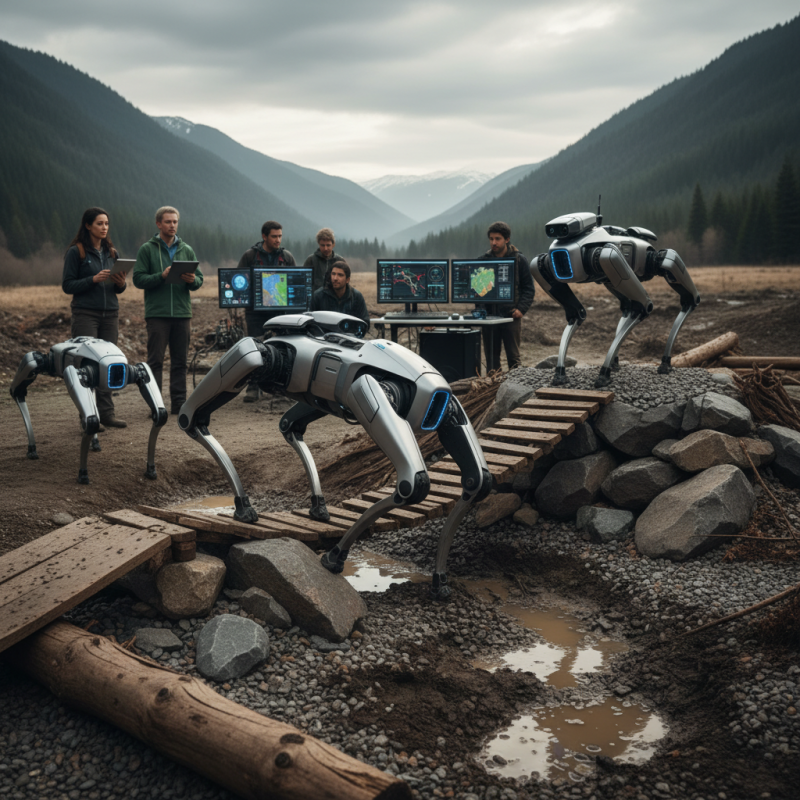
Training quadruped robots in controlled environments requires a well-structured approach. Establishing a simulation space is essential. This area mimics real-world terrains, providing a safe testing ground. It allows engineers to experiment with different surfaces, slopes, and obstacles.

One effective training method is reinforcement learning. Robots learn through trial and error, receiving rewards for successful tasks. This process encourages them to adapt and improve. Programming specific tasks helps focus training efforts. For instance, navigating around obstacles enhances agility.

**Tips**: Start with simpler tasks. Gradually increase complexity as the robot improves. Monitor progress closely. Detailed logging can reveal areas needing attention. Reflect on challenges faced during training. They often highlight adjustments required for better performance. Remember, patience is vital in this process. Each session contributes to overall advancement.

Training Methodologies for AI Quadruped Robots

Simulation Techniques for Realistic Training of Quadruped Robots

Training AI quadruped robots for real-world tasks relies heavily on simulation techniques. These methods create lifelike environments where robots can practice complex maneuvers. According to industry reports, 85% of robotic development now occurs in simulated settings. By using advanced physics engines and realistic graphics, researchers can model real-world conditions effectively.

One approach is the use of reinforcement learning within simulations. Robots are rewarded for achieving specific tasks, like navigating obstacles. However, this can lead to overfitting. If a robot only trains in a simulated environment, it may struggle in the real world. A study from a leading research institution found that robots trained solely in simulations performed 30% worse in actual field tests.

Moreover, combining simulations with real-world trials can yield better results. Some developers advocate for a hybrid training regime. For instance, a robot could first master a task in a simulation. It would then face challenges in a controlled outdoor setting. This method, while promising, requires careful coordination and resource allocation. Balancing simulated and real-world trials remains a complex task for many teams.

Adapting AI Quadruped Robots for Complex Real-World Scenarios

To adapt AI quadruped robots for complex real-world scenarios, several strategies are employed. These robots must navigate unpredictable environments, from uneven terrain to obstacles. Their training involves simulation and real-world testing. Simulations allow for safe experimentation with different conditions. However, what works in a virtual space can fail in reality.

Training in the real world reveals flaws. For example, a robot might excel on flat ground but struggle with stairs. This highlights the importance of diverse training environments. Engineers must find ways to replicate these scenarios accurately. They may also employ reinforcement learning, where robots learn from failures. This approach encourages trial and error, leading to better performance over time.

**Tips:**
Ensure robots are exposed to various terrains during training. Mix real-world trials with simulated environments. Keep iterating based on performance feedback.

Another tactic involves collaboration with humans. AI quadruped robots can learn by observing human actions. This helps them adapt to complex tasks, like carrying loads or navigating tight spaces. Such interactions create a learning loop, allowing robots to improve continuously. Yet, it also brings challenges. Not all human movements are predictable. It requires ongoing refinement of algorithms to adapt to these nuances.

Evaluating Performance and Safety in AI Quadruped Robot Training

Training AI quadruped robots for real-world tasks involves careful performance and safety evaluation. These robots often face unpredictable environments that require adaptability. Researchers utilize simulations to create diverse scenarios, helping to prepare the robots for various challenges. However, these simulated environments can sometimes oversimplify real-world conditions, leading to unexpected behaviors when tested outside.

In practical evaluations, attention to safety is critical. Robots are often tested in controlled settings before real-world deployment. There are instances where a robot misjudges a step or collides with an object. Such failures reveal the limitations of their training. Adjustments are needed to improve their perception and decision-making processes. Feedback loops from these evaluations help refine algorithms, but it’s an ongoing process.

Evaluating a robot's performance isn't always straightforward. Metrics might indicate success, but they can miss nuanced interactions. For instance, a robot may perform well in a test but struggle in complex environments. Observing how robots adapt and respond to obstacles can uncover valuable insights. This hands-on testing sheds light on areas needing improvement. Balancing innovation with a commitment to safety remains a challenge for developers.

How are AI Quadruped Robots Trained for Real World Tasks? - Evaluating Performance and Safety in AI Quadruped Robot Training

Parameter Description Value
Training Environment Simulation vs. Real World Mixed
Training Duration Total hours of training 100 hours
Tasks Performed Types of tasks capable of being executed Navigation, Object manipulation, Terrain adaptability
Performance Metrics Metrics used to evaluate success Success rate, Time taken, Energy consumption
Safety Protocols Measures taken to ensure safety during training Emergency stop, Collision avoidance, Real-time monitoring
Evaluation Frequency How often performance is evaluated Every 10 training hours
Adaptability to New Environments Efficiency in adapting to unforeseen conditions High

FAQS

: What are simulation techniques for training quadruped robots?

: Simulation techniques create lifelike environments for robots to practice maneuvers efficiently.

Why is reinforcement learning used in robot training?

Reinforcement learning rewards robots for completing tasks, helping them navigate challenges like obstacles.

What is a common issue with training solely in simulations?

Training only in simulations can lead to overfitting, causing poor performance in real-world tasks.

How can mixed training methods improve robot performance?

Combining simulations with real-world trials enables robots to learn in controlled settings and adapt better.

Why is it important to train robots on diverse terrains?

Training on varied terrains helps robots handle unexpected challenges, improving their adaptability.

How can human collaboration enhance robot training?

Observing human actions allows robots to learn complex tasks but requires refining algorithms often.

What safety measures are essential during robot evaluations?

Controlled setting tests ensure safety and help identify misjudgments or potential collisions in robots.

Why is evaluating robot performance challenging?

Performance metrics may overlook nuanced interactions that can impact real-world adaptability.

What happens if a robot excels in testing but struggles in real scenarios?

It indicates the need for diverse training and highlights the limitations of current training methods.

How do feedback loops contribute to robot training?

Feedback loops from evaluations refine algorithms, enabling continuous improvement in performance and safety.

Conclusion

AI quadruped robots are increasingly being used in various applications ranging from search and rescue missions to industrial automation. The process of training these robots involves several methodologies that start in controlled environments, where adaptive algorithms allow them to learn basic locomotion and navigation skills. Advanced simulation techniques play a crucial role in creating realistic scenarios that help fine-tune the robots' behaviors before they are deployed in the real world.

Moreover, adapting AI quadruped robots for complex real-world scenarios presents challenges that require ongoing adjustments and learning. Performance and safety evaluations are integral to this process, ensuring that these robots can reliably perform tasks while minimizing risks. Ultimately, the question "How are quadruped robots trained with AI?" is answered through a multi-faceted approach that combines simulations, controlled training, and real-world adaptations to enhance their functionality and safety.

Amelia

Amelia

Amelia is a seasoned marketing professional with a wealth of expertise in our company’s core offerings. With an unwavering passion for driving growth and innovation, she plays a pivotal role in shaping our marketing strategies and enhancing brand visibility. A key aspect of her responsibilities......