The evolution of Bridge Inspection Robots is reshaping infrastructure maintenance. According to a recent report by the National Bridge Inventory, over 47,000 bridges in the U.S. are deemed structurally deficient. This alarming statistic highlights the urgent need for advanced inspection technologies. Experts like Dr. Emily Tran emphasize, “Bridge Inspection Robots can significantly enhance our understanding of structural health.”
These innovations offer improved safety and efficiency. Robots are designed to navigate complex structures with ease, reducing the risks posed to human inspectors. The integration of AI and machine learning allows for real-time data analysis. However, the industry still grapples with challenges such as high initial costs and the need for specialized training.
Despite this, the benefits are undeniable. States adopting these technologies report faster inspection times and more accurate assessments. As the demand for safer, smarter infrastructure grows, so does the potential for Bridge Inspection Robots to become a standard in evaluating our aging bridges. The future may hold great promise, but reflection on current obstacles is essential for progress.
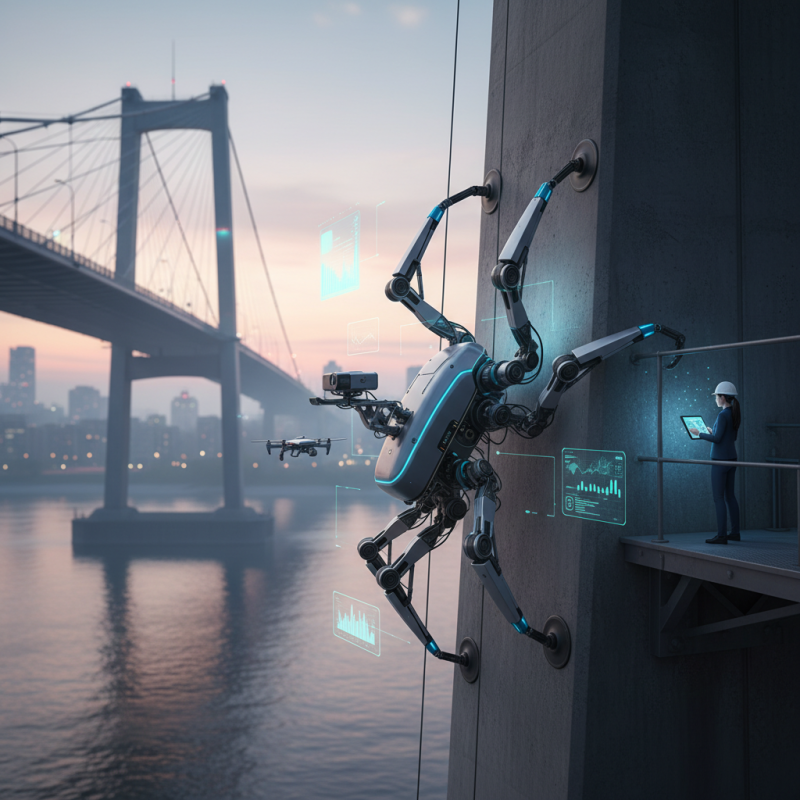
Innovative bridge inspection robotics are transforming the way we assess infrastructure. In 2026, there will be numerous advanced robots designed to handle complex inspections. These machines navigate challenging environments, providing real-time data. They reduce human risk in dangerous locations. Engineers can now focus on critical analyses rather than tedious inspection tasks.
The technology includes drones and autonomous crawlers. Drones can fly over hard-to-reach areas, capturing high-resolution images. These visuals help identify structural issues quickly. Meanwhile, ground-based robots can maneuver through narrow spaces. They can use sensors to detect cracks and corrosion. Despite their capabilities, these robots are not flawless. They may occasionally miss subtle damage. Regular calibration and updates are necessary for improvement.
Adoption of these innovations can lead to significant cost savings. However, there remains a learning curve. Training personnel to effectively use these systems is essential. As we advance, the balance between automation and human oversight must improve. This will ensure that inspections remain thorough and reliable.
Bridge inspection robotics is rapidly evolving with key technological advances reshaping the industry. Drones equipped with high-resolution cameras are now commonplace. These devices can capture detailed images of hard-to-reach areas. According to industry reports, the use of drones has improved inspection efficiency by 40%. This helps teams focus on critical repairs faster.
Another breakthrough comes from artificial intelligence. AI algorithms analyze captured data to detect structural anomalies. This technology reduces human error and speeds up the decision-making process. Studies show that AI-enhanced inspections can identify 70% more defects than traditional methods.
Tips: Always ensure that your team is trained in the latest technologies. A knowledgeable crew can maximize the benefits of these innovations. Regular updates on robotic capabilities can help maintain inspection standards.
The integration of autonomous ground vehicles is noteworthy as well. These machines can navigate bridge areas independently. However, they still face challenges in extreme weather conditions. Adapting to such issues is crucial for future developments in this field. Efforts are ongoing to improve their reliability and performance in various environments.
Automation is transforming the way we assess structural integrity, especially with bridge inspections. Traditional methods can be time-consuming and labor-intensive. Now, advanced robotic systems offer new solutions. These robots can navigate difficult terrains and capture detailed data in real-time. They use high-resolution cameras and sensors to detect micro-cracks and material degradation.
Employing these technologies allows for faster assessments. Human inspectors often miss small flaws that could lead to bigger problems. By integrating robotics, we enhance the accuracy of inspections. This shift minimizes risks to human workers and cuts down on costs.
**Tips:** Always keep training updated on new technologies. Familiarize yourself with how these robots operate. Understand their limitations as well. It's crucial to maintain a balance between automation and human oversight. Remember, technology should assist but not completely replace human expertise. Regularly review reports generated by these robots. This can help catch discrepancies that may need further examination.
| Innovation | Description | Benefits | Impact on Structural Integrity |
|---|---|---|---|
| Autonomous Drones | Drones equipped with advanced imaging technology for aerial inspection of bridges. | Reduced inspection time and increased safety for inspectors. | Provides comprehensive visual data to detect wear and structural defects early. |
| Robotic Crawlers | Ground-based robots designed to traverse complex bridge structures. | Ability to access hard-to-reach areas with precision. | Facilitates detailed assessments of the structural components. |
| Smart Sensors | Integrated sensors that monitor stress, strain, and environmental conditions. | Continuous monitoring enables proactive maintenance. | Enhances the overall understanding of structural behavior over time. |
| AI Data Analysis | Machine learning algorithms that analyze inspection data for patterns and anomalies. | Improved decision-making through predictive analytics. | Provides insights into potential future failures and maintenance needs. |
| 3D Imaging Technology | High-resolution 3D scanning for detailed modeling of bridge structures. | Creates accurate digital twins for analysis and monitoring. | Supports maintenance planning and retrofit strategies. |
Robotic inspections of bridges are becoming increasingly important in infrastructure maintenance. These machines provide detailed assessments, identifying potential issues with precision. By utilizing cameras and sensors, they can reach areas where human inspectors cannot. This often leads to earlier detection of problems, minimizing costly repairs down the line.
However, implementing robotic inspections carries high initial costs. Purchasing and maintaining these robots can strain budgets. Some departments may struggle to justify the expense. Analyzing the long-term savings from fewer emergency repairs is crucial. It often proves challenging to measure the actual benefits a robot can deliver compared to traditional methods.
Despite the setbacks, the advantages can be substantial. Robots offer consistent data collection, which is vital for making informed decisions. Inspections can be done more frequently, improving the overall integrity of the infrastructure. The balance between cost and benefit remains a topic of discussion. Each region must evaluate its unique circumstances.
The future of bridge inspection robots is promising. These innovations will significantly enhance inspection efficiency and safety. As technology advances, combining AI and drone capabilities will become standard. Robots will autonomously navigate complex structures, identifying issues quickly.
New industry standards will focus on reliability and ease of use. The design will prioritize safety for both operators and infrastructure. Inspectors will need to adapt to new tools. Training programs must evolve to keep pace. Smaller teams may become more efficient. However, reliance on robots may cause skills atrophy in traditional inspection methods.
Potential challenges remain in integrating these technologies. Not all robots will perform at the same level. Variability in performance can lead to trust issues among engineers. Addressing these concerns is crucial for successful implementation. Future regulations must ensure compliance and safety for all users. Balancing innovation and practicality will be key to moving forward.
: Drones improve inspection efficiency by 40%. They capture detailed images of hard-to-reach areas.
AI analyzes data and detects structural anomalies. It identifies 70% more defects than traditional methods.
Teams should train in the latest technologies. Regular updates on robotic capabilities are essential.
Yes, they can navigate independently. However, they struggle in extreme weather conditions.
Automation speeds up assessments and improves accuracy. It reduces risks to human workers.
Human inspectors catch details robots might miss. A balance between automation and human expertise is crucial.
Crews need to understand robot limitations. Regularly review inspection reports for discrepancies.
Robotic systems may struggle in tough terrains and extreme weather conditions. Improvements are needed.
High-resolution cameras detect micro-cracks and material degradation in real-time.
Ongoing training ensures teams are familiar with technology. It helps keep inspection standards high.
The article "2026 Top Bridge Inspection Robot Innovations and Benefits" explores the significant advancements in bridge inspection robotics that are shaping the future of infrastructure maintenance. It highlights innovative technologies that enhance the efficiency and accuracy of inspections, enabling engineers to assess the structural integrity of bridges more effectively. Automation plays a crucial role in these evaluations, drastically reducing human error and increasing safety during inspections.
Additionally, the article analyzes the cost-benefit aspects of utilizing Bridge Inspection Robots, demonstrating how these investments can lead to long-term savings in maintenance and repairs. Future trends suggest that as technology continues to evolve, industry standards for bridge inspections will adapt, ensuring compliance and improving overall infrastructure health. With the growing reliance on robotics, the bridge inspection process will become more streamlined and reliable, paving the way for safer transportation networks.

Excitech Robot